
Gaskin: Turn unfunded climate proposals into action plan

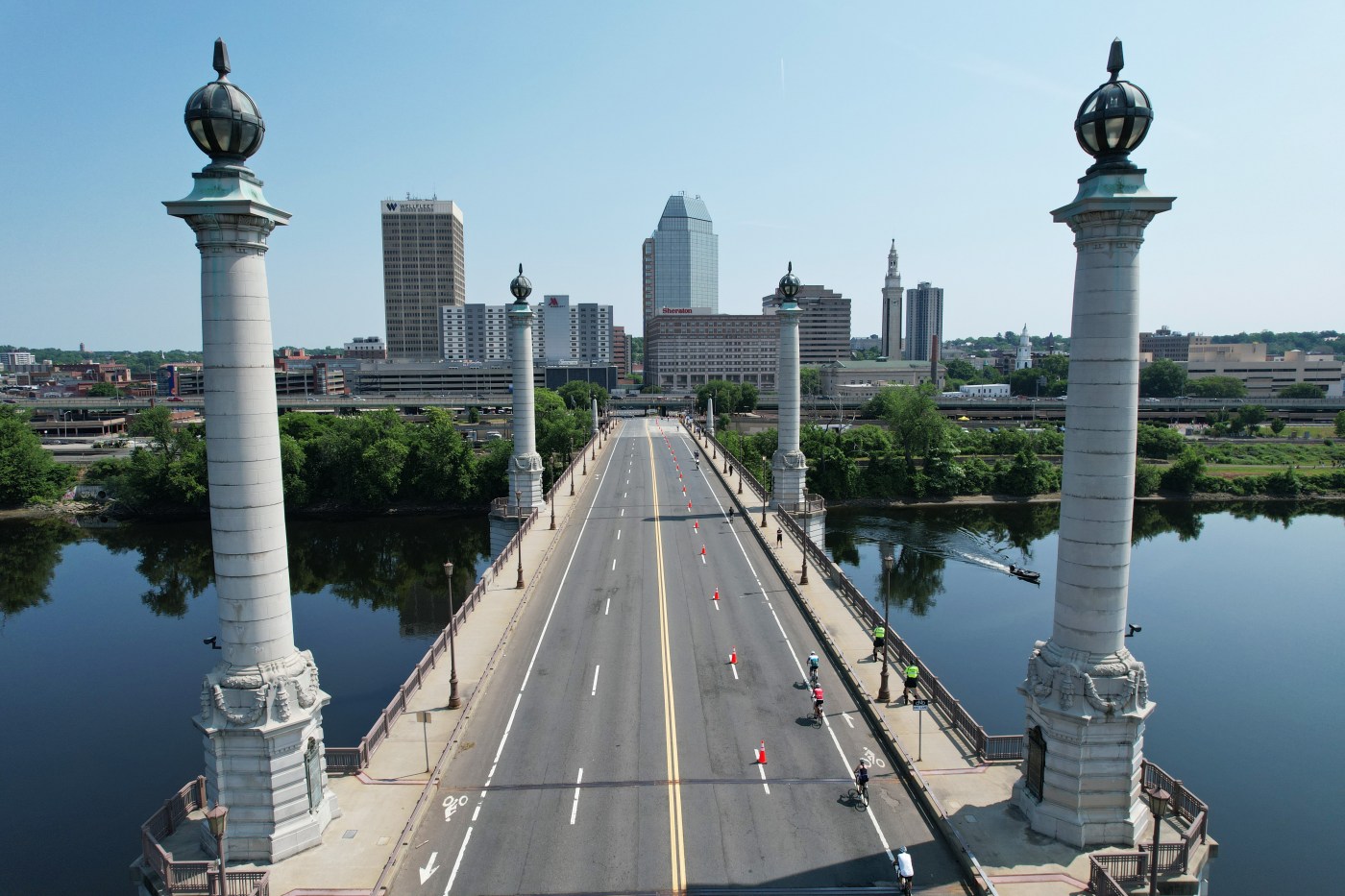
When the federal government clawed back a $20 million environmental justice grant awarded to Springfield, the headlines focused on what that city lost. And rightfully so. But what did Massachusetts gain — and what will we do with it?
Across the Commonwealth, cities, towns, and grassroots coalitions spent the better part of two years developing detailed, locally grounded proposals for federal climate and environmental justice funding. These proposals were more than grant applications — they were community-driven blueprints for how to decarbonize neighborhoods, make homes healthier, build local workforce pipelines, and adapt to a rapidly changing climate.
Now, in the wake of Springfield’s high-profile loss and amid shifting federal priorities, Massachusetts has a rare opportunity. We can leverage this collective planning work to build a comprehensive statewide energy and environmental justice strategy — one grounded in community knowledge, not just government directives.
Dozens of Massachusetts organizations — spanning Boston, Brockton, Lawrence, Fall River, Springfield, and beyond submitted federal proposals under the Biden administration’s Justice40 and Inflation Reduction Act programs. These applications represent hundreds of thousands of hours of planning, stakeholder convening, technical modeling, budget development, and impact analysis.
Though only a handful received funding, nearly all contain implementable ideas: community solar models, geothermal retrofits for public housing, green workforce training tied to real employers, flood mitigation for vulnerable neighborhoods, and tree canopy restoration for urban heat islands.
Some go further, proposing microgrid development for municipal buildings, electric school bus fleets for rural districts, or agricultural climate adaptation strategies for Massachusetts farmers. Others offer cross-cutting equity strategies — ensuring low-income households see real energy cost savings, creating targeted apprenticeship pathways for residents in environmental justice communities, or integrating climate resilience upgrades with lead abatement and indoor air quality improvements.
Taken together, these proposals offer something that no consulting firm or state agency working alone could replicate: a vision of energy justice built from the ground up.
What’s needed now is coordination. The Commonwealth should:
Collect all submitted federal environmental grant applications from Massachusetts over the past two years.
Analyze shared themes, technical solutions, and equity-centered approaches.
Synthesize them into a public, statewide energy and environmental justice plan to guide the Healey administration and Legislature.
Fund the best ideas through state capital allocations, existing climate programs, or philanthropic partnerships.
Elevate the process as a new model for participatory climate governance.
Instead of starting over — or paying consultants to develop yet another plan from scratch — we should build on what communities have already designed. We’ve done the visioning. We’ve done the technical work. Now let’s do the scaling.
Gov. Maura Healey has positioned Massachusetts as a climate leader. But leadership means more than announcing targets — it means investing in how we get there. A plan drawn from this diverse body of grant proposals would offer something no statewide roadmap has yet captured: on-the-ground feasibility.
It would reflect the lived realities of renters, low-income families, community health workers, municipal leaders, and nonprofits who are already experimenting with solutions. It would spotlight where technical assistance is most needed, where permitting delays hold projects back, and where anchor institutions are ready to partner.
It would also ensure that good ideas don’t die just because the federal government said no. By resourcing them locally, we send a clear message: Massachusetts backs innovation that serves both climate goals and community needs.
This approach also reimagines how we do public planning in the first place. For decades, planning has often meant hiring consultants, holding a few stakeholder sessions, and issuing a glossy PDF. What if instead, we start with what Massachusetts residents and organizations have already envisioned, written, and budgeted?
That would be faster. Cheaper. And far more legitimate. It would also build trust by showing that when communities put in the work, government values and acts on it.
Massachusetts stands at a crossroads. We can allow promising, well-crafted climate and environmental justice plans to gather dust, or we can treat them as the building blocks of a new Commonwealth-wide vision.
The loss of a $20 million grant may sting — but the bigger loss would be failing to capitalize on the unprecedented work that went into proposals like it. Let’s build the plan we already started. Let’s align state leadership with grassroots innovation. And let’s make sure the climate solutions we scale are the ones designed to serve everyone.
Ed Gaskin is Executive Director of Greater Grove Hall Main Streets and founder of Sunday Celebrations


More Stories
Easter and Eid collision sends British lamb prices to a record high
Supermarket shoppers face paying more than £16 per kilo for a leg as overlapping religious festivals, shrinking flocks and buoyant...
Vince calls on Miliband to halt North Sea oil exports as Iran war rattles supply
One of the Labour Party’s most prominent financial backers has called on Ed Miliband to slam the brakes on North...
Reform UK becomes first British political party to launch its own podcast
Reform UK is venturing into podcasting with a weekly show that will offer listeners behind-the-scenes access to Nigel Farage and...
Labour’s tax uncertainty is pushing Britain’s wealthiest towards the exit
The majority of Britain’s ultra-wealthy individuals are actively weighing up whether to leave the country, driven not so much by...
Barclays bets on the high street once more with new branches and the return of the bank manager
Barclays is charting a decisive U-turn on the high street, with plans to open new branches across the country and...
Amazon bets on Whole Foods to salvage its troubled UK grocery ambitions
Amazon is dusting itself off for another tilt at Britain’s fiercely competitive grocery sector, this time by converting its abandoned...