
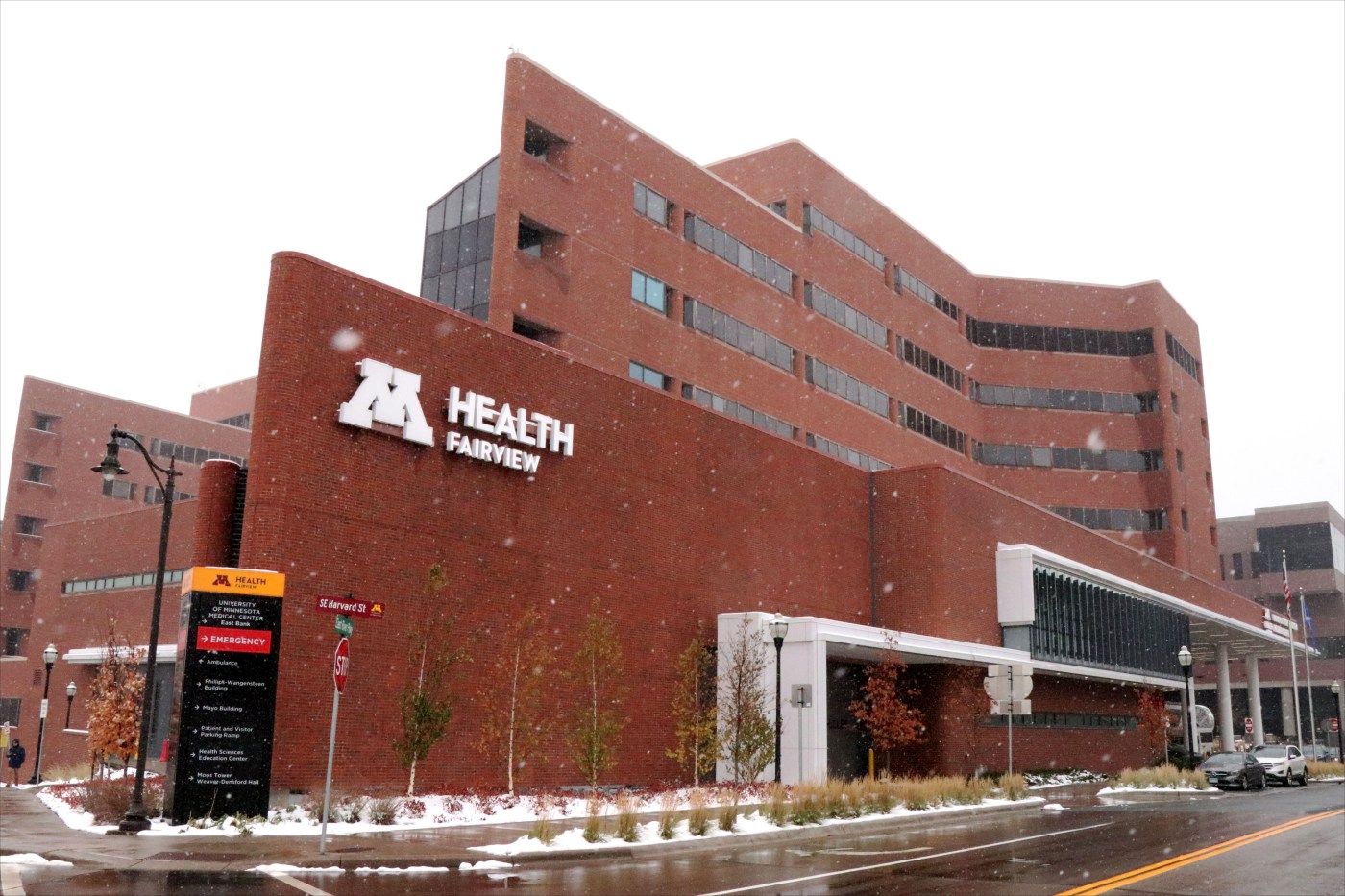
Fairview Health Services opposed UMN, Essentia merger

Fairview Health Services told its employees in a Wednesday letter that it does not agree to a proposed merger with the University of Minnesota and Essentia Health as part of a new health care organization announced in January.
The U and Duluth-based Essentia Health in late January announced the partnership to develop a new nonprofit health care organization to include a $1 billion investment in the next five years.
In a proposition to Fairview on Feb 10, University and Essentia officials further suggested that they and Fairview combine into a single organization called Newco.
But, in the letter, Fairview CEO James Hereford and Board of Directors Chair John Heinmiller said that while the organization supports the University’s endeavor to partner with Essentia, it would not agree to a merger.
“We have stated this clearly to the University: while we are open to a partnership, when it comes to a proposed merger between Fairview, the University, and Essentia — our answer is no,” the letter said.
Letter outlines issues with proposed merger
Hereford and Heinmiller said in the letter that they believed maintaining Fairview’s independence and commitment to its patients is essential over joining the proposed company called Newco.
“Additionally, we continue to support the University’s — or NewCo’s — purchase of the academic assets, as laid out in the University’s original five-point plan and reiterated in the (letter of intent) we both signed early last year,” the letter stated.
If a new contract is not in place with the University by early 2027, Fairview would continue to own and operate the academic hospitals, and academic physicians would continue to practice there, according to the letter.
Fairview officials also emphasized in their letter that Essentia’s willingness to support the University was a good development, calling Fairview’s current level of financial support of the school “unsustainable.”
University response
With Fairview and the University’s partnership set to expire in a couple years, a solution to sustain that commitment is urgently needed, said Chris Gade, University of Minnesota vice president for communications. But, when the University made an offer, Gade said, it received a negative response from Fairview and no counter-offer.
That’s when University officials shared their plans with Fairview to begin exploring alternative options, leading to the proposed solution that included the three organizations, Gade said.
In the Feb. 10 proposal to combine the three organizations, the University laid out plans for a 22-member board that would initially include six appointees from each organization, board appointees and a non-voting Newco CEO.
“Newco will be the most comprehensive health care system serving Minnesota — the system with the broadest geographic coverage and reach, serving the most communities, and offering a complete range of care from basic primary care through the most complex, multispecialty care,” the Feb. 10 proposal states.
Gade said U officials would like an opportunity to more fully explore the proposal with Fairview.
“And now today, what we’re hearing is that they have chosen to say no to that solution that we believe is in the best interest of Minnesota. And that’s perplexing to us because we have not had the level of conversation that we believe is possible about that solution and we would just welcome the opportunity to explore it more fully,” Gade said. “And what we’re proposing is a solution that alleviates from Minnesota putting the University’s medical school at risk. And without a solution, we don’t believe we can successfully educate and train the workforce.”
The U medical center, which educates some 70% of the doctors and nurses in Minnesota, was sold to Fairview in 1997.
What the University is proposing closely aligns to feedback from stakeholders across the state, as well as the governor’s task force, Gade said.
“And what we’ve heard back from Fairview is, ‘We would not like to pursue a transformational solution. Instead, what we’re proposing is a transactional relationship,’ and actually even doing that at rates lower than what they’re currently providing to the university. So I think the option for Minnesota is transformational solution or a transactional relationship,” Gade said.
Describing Fairview’s level of investment made into the University as below average, Gade said that the health care provider’s decision would not be good for patients or providers.
“And it’s important for people to recognize that and to ask questions about it. Why has it been below average? I think that’s a question that merits exploration and understanding. Our commitment at the University is to fulfill our commitment to the state of Minnesota and to our land grant mission and to patients and the healthcare workforce in Minnesota,” Gade said. “And the other kind of important part of this is, this solution, as we proposed it, really will sustain existing patient relationships that patients have with their providers. What Fairview is saying, ‘Let’s break up those relationships.’ And that’s not good for patients, and that’s also not good for the caregivers.”
Failed merger with Sanford
Fairview is Minnesota’s third largest employer with more than 34,000 employees, more than 1.2 million patients in Minnesota and more than $8 billion in revenue, according to the provider.
Fairview previously failed to persuade U officials to back a proposed merger with Sanford Health, based out of state in Sioux Falls, S.D. Sanford proposed combining their 58 hospitals, but announced in July 2023 that the deal failed after pushback from key stakeholders and regulators.
Since February 2024, the University and Fairview have been in conversations about a new model of care agreement, and the two signed a letter of intent at that time with plans for the University to purchase the four academic health facilities that make up the M Health Fairview University of Minnesota Medical Center, with the U assuming full ownership of the facilities by Dec. 31, 2027.
Essentia operates 14 hospitals and 80 clinics in Minnesota, including St. Mary’s Medical Center in Duluth.
“Essentia Health’s overriding goal has been and remains ensuring patients across Greater Minnesota and our entire service area have access to affordable, high-quality care – today and well into the future,” said an Essentia Health spokesperson in a statement Wednesday.
The University’s Board of Regents is expected to discuss the proposal for the new healthcare organization during its Academic Health Committee meeting Thursday and its full board meeting on Friday.
Related Articles
With federal money at risk, UMN, MNSCU stress high stakes of state budget debate
Education Department rescinds Biden memo that threatened to upend college NIL payments
Literary calendar for week of Feb. 9: Celebrations for ‘Gatsby,’ Kao Kalia Yang and more
University of Minnesota, Essentia Health announce partnership, nonprofit
Minnesota allocates funding to help U researchers monitor bird flu in wildlife

More Stories
Late heroics lift Wild past Jets in overtime
On one of their longest travel days of the season, the Minnesota Wild found just enough late fuel to pull...
World Junior Hockey: U.S. gets scare but holds off Switzerland
Relief flooded the United States locker room Saturday after its 2-1 victory over Switzerland in the Americans’ second game of...
Timberwolves embarrassed by Brooklyn
The Timberwolves were a 20-win team entering Saturday’s contest at Target Center. Brooklyn was 9-19. Yet there was zero doubt...
Bruins keep on losing, fall to red-hot Sabres, 4-1
After a decade and a half of the Bruins feasting on the Buffalo Sabres, the roles look like are now...
St. John’s Prep wins Pete Frates Winter Classic over Pope Francis
MIDDLETON – It was an emotional drought that the St. John’s Prep hockey team snapped in 2023 by claiming its...
Boston Police Blotter: Sandra Birchmore-connected cop has police certification revoked
A former deputy chief of the Stoughton Police Department has been decertified as a cop due in large part to...