
Beacon Hill Democrats clear way for Everett soccer stadium in policy-packed jobs bill

Beacon Hill Democrats released compromise legislation Tuesday that clears the way for a soccer stadium in Everett and shuttles millions to the life sciences sector but ditches proposals on local option happy hours and ending the automatic prosecution of 18-year-olds as adults.
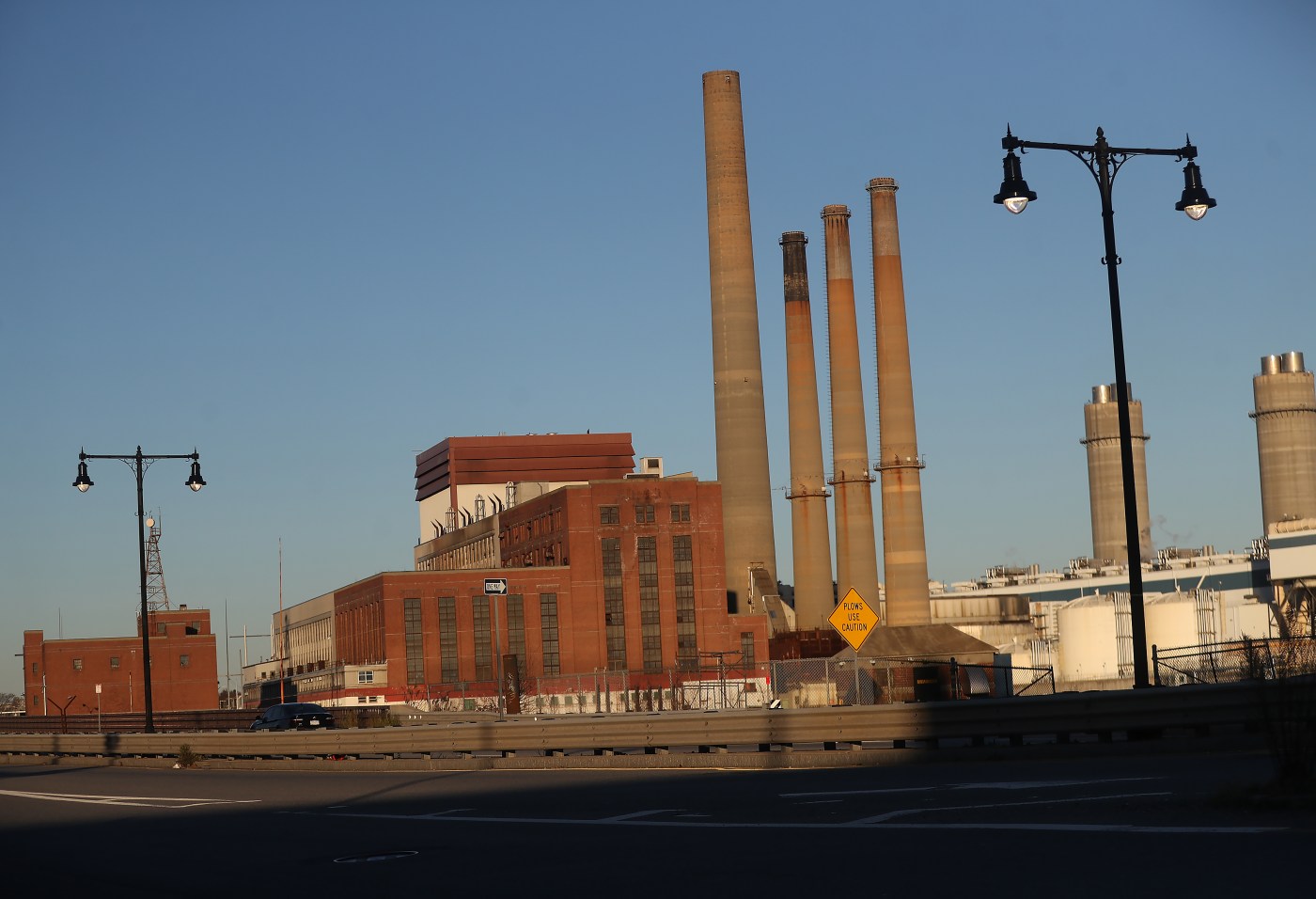
Lawmakers tucked the plan to free up 43 acres along the Mystic River for an arena and park into a multi-billion economic development bill, a move that marks a major win for the Kraft Group, which wants to move the New England Revolution from Foxboro to Everett.
The plan allows for the construction of a soccer stadium and waterfront park only if Everett and Boston can strike “community mitigation agreements,” bars public funds from being used for stadium construction, and requires private matching funds for any public infrastructure improvements.
The House did not originally include the Senate-backed soccer stadium language in its version of the economic development bill. But Rep. Aaron Michlewitz, his chamber’s budget chief and lead negotiator on the bill, said the House agreed to the plan because of those guardrails.
“I think it protects future conversations with the commonwealth itself, and then obviously protects the City of Boston in going forward in this discussion,” the North End Democrat told the Herald.
House and Senate lawmakers are expected to take final votes on the bill and send it to Gov. Maura Healey later this week. Healey, a first-term Democrat, previously expressed support for the soccer stadium in an August radio interview, saying she liked “the soccer stadium” when discussing the economic development bill.
The proposal has also drawn backing from Everett Mayor Carlo DeMaria but opposition from Boston Mayor Michelle Wu, whose administration has argued developing the land into a major attraction could bring congestion and foot traffic to the hub.
In a statement to the Herald, Wu said she was “grateful to the Legislature for recognizing the need for Boston to be included in discussions of this major proposal.”
“Thank you to our labor, climate, and transportation partners for their thoughtful advocacy through the legislative process. We look forward to learning the details of this proposal and working on behalf of Boston residents to represent community needs at this site,” Wu said.
The bill provides a path for a soccer stadium in Everett by removing the land’s designated port area classification, a change they argued is “expected to have positive environmental and economic impacts in surrounding communities as well as improve public transit connectivity.”
A spokesperson for the Kraft Group, which owns the New England Revolution, said they were not going to comment on the plan until the House and Senate take their final votes on the measure.
Sen. Sal DiDomenico, an Everett Democrat, said the stadium provision allows for a public process to move forward on a project that will help “my community clean up a power plant site that has been a health and environmental hazard for decades.”
“This will result in hundreds of millions of dollars in private investment, cleanup of a hazardous waste site, creating good paying union jobs, and opening our waterfront for the public to enjoy,” he said in a statement.
The economic development bill is expected to come up for a vote later this week, according to top Democrats.
The massive borrowing bill was filed more than three months after lawmakers finished formal lawmaking for the year in the early morning hours of Aug. 1. After meeting for roughly 23 hours straight, Democrats failed to agree on several closely watched bills.
But in the months since, the Legislature has steadily churned out deals on those measures that were left hanging.
Lawmakers must take a recorded vote on the borrowing portions of the economic development bill, a move that can only be done in a formal session. The Senate voted last month to allow for roll call votes and House Speaker Ron Mariano said he plans to call his members back into a formal meeting to advance the package.
The final votes on the job package are now set to take place after the Nov. 5 election, when some lawmakers know they will not be returning to the State House for another term and are considered “lame ducks.”
Michlewitz said he was not concerned about the timing of the votes.
“Even though we would have loved to have gotten this done earlier in the year, getting it done is more important than the actual timeline of when it got done,” he said.
The deal on the economic development bill also means that wide-ranging climate legislation is likely to come up for a final vote in the House after Mariano tied its fate to the jobs package rather than ask Democrats to trudge back into the State House to overcome a Republican blockade on the measure.
Talks on the economic development bill broke down at the end of formal lawmaking this summer after top House and Senate Democrats could not bridge divides over how much money to shuttle towards a life sciences investment program.
The compromise went with the House’s original plan — $500 million over ten years to reauthorize the initiative as opposed to the Senate’s pitch of $225 million over five years. Another $400 million will head to the Massachusetts Clean Energy Center to fund climate technology and offshore wind initiatives.
Sen. Barry Finegold, an Andover Democrat and lead negotiator of the proposal, said lawmakers need to be prudent about “making sure that we’re comfortable where the economics are in the state.”
“We have to be fiscally responsible, but we also want to be as big of champions for the biotech community,” he told the Herald.
The sweeping bill drops several key policies that some Democrats had championed, including a push to expand the juvenile justice system to include 18-year-olds. It was a policy that supporters hailed as a way to increase public safety but critics said could put a burden on the court system.
Another effort to grant local cities and towns the option to approve happy hours was left on the cutting room floor.
Finegold said there was “a lot of concern” about happy hours from the Massachusetts Restaurant Association and more conversations to be had on expanding the juvenile justice system.
“I just think it’s something that just needs so much work,” he said of the juvenile justice push. “I think it’s something that will have to come up during the legislative session.”

More Stories
Stocks fall on Wall Street after Powell says Trump trying to undermine the Fed’s independence
NEW YORK (AP) — Stocks are falling on Wall Street after Federal Reserve Chair Jerome Powell said the Department of...
Mientras Canadá busca reducir su dependencia de EEUU, su líder visitará China para reconstruir lazos
Por KEN MORITSUGU BEIJING (AP) — Un líder del gobierno canadiense está visitando China esta semana por primera vez en...
India y Alemania firman acuerdos para fortalecer lazos económicos y de seguridad
Associated Press NUEVA DEHLI (AP) — El primer ministro de India, Narendra Modi, y el canciller alemán, Friedrich Merz, se...
Pope Leo XIV meets with Venezuelan opposition leader María Corina Machado in a surprise audience
ROME (AP) — Pope Leo XIV met with Venezuelan opposition leader and Nobel Peace Prize winner María Corina Machado in...
Pope Leo XIV meets with Venezuelan opposition leader María Corina Machado in a surprise audience
ROME (AP) — Pope Leo XIV met with Venezuelan opposition leader and Nobel Peace Prize winner María Corina Machado in...
Malaysia and Indonesia become the first countries to block Musk’s Grok over sexualized AI images
By EILEEN NG and EDNA TARIGAN, Associated Press KUALA LUMPUR, Malaysia (AP) — Malaysia and Indonesia have become the first...