
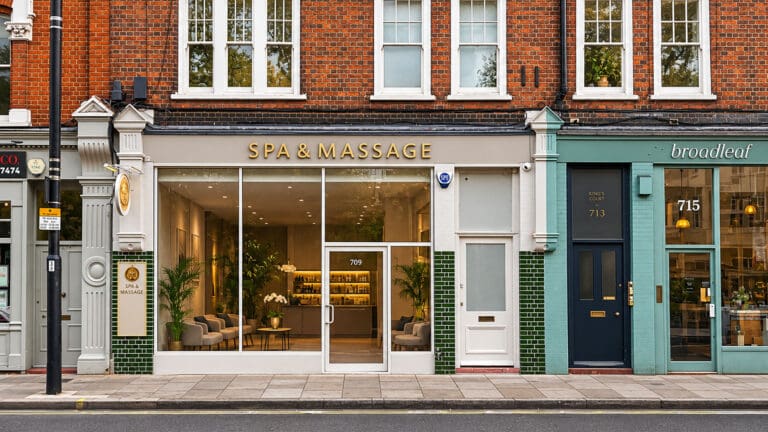
The $6.8 Trillion Health & Wellness Revolution: Why Spa & Massage Is Betting on the Future of Proactive Healthcare

A fundamental shift is taking place in the global healthcare economy. People are no longer simply asking how to live longer. They are asking how to live better.
According to the Global Wellness Institute, the global wellness economy reached $6.8 trillion in 2024 and is projected to reach $9.8 trillion by 2029. Global Wellness Institute
For private equity firms, institutional investors and family offices, this represents an extraordinary commercial opportunity, driven by a structural change in consumer behaviour.
An increasingly educated population is taking greater responsibility for its physical and mental wellbeing, incorporating exercise, nutrition, recovery and evidence-informed therapies into everyday life.
Healthcare is becoming more proactive.
And one London business is positioning itself at the centre of this transformation.
From Luxury to Lifestyle Healthcare
Delivering more than 4,000 massages every week across ten London locations, Spa & Massage is challenging traditional perceptions of massage therapy.
Its clients are not simply seeking relaxation. They are seeking tangible health outcomes: less pain, improved mobility, better recovery and greater physical and psychological wellbeing.
The company’s growing number of returning clients suggests that massage therapy is evolving from an occasional indulgence into a regular lifestyle commitment.
For founder Aly-Khan Thobani, this behavioural shift is fundamental to the company’s growth strategy.
Established in 2007, Spa & Massage has spent nearly two decades refining a business model that combines accessibility, experienced therapists, clinical guidance and a consistently premium experience.
What Does the Science Say?
A growing body of peer-reviewed research supports the therapeutic potential of massage across several areas of physical and psychological health.
Chronic neck pain: A randomised controlled trial involving 290 participants reported improvements in pain and neck-related disability. (Munk et al., 2025; PMID: 40875586). pubmed.ncbi.nlm.nih.gov
Shoulder pain: A systematic review and meta-analysis found significant improvements in shoulder pain following massage therapy. (Yeun, Journal of Physical Therapy Science, 2017). pubmed.ncbi.nlm.nih.gov
Depressive symptoms: A meta-analysis of 17 studies identified significant reductions in depressive symptoms among participants receiving massage therapy. (Hou et al., Journal of Clinical Psychiatry, 2010). pubmed.ncbi.nlm.nih.gov
Sports recovery: A systematic review found that sports massage can reduce post-exercise muscle soreness and modestly improve flexibility. (Davis et al., BMJ Open Sport & Exercise Medicine, 2020). pubmed.ncbi.nlm.nih.gov
Relaxation and sleep: A randomised controlled trial identified reduced physiological arousal and changes in brain activity associated with relaxation among poor sleepers. (Ntoumas et al., BMC Complementary Medicine and Therapies, 2025). pubmed.ncbi.nlm.nih.gov
While the strength of evidence varies between conditions, these findings demonstrate that massage therapy deserves serious consideration as a complementary healthcare intervention.
Bringing Clinical Expertise to the High Street
What differentiates Spa & Massage from conventional health & wellness businesses is its clinical infrastructure.
Under the guidance of its Medical Director, Professor Eyal Lederman, an internationally recognised authority in manual and musculoskeletal therapy, the company has incorporated clinical oversight into its operating model.
Experienced massage therapists receive guidance from physiotherapists, enabling treatments to be tailored to individual health objectives.
The ambition is to bridge the gap between traditional spa experiences and outcome-focused therapeutic care, making professional massage therapy accessible within London’s neighbourhoods.
Could Proactive health & Wellbeing Ease the Pressure on the NHS?
Millions of people experience everyday physical pain, muscular tension, stress, disrupted sleep and psychological fatigue.
These problems can significantly affect productivity, relationships and quality of life.
While conventional medicine remains essential, there is a compelling opportunity to expand access to complementary, non-pharmacological approaches that help people manage their health & wellbeing before problems escalate.
Could greater investment in proactive health & wellbeing eventually reduce some of the pressure on primary healthcare services?
It is a proposition that deserves further investigation.
Massage therapy is not a replacement for medical diagnosis, prescribed medication or specialist treatment. However, where clinically appropriate, it can form a valuable component of a broader approach to maintaining physical and mental health.
The Business of Solving a Human Problem
Alykhan Thobani is not a medical professional. He is an entrepreneur who recognised an increasingly important unmet consumer need: accessible, professionally delivered massage therapy that prioritises health outcomes.
His business philosophy is remarkably straightforward.
The most enduring companies are rarely built around the pursuit of revenue alone. They are built around solving meaningful problems for large numbers of people.
Spa & Massage addresses a universal human desire — to live with less pain, less tension and a greater sense of health & wellbeing.
Its commercial model benefits from recurring demand, customer loyalty, repeat purchasing and a scalable portfolio of neighbourhood clinics.
Unlike businesses dependent on novelty or discretionary luxury spending, Spa & Massage is seeking to establish itself within the everyday health routines of its clients.
That distinction could prove commercially significant.
As the global wellness economy continues to expand, the greatest opportunities may lie with businesses that successfully combine scientific credibility, exceptional consumer experiences and strong operational economics.
Spa & Massage is building a business around precisely that intersection.
Its proposition is ultimately not about selling massages. It is about improving the quality of human life — and building a scalable business in the process.


More Stories
How UK SMEs Can Reduce Business Travel Costs Without Cutting Comfort
For growing businesses, every unnecessary expense reduces money available for other priorities. Yet cutting travel budgets too aggressively can create...
UK trails China on industrial autonomy, Hexagon survey finds
Only 16 per cent of UK companies say they operate at high or full levels of autonomy, the lowest figure...
Save some for us, Gordon: Gordon Ramsay, Top Gear and key person risk
Every primary school in England has one. The father at sports day who enters everything. He is in the dads’...
What Is SaaS SEO? A Guide Plus the Best Agencies to Hire
Success is measured in qualified trials, demos and pipeline rather than raw traffic. This guide explains what makes it different...
How much does a voice over cost in the UK in 2026? Studio fees, usage and what to budget
Put the same read into a paid online advert and the card adds a usage fee of 400% of that...
Topic, country, traffic, authority: the best link building platforms to filter publishers on real data
When managing off-site campaigns across several regions, relying on basic spreadsheets or outdated metrics often leads to poor link placements...