
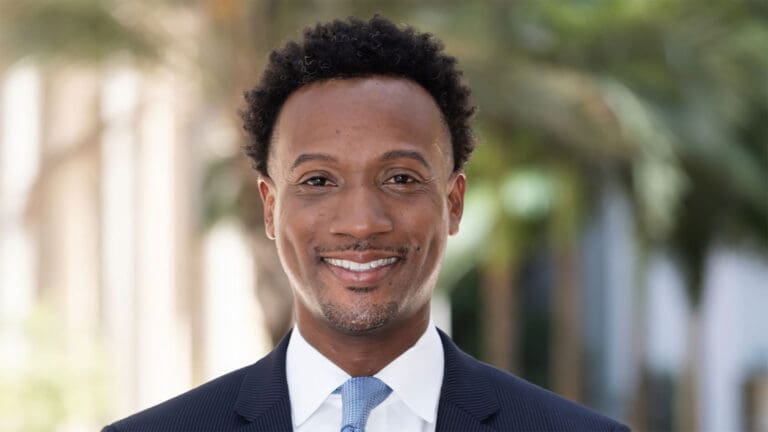
Torey Alston on Why College Enrollment Means Little Without Graduation and Career Opportunities

Before taking the top position at Broward College, he had managed transportation agencies, worked in state government, overseen economic opportunity programs, and chaired one of the largest school districts in the country.
What connects these seemingly different roles is his experience managing public institutions and understanding how their decisions affect the people who depend on them.
The Broward County native has spent nearly two decades working across government, transportation, and education. Most recently, he served as the eighth President and CEO of Broward College from February 2025 through August 2026, bringing an operational perspective to an institution serving more than 55,000 students.
A Public Service Education That Started at Home
Long before entering government, Torey Alston was familiar with the demands of public service. His father (deceased), Louis Alston, was a police officer, and his mother, Bobby Smith Alston, worked as a social worker.
Growing up in Broward County, Alston attended Blanche Ely High School in Pompano Beach before enrolling at Florida Agricultural & Mechanical University (FAMU).
He earned a bachelor’s degree in Business Management in 2005 and an MBA in 2007. Shortly afterward, he entered state government as Executive Director of Florida’s Office of Supplier Development and Office of Efficient Government.
The position introduced him to the complicated relationship between government spending, business participation, and public accountability. It also marked the beginning of a career spent examining how institutions operate.
The Decisions Nobody Sees Still Matter
In 2010, Alston became Chief of Staff to the Broward County Board of County Commissioners. He later joined Miami-Dade County Public Schools as Executive Director of the Office of Economic Opportunity.
His responsibilities took him to Gainesville in 2015, where he served as Equal Opportunity Director and ADA Coordinator. In 2018, he returned to Miami-Dade County Public Schools as Economic Opportunity and Compliance Officer.
These roles involved policies and administrative decisions that often receive little attention outside government offices. Yet procurement practices, accessibility standards, and compliance requirements can determine who gets access to services and business opportunities.
Alston’s career increasingly centered on making large organizations more effective while understanding the practical consequences of their decisions.
From Toll Roads to the Boardroom
In January 2019, Alston became Chief of Staff at the Florida Department of Transportation, serving in a role comparable to chief operating officer.
Two years later, he became Chief Executive Officer of the Greater Miami Expressway Agency. He also served as President of Transportation and Infrastructure at Indelible Solutions from August 2022 through August 2023.
Transportation presented a different set of challenges from his earlier work. Infrastructure projects require long-term investment, coordination across agencies, and decisions that can affect communities for decades.
At the same time, Alston remained involved in education. He served as Chairman of the School Board of Broward County from August 2022 through November 2024.
His experience across transportation and education gave him a rare combination of operational management, public governance, and institutional oversight.
The Unlikely Road Back to Broward County
In February 2025, Alston became the eighth President and CEO of Broward College.
The appointment brought him back to the community where he had attended high school, this time leading one of Florida’s largest state colleges.
During his tenure, Broward College reached its highest enrollment in five state reporting years. The institution also received its first Purple Star Campus designation, recognizing its support for veterans and military-connected students.
Broward College was named among the Aspen Institute’s Top 200 community colleges nationwide and secured $11.7 million in state appropriations toward a new health sciences and nursing facility. An additional $1 million came through federal community project funding.
These developments reflected several priorities facing public colleges, including enrollment, student support, workforce preparation, and long-term facility investments.
A Full Classroom Doesn’t Tell the Whole Story
For Alston, growing enrollment is important, but it doesn’t necessarily mean an institution is achieving everything it should.
“The question for higher education is no longer simply how many students we enroll,” Alston said. “We also have to ask whether students complete, whether our programs connect to opportunity and whether students and communities are demonstrably better because we are there.”
His perspective connects higher education with the economic opportunity programs he managed earlier in his career, ultimately leading to a high-wage salary.
He believes colleges need to examine whether their programs help students graduate, find employment, and improve their financial circumstances. That also means reviewing academic offerings and directing resources toward fields with strong workforce demand.
“Access without completion and job placement is an unfinished promise,” Alston said. “Students are investing their time, money and trust in higher education institutions. They should be better off because they came to us.”
Why Standing Still Can Be the Bigger Risk
Alston has also spoken about the pressure colleges face to modernize while managing limited resources.
Artificial intelligence is one area he believes institutions should examine closely, particularly its potential applications in recruitment, student support, workforce forecasting, and administrative operations.
But adopting new technology is only one part of the challenge. Colleges must also make decisions about which programs to expand, where to invest, and how to prepare students for changing employment needs.
“You cannot cut your way to relevance,” Alston said. “Institutions have to continuously improve, invest strategically and make sure resources are aligned with the opportunities of tomorrow.”
A Career That Refuses to Stay in One Lane
Since leaving Broward College in August 2026, Alston has continued focusing on higher education, workforce development, and institutional effectiveness.
His involvement in community organizations also reflects his long-standing ties to the State of Florida. He has served on the boards of Florida A&M University and the Boys & Girls Clubs of Broward County, which inducted him into its Hall of Fame in 2025.
In 2026, he was recognized as Father of the Year by the Greater Fort Lauderdale Chapter of Jack and Jill of America. Outside his professional life, he enjoys family time, fishing, bowling, and traveling.
Alston’s career demonstrates how experience in one public sector can inform leadership in another. His work has moved from government contracting to transportation infrastructure and eventually higher education, with each position adding a different perspective on how institutions serve their communities.
“The institutions that thrive will not simply defend what higher education has always been,” Alston said. “They will have the courage to imagine what it needs to become for the students, employers and communities actually in front of us.”


More Stories
Barry Gallant: What Versatility Is Worth in the Trades
He is not the owner of a paving company or the name on a fleet of trucks. He is a...
Best Website Builder for Therapists: 5 Alternatives to an EHR’s Built-In Site
If you want more bookings, you need the best website builder for therapists in 2026: one that marries HIPAA peace...
George Stanley on the Call He Makes When a Finished Job Doesn’t Hold Up
In this interview, he talks about one of the harder calls a contractor has to make: what to do when...
UK Businesses Face Continued Uncertainty Over Inflation and Interest Rates
Inflation increased in September 2026 to 3.5%, and the core CPI (annual) rose from 2.6% in August to 2.8%. Now...
Royal Mail set to miss first-class delivery target for fourth year
Royal Mail is on course to miss its first-class delivery target for a fourth consecutive year after delivering 82.5 per...
Tens of thousands of UK fridges secured from hackers in secret drive
Tens of thousands of fridges and freezers at UK supermarkets, warehouses, restaurants, petrol stations and stadiums have been secured against...