
Global Trade Is Not Ending — It Is Being Reshaped by Geopolitical Competition

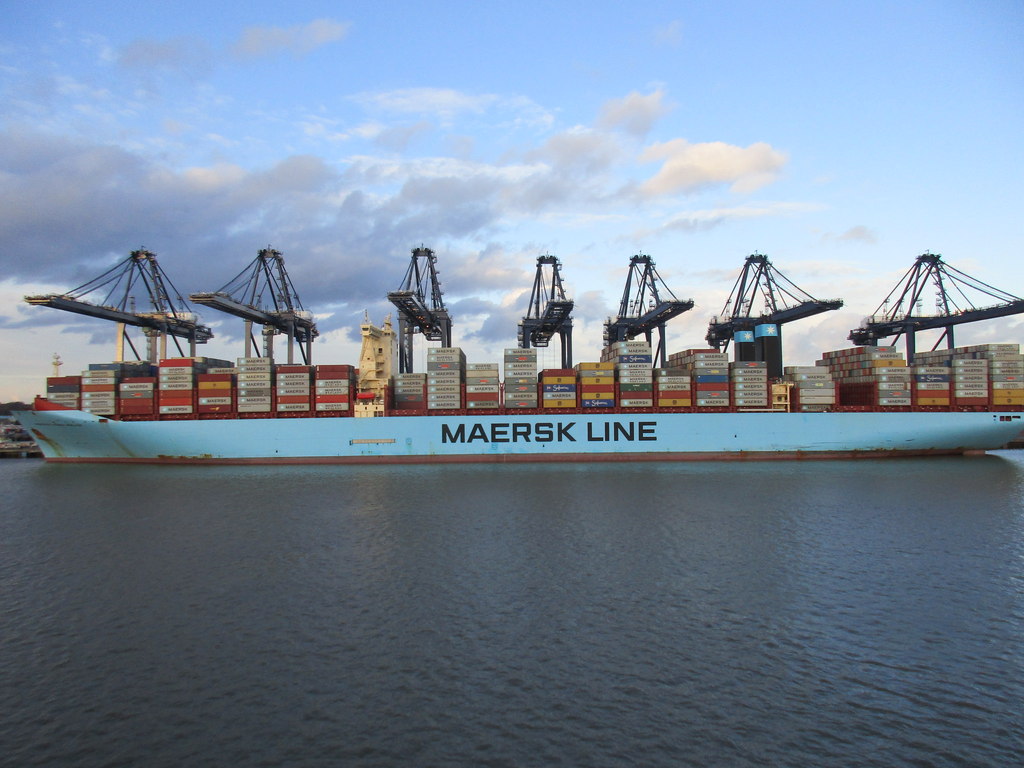
Seaports and container terminals remain essential to international
commerce, connecting manufacturers, suppliers and consumers across
global markets. Photo: Jonathan Thacker / Geograph Britain and Ireland /
Wikimedia Commons.
Licensed under
CC BY-SA 2.0.
commerce, connecting manufacturers, suppliers and consumers across
global markets. Photo: Jonathan Thacker / Geograph Britain and Ireland /
Wikimedia Commons.
Licensed under
CC BY-SA 2.0.
Globalisation is not disappearing. Instead, governments and businesses are changing how they trade, where they invest and which partners they consider strategically reliable. This shift is creating new opportunities, but it is also making international business more complicated.
For decades, companies organised their supply chains around cost, efficiency and access to international markets. Manufacturers sourced components from different countries, built products wherever production was most competitive and sold them to customers around the world.
That model has not disappeared. International trade remains a central part of the global economy. However, geopolitical tensions, industrial policies, export controls and concerns about economic security are changing the decisions made by governments and multinational companies.
The result is a new phase of globalisation: one in which commercial efficiency must increasingly be balanced against political risk and strategic security.
Trade is growing, but the geography is changing
The scale of international trade remains remarkable. According to UN Trade and Development (UNCTAD), global trade reached a record value of approximately $35 trillion in 2025. Yet the organisation’s 2026 Trade and Development Report describes a more selective trading environment, in which governments increasingly use trade, investment and technology policies to protect strategic interests.
One important development is the changing relationship between major economies. UNCTAD reports that trade between the United States and China has fallen by more than 20% since 2024. At the same time, East Asian economies have expanded trade connections with both China and North America.
This does not mean that companies are abandoning international suppliers. Rather, businesses are reconsidering the risks of depending too heavily on a single country, supplier or transport route.
From lowest cost to strategic resilience
Traditional supply-chain management focused heavily on reducing production costs and maintaining efficient inventories. Recent disruptions have encouraged companies to place greater value on resilience.
Businesses are increasingly considering supplier diversification, additional inventory, alternative transport routes and production facilities in different countries. These decisions can increase short-term costs, but they may reduce the financial damage caused by sudden trade restrictions, political tensions or logistics disruptions.
For example, a manufacturer that depends on one location for a critical electronic component may face serious problems if exports are restricted or transport routes are interrupted. Having qualified alternative suppliers can provide greater security, even if those suppliers are not the cheapest.
However, diversification is not simple. New suppliers must meet technical standards, production requirements and delivery schedules. Moving production also requires investment, skilled workers and reliable infrastructure.
Industrial policy is becoming a competitive tool
Governments increasingly view certain industries as essential to economic and national security. Semiconductors, batteries, artificial intelligence infrastructure, renewable energy equipment and critical minerals have become important areas of industrial competition.
Public subsidies, tax incentives, investment screening and export controls can influence where companies build factories and which markets they can serve. These policies may strengthen domestic industrial capacity, but they can also create uncertainty for international investors.
When several governments support similar industries at the same time, companies may benefit from incentives while facing a more complicated regulatory environment. Businesses must understand not only market demand, but also the political and legal conditions governing their supply chains.
Developing economies: opportunity or exclusion?
Changes in global sourcing can create opportunities for emerging economies. Countries with competitive labour costs, improving infrastructure, stable institutions and access to major markets may attract new manufacturing investment.
But attracting factories is only the first step. The long-term economic benefits depend on whether local companies can become suppliers, workers can develop advanced skills and domestic industries can move into higher-value activities.
UNCTAD highlights a major concern: participation in global value chains does not automatically mean that a country captures a large share of the value created. An economy may assemble products or export raw materials while most profits, intellectual property and advanced services remain elsewhere.
Governments therefore need policies that support education, technology transfer, local suppliers, infrastructure and access to finance. Without these foundations, new investment may create limited connections with the wider domestic economy.
Trade rules still matter
As trade becomes more politically sensitive, predictable international rules become even more valuable. Companies need clarity about tariffs, customs procedures, product standards and market access.
Regional trade agreements can help businesses diversify markets and reduce some barriers. However, different rules of origin, certification requirements and technical standards can also increase administrative costs, especially for smaller exporters.
The World Trade Organization remains an important forum for international trade cooperation. Its role is particularly relevant when countries need common rules and mechanisms to address trade disputes. Maintaining confidence in multilateral cooperation can help prevent individual trade conflicts from escalating into wider economic disruption.
What businesses should do next
Companies operating internationally should treat geopolitical risk as a normal part of strategic planning. This means regularly reviewing supplier concentration, identifying alternative sources of critical materials and understanding the trade policies of important markets.
Businesses should also examine the financial consequences of changing supply chains. Moving production can require substantial investment, and the benefits may take years to materialise. Decisions should be based on a realistic assessment of total costs, delivery risks and market access.
For smaller companies, partnerships with logistics providers, trade-finance institutions and experienced exporters can help reduce the complexity of entering new markets.
The next phase of globalisation
The future of global trade is unlikely to be defined by a complete return to domestic production or by the disappearance of international supply chains. International commerce remains too important to businesses and consumers.
Instead, globalisation is becoming more selective. Companies will continue to seek competitive suppliers and customers abroad, while governments will pay closer attention to strategic industries and economic security.
The countries and businesses most likely to benefit will be those that combine international openness with resilience, productivity and the ability to adapt. In this changing environment, competitiveness will depend not only on producing at the lowest cost, but also on building reliable partnerships and creating greater value at home.
Sources and further reading
UNCTAD — Trade and Development Report 2026: The Geoeconomics of Development
UNCTAD — Global growth slows to 2.6%, 9 October 2026
World Trade Organization — Global Trade Outlook and Statistics
Looking Times — Informed Today. A More Connected Tomorrow.

More Stories
The AI Investment Boom: Who Will Capture the Economic Benefits?
Data centres provide the computing infrastructure that supports artificial intelligence, cloud services and the digital economy. Photo: Helpameout / Wikimedia...
How to Recover a Disabled Instagram Account? Tips and Process
Losing access to your personal or business Instagram account can disrupt personal connections, professional outreach, or years of memories. Instagram...
How Payment Processing Fees Affect Ecommerce Profit Margins
Card fees take a larger share of an online store’s profit than its revenue line suggests. Publicly traded general retailers...
Ukraine, Russia and Europe: Why the Future of European Security Is at a Turning Point
European diplomacy faces important questions about security, peace and international cooperation. The war in Ukraine continues to shape Europe's political...
COP31: Can World Leaders Turn Climate Promises into Real Action?
Renewable energy investment is central to the international effort to reduce greenhouse gas emissions. Climate change has become one of...
Who Controls the Machines? The Global Debate Over AI-Powered Autonomous Weapons
Global Affairs and Technology | 16 November 2026 Artificial intelligence is creating new questions about human control, responsibility and the...