
The AI Investment Boom: Who Will Capture the Economic Benefits?

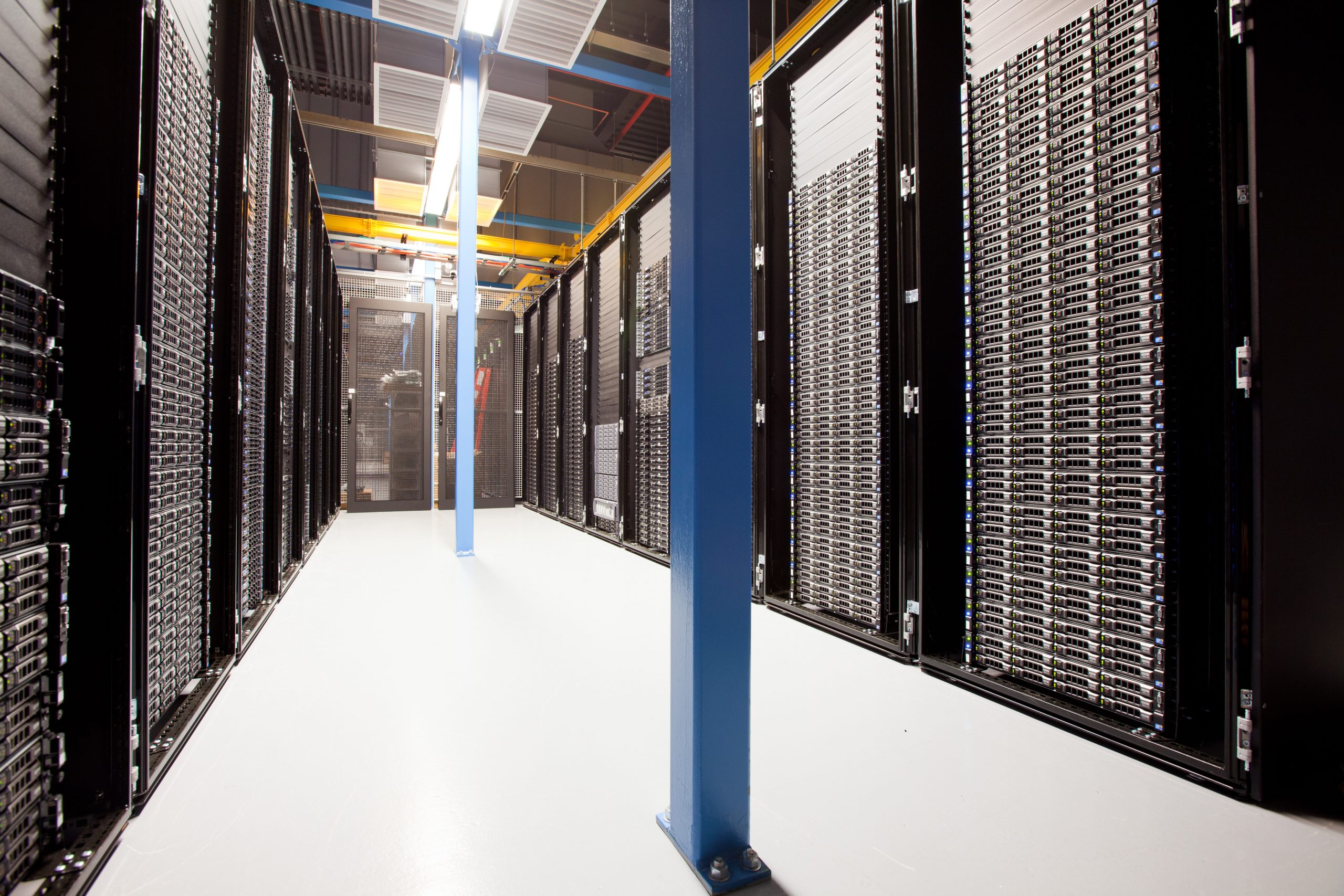
Data centres provide the computing infrastructure that supports
artificial intelligence, cloud services and the digital economy. Photo: Helpameout / Wikimedia Commons —
Original image.
Licensed under
CC BY-SA 3.0.
artificial intelligence, cloud services and the digital economy. Photo: Helpameout / Wikimedia Commons —
Original image.
Licensed under
CC BY-SA 3.0.
Artificial intelligence is attracting extraordinary investment, transforming corporate strategies and creating demand for new infrastructure. But the central economic question is no longer simply how powerful AI can become. It is whether the returns will justify the cost — and how widely the benefits will be shared.
Artificial intelligence has moved from a specialist technology into the centre of global business competition. Major technology companies are investing in data centres, advanced chips, cloud computing and AI models. Governments are also treating AI infrastructure as a strategic asset that could influence future productivity and economic competitiveness.
This investment cycle is creating opportunities across the economy. Semiconductor producers, energy companies, construction businesses and software developers may all benefit from the expansion. However, the scale of spending raises important questions about financial risk, electricity supply and the distribution of economic gains.
The investment cycle is becoming enormous
The International Energy Agency’s 2026 report, Powering Artificial Intelligence, describes a rapid expansion of investment in data centres. It estimates that the world’s largest data centre operators are set to spend more than $700 billion in capital expenditure during 2026, mostly on developing new data centres.
This investment reflects expectations that demand for AI computing, cloud services and digital infrastructure will continue to grow. Companies are competing to secure computing capacity because access to advanced infrastructure may become a source of competitive advantage.
However, capital expenditure is not the same as economic value created. Building a data centre requires large upfront investment, while the financial returns depend on future demand, utilisation rates, operating costs and the prices customers are willing to pay.
AI could raise productivity — but the gains are not automatic
One of the strongest arguments for AI investment is its potential to improve productivity. Businesses can use AI tools to assist with research, customer service, document processing, software development, logistics and data analysis.
If these tools reduce the time required to complete tasks, companies may produce more with the same workforce and capital. AI may also help workers make better decisions by identifying patterns in large amounts of information.
But productivity improvements depend on how organisations introduce the technology. Companies may need to redesign workflows, train employees, improve data quality and change management practices. Simply purchasing AI software does not guarantee better performance.
There is also a difference between technical capability and measurable economic impact. A system may perform impressive tasks in a demonstration but deliver limited savings in a real business environment if integration costs are high or errors require substantial human supervision.
Who captures the value?
The economic benefits of AI may be distributed unevenly. Companies that control advanced chips, cloud infrastructure, intellectual property and leading AI models may capture a significant share of the profits.
Businesses that adopt AI successfully may also gain through lower costs or improved services. However, smaller firms can face barriers such as expensive software, limited technical expertise, data constraints and dependence on a small number of technology providers.
UNCTAD’s 2026 Trade and Development Report raises a related concern about the distribution of value in AI-related production. Its analysis of an advanced AI server rack finds that a large share of the traced value added is captured as post-tax profits, while workers receive a much smaller share.
This highlights an important distinction: participating in the AI supply chain does not necessarily mean capturing a large share of its economic value. Countries and businesses need technological capabilities, skilled workers and stronger positions in high-value activities if they want to benefit more fully.
The energy and infrastructure constraint
AI is often described as a digital technology, but its expansion depends on physical infrastructure. Data centres require electricity, cooling systems, buildings, networking equipment and reliable connections to power grids.
The IEA warns that rapid data centre expansion is placing pressure on electricity networks and supply chains for key electrical equipment. Grid connection queues, limited network capacity and slow permitting can delay projects.
This creates an unusual economic challenge. A company may have the finance, land and computing equipment required for a new data centre but still be unable to operate it at the planned scale because sufficient electricity is not available.
Energy infrastructure is therefore becoming part of the competitive landscape for AI. Regions with reliable power, modern grids and efficient permitting processes may attract more investment.
Could the AI boom create financial risks?
Large investment cycles often involve uncertainty about future demand. If companies build computing capacity faster than customers adopt AI services, the industry could face excess capacity, falling prices and weaker returns.
Another risk is concentration. When a small number of companies account for a large share of investment and market expectations, financial markets can become more sensitive to changes in their earnings, valuations and spending plans.
Investors should distinguish between the long-term potential of AI and the financial attractiveness of individual companies. A technology can transform the economy while some businesses investing in it still generate disappointing returns.
Capital expenditure should therefore be assessed against realistic revenue expectations, depreciation costs, energy prices and the possibility that technology will change faster than infrastructure can be recovered financially.
What this means for Europe and emerging economies
Europe has an opportunity to strengthen its position in AI through research, industrial applications, cloud infrastructure and specialised technology. Its established industrial base could support the use of AI in manufacturing, engineering, healthcare and energy management.
However, competitiveness will depend on access to investment, computing capacity, skilled workers and reliable electricity. Regulatory clarity and cooperation between research institutions, companies and governments will also matter.
Emerging economies face a different set of challenges. AI could improve access to services, support agriculture and help businesses become more efficient. Yet countries without affordable computing infrastructure, digital skills and reliable electricity may struggle to capture the benefits.
Investment in education, connectivity and local technology capabilities will be essential. International partnerships can help, but long-term development requires more than simply importing AI services.
How businesses should approach AI investment
Businesses should begin with clear commercial problems rather than adopting AI simply because it is fashionable. The most useful projects are those where the expected benefits can be measured against implementation and operating costs.
Management teams should assess data security, reliability, employee training, supplier dependence and the need for human oversight. They should also monitor whether productivity gains are improving the company’s financial performance rather than merely increasing technology spending.
For investors, it is important to examine the entire value chain. Semiconductor manufacturers and data centre operators may have different risks from software companies and businesses using AI to improve their operations. Revenue growth alone does not establish that an investment is profitable or sustainable.
The real test is economic value
Artificial intelligence has the potential to become a general-purpose technology with effects across many industries. But the economic outcome will depend on more than technological breakthroughs.
The next phase will test whether large infrastructure investments translate into sustainable profits, measurable productivity gains and wider economic opportunity. It will also test whether electricity networks, education systems and public policies can adapt quickly enough.
The AI boom should therefore be judged not only by the amount of money invested or the speed of technological progress, but by the value it creates for businesses, workers and society.
The winners may not simply be the companies that spend the most. They may be the organisations and countries that use AI effectively, manage its costs and convert technological progress into lasting economic productivity.
Sources and further reading
International Energy Agency — Powering Artificial Intelligence (2026)
International Energy Agency — Energy and AI
UNCTAD — Trade and Development Report 2026
Looking Times — Informed Today. A More Connected Tomorrow.


More Stories
Global Trade Is Not Ending — It Is Being Reshaped by Geopolitical Competition
Seaports and container terminals remain essential to international commerce, connecting manufacturers, suppliers and consumers across global markets. Photo: Jonathan Thacker...
How to Recover a Disabled Instagram Account? Tips and Process
Losing access to your personal or business Instagram account can disrupt personal connections, professional outreach, or years of memories. Instagram...
How Payment Processing Fees Affect Ecommerce Profit Margins
Card fees take a larger share of an online store’s profit than its revenue line suggests. Publicly traded general retailers...
Ukraine, Russia and Europe: Why the Future of European Security Is at a Turning Point
European diplomacy faces important questions about security, peace and international cooperation. The war in Ukraine continues to shape Europe's political...
COP31: Can World Leaders Turn Climate Promises into Real Action?
Renewable energy investment is central to the international effort to reduce greenhouse gas emissions. Climate change has become one of...
Who Controls the Machines? The Global Debate Over AI-Powered Autonomous Weapons
Global Affairs and Technology | 16 November 2026 Artificial intelligence is creating new questions about human control, responsibility and the...