
Packaging makers warn 65 per cent PET plastic tariff will raise costs

British packaging manufacturers have warned that a proposed 65 per cent tariff on imports of polyethylene terephthalate (PET) could leave a subsidiary of the Mexican multinational Alpek in control of domestic supply and push up costs for food producers and consumers.
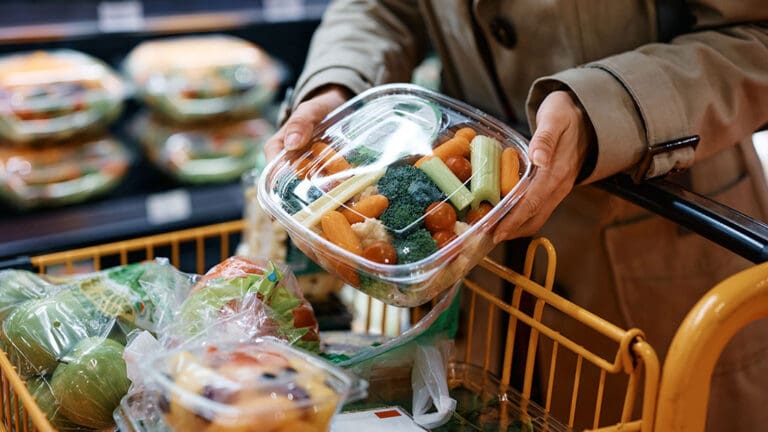
The Trade Remedies Authority (TRA), the independent body that investigates trade disputes, has recommended the duty on PET, a clear plastic used in food packaging, including water bottles and fruit punnets, and in clothing.
The tariff would apply to virgin and recycled PET imported once the industry has reached a quarterly quota of about 48,000 tonnes. If approved by the business secretary, the provisional safeguard would start on 1 December and last up to 200 days while the TRA completes its investigation.
The TRA acted on an application from Alpek Polyester UK, which runs a plant near Redcar on Teesside. The company argued that rising imports “have been and are causing serious injury to UK producers of the goods”.
Alpek said in its submission that it is the only British manufacturer of virgin PET, made entirely from new petrochemicals rather than recycled material. The TRA accepted this, noting other domestic producers of recycled PET.
UK imports of PET were worth more than £300m in 2025, the authority said. The case is the first new safeguard investigation opened by the TRA since it was established in 2021. A safeguard is a temporary trade restriction applied when a surge of imported goods causes or threatens serious injury to UK producers.
Manufacturers that rely on imported PET argue that the measure would leave them dependent on Alpek, which they say cannot meet the industry’s needs.
“Now all these businesses like ours, all these other packaging producers, are going to face this punitive tariff or have to buy from Alpek, who can’t even supply all the polymer we need, who can charge whatever they want now,” said Stuart Kershaw, managing director of A&K Ecofilm, a Bradford-based manufacturer of plastic sheet used in packaging.
“All it’s going to do is lead to big price rises on packaging, which will lead to food inflation and then, surprise, there’s a cost of living crisis.”
Kershaw said A&K would face an additional £120,000 a month in costs at its current import levels if the full 65 per cent duty were introduced. “If this came in and Alpek had another catastrophic failure, at today’s levels … we would have to import 250 tonnes [of PET] a month. That would wipe us out.”
According to its latest filings with Companies House, Alpek’s Redcar plant had a prolonged machinery shutdown between October 2024 and March 2025, during which it declared force majeure, a clause excusing it from supply contracts.
The director of another packaging company, who declined to be named, said the proposal “could be horrendously damaging for the UK’s packaging value chain” if implemented in its current form. The director said manufacturers’ higher costs “are likely to flow through to food and beverage producers and, eventually, consumers”.
“As currently written, the draft determination appears to favour a single domestic producer at the expense of a much broader manufacturing and recycling sector that supports hundreds of businesses, thousands of jobs and significant investment in the UK’s green economy,” the director added.
Alpek Polyester UK recorded a loss before tax of £8.1m in 2025, up from £4.1m in 2024, which it attributed to market challenges and the shutdown. It employs about 100 people.
The company says prices are artificially low because of “persistently high” imports from low-cost countries. “The European PET industry faced another challenging year, namely reduced consumer demand, more recycle PET conversion and an excess of global virgin PET capacity,” it said in accounts published in June. It added that the shutdown cost it sole supplier status with two main customers.
A spokesperson for the TRA said that “increased quantities of imported PET have caused serious injury to UK production” and that it was recommending the provisional duty “to prevent further injury” while the investigation continued.
“We are also recommending a tariff-free quota to guarantee supply,” the spokesperson added. “The duty would only apply on imports that exceed that quota.”
The TRA is accepting evidence until 22 November.

More Stories
Overseas takeovers of UK businesses up 70 per cent in two years
The number of UK businesses bought by overseas buyers rose 70 per cent in two years to 811 in 2025,...
Shadow AI: It Could Be Your Biggest Threat
What is Shadow AI? It’s the use of AI tools within a business that have not been authorised or approved...
The 51% Club names HSBC UK as its regional banking partner
The 51% Club, a national network for female founders and leaders, has named HSBC UK as its Regional Banking Partner,...
Marking Military Service at a Small Business
When an owner does want to mark that service, the gesture matters more than the budget. Some firms commission personalized...
Why Fast and Secure Checkout Matters for Ecommerce Success
The shopper closes the tab before the shipping cost appears. Nothing in the store’s sales report records the reason, so...
Why embedded DevSecOps security pays off for fast-growing startups
Software startups live in a cut-throat industry where the ability to innovate rapidly is critical to growing their revenue base....