
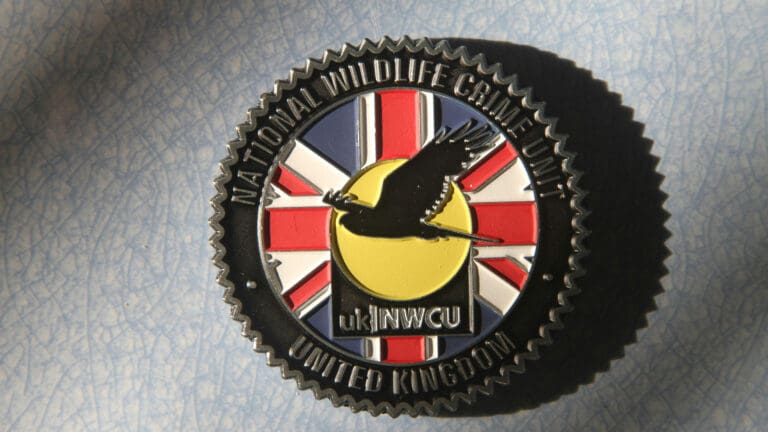
Marking Military Service at a Small Business

When an owner does want to mark that service, the gesture matters more than the budget.
Some firms commission personalized military keepsakes from specialist makers such as ChallengeCoins4Less, a Florida-based company that designs custom coins around unit symbols and branch insignia. Others start with a conversation and a line in the staff handbook. Both have a place.
How Many of Your Staff Might Have Served?
More than most owners assume. The Office for National Statistics counted 1,481,000 veterans in England and Wales aged 16 and over in mid-2025. Of those, 1,388,200 lived in England and 92,800 in Wales.
Service is not only a regular-army story. The same bulletin found that 74.4% of veterans served as regulars, 20.5% as reservists and 5.1% as both. That reserve share is the one employers miss, because a reservist can work for you for years without it ever coming up.
Geography matters too. Veterans make up 11.4% of residents aged 16 and over in Gosport, 9.9% in North Kesteven and 8.4% in Fareham. In Newham the figure is 0.4%. A firm near a garrison town is far more likely to employ people with service records than one in central London.
The age profile shapes who is in your workforce. Over a fifth of veterans in England, 21.5%, are aged 85 or over. Many of them served under Peacetime National Service, which ended in 1963. So the veterans on a payroll today are a younger slice of that total.
The ONS adds a caution worth repeating: its figures are likely to underestimate the total. The simplest way to find out is to ask, in a voluntary question at onboarding or in a staff survey.
What Does Signing the Armed Forces Covenant Involve?
The Covenant is a public promise that people who serve or have served, and their families, are treated fairly. The Covenant signing guidance says any organisation can sign, public, private or voluntary, and of any size. For a small firm, the process breaks down into a few steps:
Read the core principles and decide what your business can realistically offer.
Write your own pledge, in as much or as little detail as suits you.
Download the pledge template or complete the online form.
Use the example pledge bank if you are unsure what to commit to.
The scale is no longer niche. John Lewis and Partners became the 10,000th signatory, and Northumberland Community Bank later became the 12,000th. Every local authority in mainland Great Britain has pledged, along with six councils in Northern Ireland. Signing also gives a firm the chance to be recognised through the Employer Recognition Scheme award.
When Does a Keepsake Feel Right?
A pledge sets the policy. A keepsake marks a person. The two work best together, and neither should feel like a marketing exercise.
Good moments tend to be personal and specific. A reservist returning from a long deployment is one. So is a long-serving veteran reaching a work anniversary, or a team marking Remembrance together in November. The object matters less than the fact that someone noticed. A handwritten card from the owner can carry as much weight as anything engraved.
Timing is the other half. A gesture made in front of the whole office can embarrass someone who keeps their service private. Asking a line manager first, and keeping the moment small, avoids most of the awkwardness.
The usual staff-gift questions still apply. Welcome packs for new starters work because they show thought before the first day. A service keepsake works for the same reason, provided it is about the colleague rather than the company logo.
Which Moments Suit Which Gesture?
Not every occasion needs an object. The table below is a starting point for a small firm.
Moment
Proportionate gesture
Watch out for
A reservist returns from deployment
A quiet welcome back and a keepsake
Making it a public show they did not ask for
A veteran’s work anniversary
A personal note, perhaps a numbered coin
Turning service into a branding moment
Remembrance in November
Time and space to attend a service
Pressure on anyone to take part
Signing the Covenant
A short note to all staff
Promising support the firm cannot deliver
A veteran leaves the business
A thank-you that mentions both careers
Forgetting the civilian years they gave you
How Do You Commission One Without Getting It Wrong?
Custom coins and medallions are small runs of a made-to-order object, so the brief carries most of the risk. A few checks keep it on track:
Ask the colleague first, because some people prefer their service kept private.
Get permission before using any regimental badge, crest or association logo.
Check the artwork on a proof, and sign it off only when names and dates are right.
If the maker is overseas, confirm delivery times and any import charges in advance.
Keep the wording plain: a name, the occasion and a date usually say enough.
Budget is the last question, not the first. As with branded gifts generally, the value lies in why you give, not in what you spend.
Service Noticed, Not Paraded
Small firms do not need a programme to recognise military service. They need to know who has served, a pledge they can keep and the judgement to mark the right moments. A keepsake can be part of that, as long as it honours the person rather than the firm.
Frequently Asked Questions
Does a Small Business Have to Sign the Armed Forces Covenant?
No. Signing is voluntary, and organisations of any size can choose to pledge. Each signatory writes its own pledge to suit its circumstances.
How Do I Find Out Which Staff Are Veterans or Reservists?
Ask, and make answering optional. A voluntary question at onboarding or in a staff survey is the simplest route, and it respects people who prefer not to say.
Are Military Coins Only for Serving Personnel?
No. Firms also use custom coins to mark a colleague’s service, a team milestone or a company anniversary. The design should fit the occasion and the person receiving it.
Can a Firm Use a Regimental Badge for a Gift?
Only with permission. Ask the regiment, corps or association that owns the badge before including it, and keep a record of their reply.

More Stories
Why Fast and Secure Checkout Matters for Ecommerce Success
The shopper closes the tab before the shipping cost appears. Nothing in the store’s sales report records the reason, so...
Why embedded DevSecOps security pays off for fast-growing startups
Software startups live in a cut-throat industry where the ability to innovate rapidly is critical to growing their revenue base....
California sues AI giant over rogue attacks
Attorney General Rob Bonta has accused OpenAI of endangering the public by failing to implement adequate safeguards California has sued...
Domino effect: why the red flag over Nvidia isn’t about the ‘honeypot’
RT breaks down why we should be skeptical of the latest US ‘success story’ that morphed into a scandal The...
Karren Brady and Nathan Thompson launch sports agency Brady Thompson
Baroness Karren Brady has launched Brady Thompson, a sports and entertainment agency co-founded with Nathan Thompson, who worked alongside her...
AI fashion design platform Fermat raises $8m to open New York office
Fermat, the Barcelona-based AI platform for the fashion industry, has raised $8m in seed funding to open an office in...