
What to Know Before Switching to eSIM Singapore for Mobile Data

With some devices, you can download a SIM profile and subscribe to a mobile plan without ever owning a SIM card. It makes it easier to have multiple mobile connections at once than to be swapping around tiny SIM cards.
But the advantages of an eSIM in Singapore plan are more than just the eSIM convenience and simple activation. It should be the data you need, from the provider you want, with the coverage you want, and compatible with your phone. Familiarity with this prior to your switch will help you avoid activation issues, unwanted charges, and service interruptions.
Learn What an eSIM Is
Basically, an eSIM is a programmable embedded SIM in the device that works with smartphones, tablets, or other smart devices. It functions in the same way as an ordinary SIM card, informing your mobile network of the service plan you’re using. The big difference comes in how you install and maintain it.
A physical SIM is a tiny card you place inside your phone. An eSIM is a digital profile that your carrier sends to you and you can download using an app, QR code, or manual activation from the device. Once that device is installed and activated, it will attach to whatever network it can use.
Multiple eSIM profiles can be stored on many eSIM phones. Some even allow you to use physical SIMs and eSIMs simultaneously. This switch may offer you the possibility of having different work and home numbers or to have a home number but use a different cell data plan.
Having the price of multiple profiles, however, does not mean you can use multiple at the same time. Locate Compatible eSIM Phones.
Check Whether Your Phone Supports eSIM
See If Your Phone Can Support eSIM.
Verify that your phone has eSIM functionality. Not all phones support eSIM and depends on your phone model, region, and software version.
Verify Your Phone Model
If your particular phone supports eSIM, you should be able to check the official specifications on the manufacturer’s website. Don’t rely on the model family name; some variants of the same model have different hardware/network capabilities in other regions.
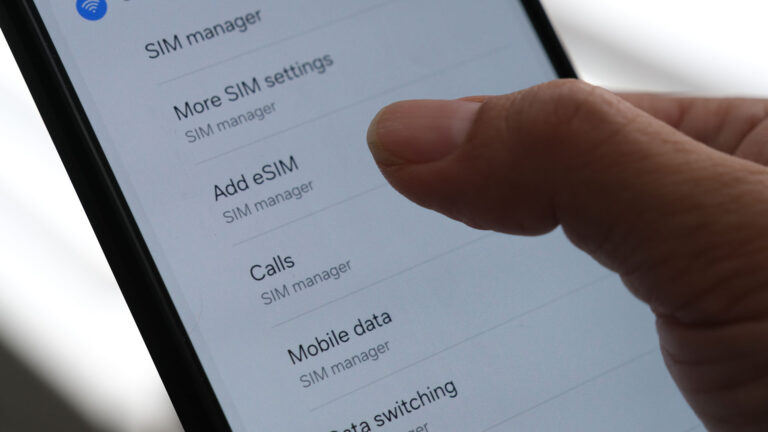
iPhones will likely list eSIM options under Settings, then Mobile Service or Cellular (depending on your software version). On Android, go to Settings > Connections or Network & Internet or SIM Management. The wording varies by manufacturer.
Verify Your Phone Is Unlocked
If your device is locked, it might not be able to receive an eSIM from another carrier. If you aren’t sure if your device is locked to a network, contact your current cell carrier.
Also be sure to get any operating system updates related to your conversion. Newer applications will generally get along better and resolve installation problems.
Singapore eSIM Plans and Average Cost Comparison
As well as compatibility, you should check the providers based on your mobile data usage. Sure, a large quoted allowance sounds appealing, but don’t use that as a guide to the success or otherwise of a plan for you.
Calculate Your Monthly Data Needs
Begin by determining your data needs. Check your phone data usage or your provider’s monthly billing statements. Evaluate whether you primarily use it for web/messaging apps, video, online meetings, etc. Do you share with other devices?
If you use the device to message and navigate, you will need a different allocation than someone who streams HD videos all day or works remotely as a freelancer.
Review Network Performance and Coverage
Understand which local network the plan is using and whether the coverage will suit your needs. Signals can be poor inside buildings, underground, or in congested areas of the network.
If you are a habitual Singapore traveller, and assume not all plans are created equal, check the coverage trivia of the provider. Discover that the plan provides 4G and/or 5G and that your phone will function on the correct bands.
Know Your Plan’s Terms
Know the plan’s details before purchasing. Look for data caps, validity, renewal, speed limits, hot-spotting, and other fees.
For example, a prepaid tourist eSIM may have a fixed validity, whereas a standard local mobile subscription may renew monthly. Different products are for different use cases, so compare against your stay and usage length.
Physical SIM vs. eSIM: What’s the Difference?
Both SIM types connect you to a mobile network with your phone, but the terms can make a difference in how you set up, maintain, and replace your mobile connectivity.
Here are the key differences to keep in mind:
Installation: You physically insert a regular SIM; an eSIM is installed digitally.
Swapping ease: It’s not as easy to swap an eSIM between unlocked phones. eSIM transfer: You may need authorisation from your provider or re-activation to transfer your eSIM.
Multiple connections: Some hardware is capable of combining physical SIMs and eSIMs for multiple devices.
Swap out: Forgoing the physical card, an eSIM means no waiting but perhaps seeking the operator to reactivate.
Travel ease: With an eSIM, you can use a different plan while you travel (if you so choose) without having to physically remove your daily SIM.
Device compatibility: A traditional SIM will work in any phone that has a SIM slot, while an eSIM requires support from the device.
It’s more than just coverage or fast connection. They are determined by your carrier, plan, device, and network conditions, not by the type of SIM card.
Prepare for Switching and Powering On
It will depend on your mobile carrier how you do this. Some carriers will then require you to download an app to obtain an eSIM, whereas others may provide you with a QR code or ask you to verify your identity.
Have a good Internet connection, and be ready to log in to your provider account before you start. Be sure to follow operator instructions and not to delete your SIM profile until you’re sure you have a working new connection.
If porting an existing number, check that the supplier supports this and any form of account/ID verification they may need. Just setting up an eSIM is unlikely to allow you to move your subscription and number.
Visitors buying a Singapore prepaid eSIM will also have to register their ID. SIM registration is mandatory in Singapore, and foreign visitors usually need to present their passport for registration or by online verification by the provider. Requirements vary by operator and location of purchase of SIM.
Common Problems and Tips for Switching to eSIM
Most of the issues with setting up an eSIM will be related to the device not being compatible, bugs in the installation, or mobile settings being incorrect. If you’re careful and informed, you can prevent derailing your connection during conversion.
checking first to make sure your plan activates on purchase, installation, or network connection. That’s important if you’re purchasing an eSIM before you travel or want to time activation with a billing cycle.
Then, select the phone data line. If you use the wrong line with the old SIM, you’ll be charged for roaming. Data roaming should be on already (the new line, if that should be used, direct or no).
If activation has not been successful, connect to Wi-Fi, reboot, and look up your provider’s troubleshooting guide. Some activation codes can only be used once, so avoid deleting and reinstalling the eSIM profile multiple times. Contact the provider if you encounter any troubles installing or connecting to the profile.
Plan Ahead for Your Mobile Data Needs
If you live in Singapore, are a frequent traveller, or just need to have a temporary data connection, your best option will be different. Residents will consider monthly allowances, terms of renewal, coverage, and service. Travellers may care more about a short validity period, easy set-up, and sufficient data for navigation and communication.
Regional options like Giga for digital SIM can also be attractive. Research what plans they offer, what types of devices they cover, and what it takes to activate it so that you can assess whether or not their services are right for you.
Also consider the timeframe in which you change devices. If you’re a phone switcher and you’re off-contract, find out how your provider treats eSIMs for switching and reactivating your phone. If it’s easy to install from the start, it should also be easy to tweak as your needs change.
Making the Switch to eSIM
Switching to eSIM has the potential to make mobile communication much easier, but it can be either smooth and seamless or an undesired interruption of service depending on how well you prepare. Confirm compatibility and unlock status of your phone, your ability to shop plans, and your knowledge of how to activate your device and port your number to your provider.
Finally, select a plan better suited to your actual data consumption than any marketing bells and whistles. If you’re hopping providers, keep in mind coverage, duration, network features, and continuing costs, and you’ll be ready for whether an eSIM works for your flexible, convenient eGIS to Singapore (or it doesn’t).


More Stories
Easy Ways to Elevate Your Living Space with Affordable Home Finds from SHEIN
Sometimes, a few carefully chosen decorative pieces are enough to make a room feel more attractive and comfortable. SHEIN Home...
Salmon takes almost £1 in every £3 spent on fish in UK supermarkets
Salmon sales in the UK reached almost £1.7bn in the 12 months to October, according to figures released by trade...
Applied Nutrition profits rise 44 per cent on weight-loss jab demand
Applied Nutrition, the Liverpool sports supplement maker backed by Coleen Rooney, today reported a 44 per cent rise in annual...
What Should a Cosmetic Surgery Package Include?
If you are comparing quotes, knowing what a complete package looks like will help you spot the gaps. Here is...
Bounced Remittances & The Cost of Failed TransfersBounced Remittances & The Cost of Failed Transfers
A transfer that doesn’t reach its recipient leaves more than a payment problem behind. Currency moves between the outbound and...
How WayKen Helps Engineering Businesses Control the Hidden Costs of Custom Parts
Design changes, setup time, material waste, inspection, rework, and delivery delays can increase project costs. A sound custom manufacturing strategy...