
ISO 7010 Explained: What UK Businesses Need to Know About Safety Signs

But their importance is easy to overlook until an emergency occurs. A clearly displayed fire exit sign or warning symbol or mandatory instruction can help employees and visitors as well as contractors recognise hazards and respond appropriately.
Understanding ISO 7010 for UK businesses is an important part of creating a safer working environment. The standard provides a consistent system of safety symbols designed to communicate essential information across language barriers. Knowing what is covered and where different signs are needed along with how to maintain them can help organizations improve workplace communication and meet their wider health and safety responsibilities.
What is ISO 7010?
ISO 7010 is an international standard to help increase clarity of Safety Signs. They consist of widely recognised pictograms that help to inform individuals (regardless of their language, background etc.) of safety issues. There are four main types of signs covered by this standard, including those for accident prevention, fire safety, health hazards and emergency evacuation.
This standard is used in the UK as BS EN ISO 7010. It works alongside the Health and Safety (Safety Signs and Signals) Regulations 1996 to give employers requirements for Safety Signs in the workplace. Whilst the ISO standard gives the signs a standardised look, the regulations show when signs need to be used.
The Health and Safety Executive (HSE) explains that they should only be used when there are still significant risks that have not been managed using other methods. Safety Signs should always be used to support safety in the workplace and should not be used as a substitute for proper risk assessment, safe working practices and proper safety measures. Know the 4 main types of Safety Signs. They are as follows.
ISO 7010 signs have a standard look, with specific colours, shapes and pictograms. Knowing what type of signs you have will help your business decide what signs to use.
Prohibition signs
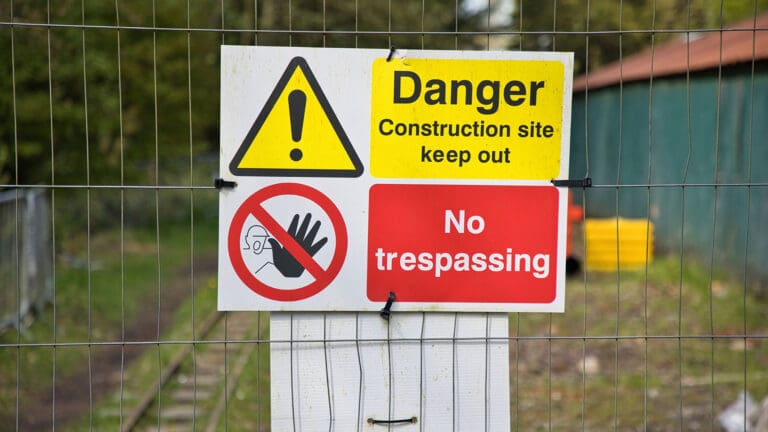
Red circular signs with a diagonal line to indicate something cannot be done. For example, no smoking, no unauthorized persons and no use of mobile phones. These are great to use in places where certain activities may cause a risk. This includes chemical storage areas, restricted manufacturing areas and flammable areas.
Warning signs
These are yellow triangular signs with a black border and pictogram to warn people of potential dangers. These can include electrical dangers, wet areas, moving machinery and overhead loads. Businesses can use these in areas where equipment is used, loading areas, and maintenance areas.
Mandatory signs
Blue circular signs to indicate that something must be done. These include wearing safety helmets, protective footwear, gloves, eye protection and ear protection.
These are important to use in manufacturing areas, construction and workshop areas.
Emergency escape and Fire Safety Signs
Green signs to indicate emergency exits, escape routes, first aid areas and safety equipment. Red signs with white pictograms indicate fire fighting equipment such as fire extinguishers and fire hoses. It is important that they are easy to locate so people can easily recognise the signs.
Where should UK Businesses Use ISO 7010 signs?
Depending on what your business does, where they are based and any risks identified through risk assessments, you will need to use the correct signs. Manufacturing areas may need warning signs for moving machinery, mandatory signs for wearing ear protection in noisy areas and clear signs for emergency escape.
Warehouses may need signs for forklifts, pedestrian areas, restricted areas and hazardous material handling. Although offices may not have as many industrial risks, they can still benefit from signs for fire exits, first aid and electrical/restricted areas.
Construction areas can be tricky to manage as things can often change. Temporary warning signs may be required for digging, scaffolding, lifting and areas where specialist equipment is being used. Try to determine what the real risks are in your areas and use the correct signs.
How to use the correct Safety Signs
You will want to ensure you use the right pictogram. But there are also other factors to consider.
Ensure they are visible
Ensure they are placed where employees and visitors can see them.
Correct size
Use the correct size so the pictogram can be recognised from a distance.
Correct materials
Consider if they will be used indoors or outdoors. Will they be exposed to water, dust, chemicals, sun and changing temperatures?
Keep them in the same place
Use a logical method so important information can be recognised.
Avoid putting them behind anything
Don’t put them behind equipment, storage, open doors etc.
Sometimes adding additional text can help. But ensure it is supporting the pictogram.
Common mistakes to avoid
Sometimes even businesses who invest in Safety Signs can fail to notice small details. Having too many signs in a small area can cause confusion and employees may miss the most important one. Using old signs once things have changed in the workplace can cause confusion. If your machinery has moved but you still have a sign warning of machinery in that area it can cause issues.
Signs that are damaged, dirty or poorly lit can be hard to recognise. Ensure you regularly check them as part of your regular safety checks. Replace any faded, damaged, blocked or irrelevant signs. Ensure employees know what the signs mean. If they don’t recognise the pictogram, they need to be given the correct training.
Creating a plan to ensure Safety Signs are used correctly
Creating a logical plan will help your organisation ensure they are using the right signs. Start with a risk assessment to identify what areas need signs to highlight the remaining risks. Create a list of what signs you currently have and ensure they are the right signs, visible and in good condition.
Compare them to the correct ISO 7010 pictograms and ensure they meet UK requirements. If they need updating focus on high risk areas such as emergency exits, machinery areas, chemical storage and vehicle areas.
Ensure someone is responsible for checking them. Create a schedule to review your signs. If any equipment, processes or building changes occur in your workplace you should review your signs. Check they meet the latest standards and HSE guidelines. If you would like to know more about the requirements, Seton have created a handy guide on how to achieve full compliance with UK safety signage standards.
Final words
Using effective Safety Signs will help you to identify risks, give clear instructions and ensure employees and visitors know what to do. Knowing what ISO 7010 is, using the right signs and keeping them in good condition will help UK businesses ensure important safety information can be recognised. When combined with the correct training and practical risk controls, having consistent signs will make a valuable addition to your day to day health and safety.

More Stories
Small firms asked to pledge 50,000 work experience places for teens
Small businesses are being asked to pledge 50,000 work experience placements for 14 to 16-year-olds under a government-backed campaign launching...
Life pressures harming 16.3 million workers’ careers, new research finds
Nearly half of UK workers say personal and family responsibilities are harming their careers, according to new research from Bupa....
Tech firms got £39.9m of £50bn UK Export Finance support in five years
Digital and technology companies received £39.9m of the roughly £50bn in support provided by UK Export Finance (UKEF) over the...
Borrowing Against Foreign Shares? The Exchange Rate Counts Too
Over the same three months, what the US owes foreign investors rose US$4.87 trillion to US$69.39 trillion, led by portfolio...
How Corporate Marketing Departments Are Adopting AI
In this environment, artificial intelligence is coming to the forefront, often being prioritised alongside more mature automation and analytics solutions....
Steven Sovik on the Evolution of Enterprise Buying
Now they can study documentation, review peer experiences, watch product demonstrations and consult AI tools before speaking to a sales...