

New Lotus Esprit Supercar Gets 670-HP Twin-Turbo V8 With Hybrid Powertrain Targeting Nearly 1,000 HP

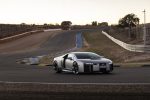
Lotus is bringing serious V8 performance back to its lineup, and we’re starting to get a much clearer picture of what will power its upcoming flagship supercar. The British automaker’s new Type 135, widely expected to revive the legendary Esprit nameplate, will feature an all-new 4.0-liter twin-turbocharged V8 producing more than 670 horsepower on its own. That’s already an impressive amount of power, but the engine is only one part of a larger hybrid system that Lotus says will deliver at least 986 horsepower when everything is working together. With the new supercar scheduled to arrive in 2028, Lotus appears determined to compete with some of the most powerful exotic machines from Ferrari, Lamborghini, and McLaren. For a brand that has traditionally emphasized lightweight construction and exceptional handling over outrageous horsepower, this represents a fascinating new direction.
The newly revealed engine comes from Horse Powertrain, a company backed by Renault, Geely, and Aramco. Known as the Horse W40, the 4.0-liter V8 uses a hot-V configuration that places its two turbochargers between the cylinder banks rather than along the outside of the engine. This arrangement allows for more compact packaging and shorter exhaust paths to the turbochargers, both valuable advantages in a mid-engine supercar. Horse says the V8 produces more than 670 horsepower and approximately 590 lb-ft of torque while weighing just 441 pounds. That makes it an exceptionally power-dense engine, and one designed from the beginning to work with electric assistance. Rather than taking an existing V8 and simply adding hybrid components, Horse developed the W40 specifically for advanced electrified performance applications, giving Lotus a strong foundation for its next supercar.
The V8 will be paired with a newly developed eight-speed dual-clutch automatic transmission called the Horse 8LDCT. This gearbox incorporates a performance-oriented wet dual-clutch system capable of shift responses in less than 20 milliseconds, along with advanced silicon-carbide electronics and a variable-displacement mechanical pump. Horse says the transmission can accommodate approximately 774 lb-ft of input torque, making it suitable for serious high-performance applications. Lotus hasn’t revealed the precise arrangement of the electric motors or how much additional horsepower they will contribute, but the combined system is expected to deliver at least 986 horsepower. That’s an important distinction, because the 670-horsepower figure represents the combustion engine by itself, while the nearly 1,000-horsepower output represents the complete V8 hybrid powertrain in the Type 135. Considering the company’s reputation for building engaging driver’s cars, we’re particularly interested in seeing how Lotus manages that much power without compromising the handling characteristics that have always made its vehicles special.
We actually covered Lotus’s return to V8 performance and the development of the Type 135 back in May 2026, when the company first teased its upcoming hybrid supercar and revealed its ambitious performance targets. At the time, the biggest news was Lotus’s decision to move away from its earlier plans for an entirely electric Type 135 and instead embrace a hybrid V8 configuration. Now, with the Horse W40 engine officially revealed, that strategy is beginning to take shape. The possibility of reviving the Esprit name is especially exciting considering the original car’s remarkable history. Introduced in the 1970s, the Esprit became one of Britain’s most recognizable sports cars, eventually receiving turbocharged engines and a twin-turbo V8 before production ended in 2004. Its dramatic styling and memorable appearances in the James Bond franchise helped establish its legendary status, and a modern successor would have some pretty big shoes to fill.
From our perspective, we’re happy to see Lotus investing in a proper combustion engine while incorporating hybrid technology to deliver the kind of performance expected from a modern exotic car. There’s something appealing about an advanced twin-turbocharged V8 producing more than 670 horsepower before the electric motors even join the party. Of course, nearly 1,000 horsepower is only part of the equation. Lotus has built its reputation on steering precision, chassis balance, and the ability to make a driver feel connected to the road, and we’re hoping those qualities remain central to the Type 135’s development. The Esprit name hasn’t been officially confirmed, and we’re still waiting for final specifications, pricing, and performance figures. However, the confirmed engine and transmission details give us plenty of reasons to be optimistic. If Lotus can combine its traditional driving dynamics with this extraordinary new hybrid V8, its upcoming 2028 supercar could become one of the most exciting performance vehicles the company has produced in decades.
More Stories
2028 Audi Nuvolari Supercar Coming to America With 987 HP, $700,000 Price Tag and Just 182 U.S. Examples
Audi is making a serious return to the exotic supercar market, and American buyers are getting a surprisingly generous allocation...
6 Incredible Motoring Books That Will Make Every Car Lover’s Christmas Special
Christmas is approaching, and motoring enthusiasts have plenty to add to their wish lists. Specialist publisher Porter Press International is...
Can Dashcam Footage Help Determine Who Caused a Car Accident?
A car accident can happen in seconds, leaving drivers with different accounts of what went wrong. One person remembers having...
2027 Genesis GV60 Invoice Price, Dealer Cost, and What You Should Pay
The 2027 Genesis GV60 receives a meaningful refresh that adds a new rear-wheel-drive entry trim, a 27-inch OLED display, a...
2027 GMC Sierra 1500 Invoice Price, Dealer Cost, and What You Should Pay
The 2027 GMC Sierra 1500 is an all-new generation, not a refresh. GMC replaced the previous lineup’s SLE and SLT...
Toyota Brings Back Scion With the KEI-01 Tiny Pickup Truck Built in America for 2027
Scion is making a comeback, but probably not in the way anyone expected. Instead of introducing another affordable sports coupe...