
Lucid Burns Through $1 Billion but Gets Nearly $2 Billion More From Saudi Arabia to Keep Its EV Future Alive

Lucid Motors continues to find itself in a rather unusual position. The California-based electric vehicle manufacturer builds some genuinely impressive luxury EVs, yet turning that engineering excellence into a profitable business remains an enormous challenge. Following another difficult financial quarter, Lucid has secured nearly $2 billion in additional financial backing from Saudi Arabia’s Public Investment Fund (PIF), its largest investor. The announcement comes as Lucid reported consuming approximately $1.04 billion in free cash flow during the third quarter of 2026. That’s an eye-watering amount of money to burn through in just three months, even for an automaker still investing heavily in production capacity, technology, and future vehicles. Thankfully for Lucid, its Saudi investors aren’t ready to abandon the company just yet.
According to Lucid’s latest financial results and reporting from Reuters, the company has expanded its existing loan facility with Saudi Arabia’s PIF by another $1.75 billion, bringing its total available liquidity to approximately $3.75 billion when the additional financing is included. To put things into perspective, Lucid generated just $350 million in revenue during the third quarter while reporting a net loss of approximately $831 million. Its loss attributable to common shareholders was even larger, at roughly $1.08 billion. The distinction matters because the company’s $1.04 billion cash burn reflects money spent beyond what the business brought in, rather than its accounting loss. Still, however you look at these figures, Lucid remains a long way from financial stability, and this latest injection of capital underscores just how dependent the automaker has become on continued outside support.
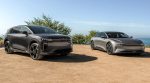
There are, however, some encouraging signs buried in those financial results. Lucid managed to reduce its quarterly free cash flow consumption by approximately 30% compared with the previous quarter, when it used about $1.48 billion. The company has been making significant operational changes, including adjusting production, reducing inventory, and cutting expenses as part of a broader restructuring effort. Under CEO Silvio Napoli, Lucid is working toward a more disciplined business model while preparing for several important product launches. The automaker’s Air luxury sedan remains an impressive technological showcase, and the newer Gravity SUV gives Lucid a much-needed opportunity to attract buyers in a more popular vehicle segment. Nevertheless, building excellent vehicles and selling enough of them at sustainable margins are two very different challenges, and Lucid still has considerable work ahead.
Much of the company’s future now rests on its upcoming midsize electric vehicle platform, which is expected to enter production during the second half of 2027. These more affordable models could allow Lucid to reach buyers who simply cannot justify the substantial prices commanded by the Air and Gravity. The company is also progressing with its second manufacturing facility in Saudi Arabia, which is expected to begin its next phase of operations in early 2027. Meanwhile, partnerships involving autonomous driving and robotaxi services could eventually create additional business opportunities. Lucid believes its newly expanded financial resources will provide enough liquidity to support operations and important investments into the fourth quarter of 2027, potentially giving it the breathing room needed to launch its midsize vehicles and begin proving that its long-term strategy can actually work.
From our perspective, Lucid remains one of the most fascinating and frustrating companies in the electric vehicle industry. We’ve long admired the brand’s advanced electric powertrains, remarkable driving range, and ability to build luxury vehicles that genuinely compete with established premium manufacturers. The engineering talent is clearly there, and we believe Lucid deserves recognition for what it has accomplished. Unfortunately, impressive technology doesn’t automatically translate into a successful automotive business, particularly when the company continues consuming roughly $1 billion in cash every quarter. Saudi Arabia’s willingness to provide nearly another $2 billion certainly buys Lucid more time, but it doesn’t solve the fundamental problem of profitability. We’re rooting for Lucid to succeed because the EV market benefits from meaningful competition and innovative products. However, at some point, the company must demonstrate that it can survive on vehicle sales and sustainable operations rather than repeatedly returning to its wealthy financial backers for another lifeline.
More Stories
2027 Ford Maverick Invoice Price, Dealer Cost, and What You Should Pay
The 2027 Ford Maverick arrives with a significant powertrain restructure that changes the buying math at every trim level, plus...
Super Rare Cars that We Loved at the Concours of Elegance 2026
We attended the Concours of Elegance 2026 on Friday 4th Sept, and this wonderful show (we say that every year)...
After a Collision, Medical Bills Can Complicate a Damage Claim
After a collision, medical bills can complicate a damage claim, especially when treatment continues beyond an emergency visit. Insurers review...
Can Your Car See a Cyclist? Tech Meets Texas Bike Law
New-car spec sheets now list cyclist detection next to horsepower and towing figures. Automakers pitch it as a second set...
Can Alternative Wheels Really Replace a Second Car?
A second car can feel indispensable until a household looks closely at how often it moves, how far it travels...
Polestar Formula 2030 Concept Looks Stunning, But U.S. Ban Means Americans Will Miss Out on Its Future EVs
Polestar has never really struggled when it comes to designing attractive electric vehicles, and its latest concept might be one...