
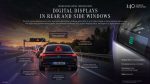
Mercedes-Benz Wants to Turn Car Windows Into Digital Screens With New Holographic Display Technology

Apparently, the massive screens already stretching across Mercedes-Benz dashboards aren’t quite enough, because the German luxury automaker has now figured out how to turn the windows into displays, too. Mercedes recently previewed two new technologies called Intelligent Display in Glass and Holographic Display, both designed to make better use of the glass surrounding vehicle occupants. The idea is to display useful information without adding more conventional screens to the cabin, although we’re starting to wonder just how much digital technology a car really needs. Still, some of the proposed applications are genuinely interesting, particularly when it comes to communicating with other drivers and providing information without unnecessarily distracting the person behind the wheel.
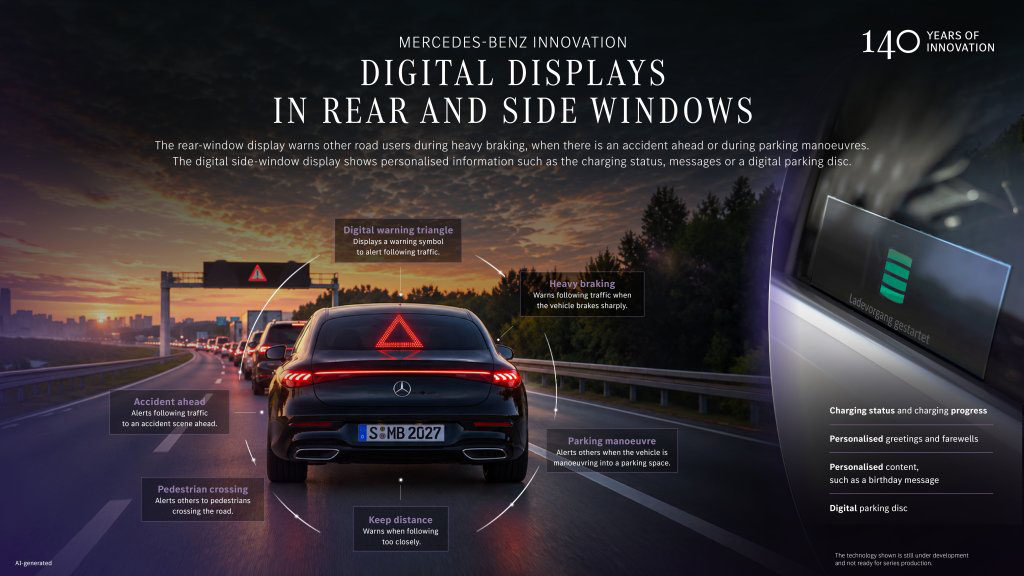
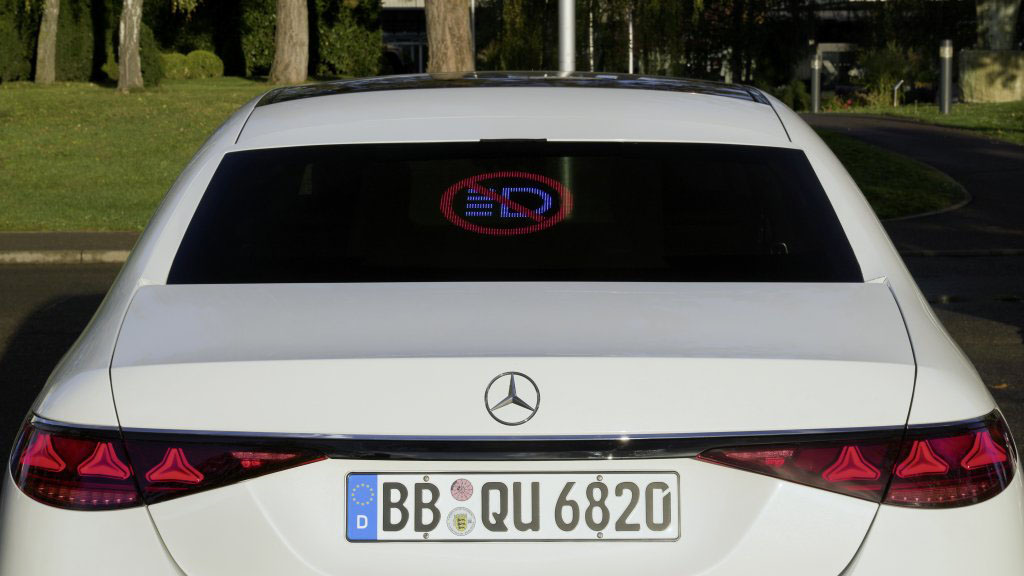
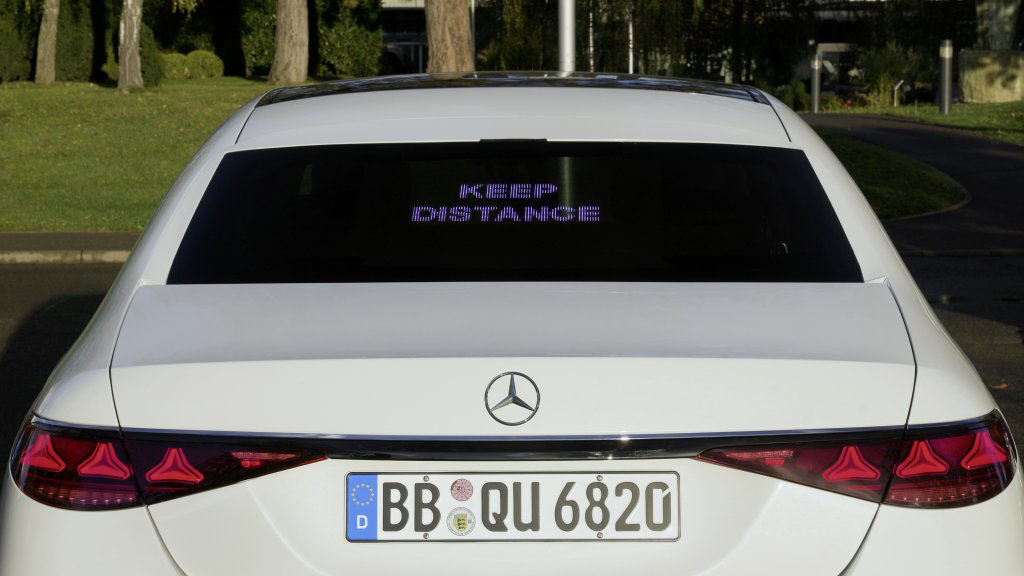
The first technology, Intelligent Display in Glass, integrates tiny LED elements directly into a vehicle’s windows, allowing them to display symbols, messages, or other information when needed. Mercedes envisions using the rear window to warn approaching drivers about hazards such as accidents, pedestrians, or stopped traffic ahead. One particularly amusing example displays the words “KEEP DISTANCE,” essentially allowing your Mercedes to politely tell an aggressive tailgater to back off. As highlighted in reporting from Road & Track, that feature alone could generate some interesting reactions in traffic. The potential safety benefits are worth exploring, although we’d be curious to see how effectively other motorists respond to these messages in real-world driving conditions.
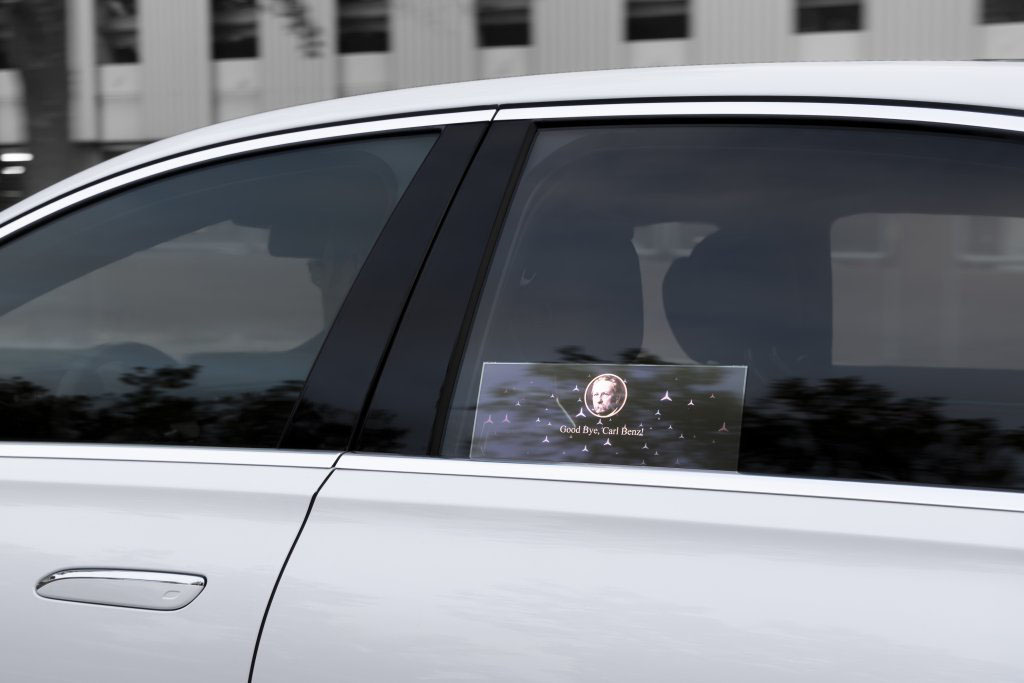
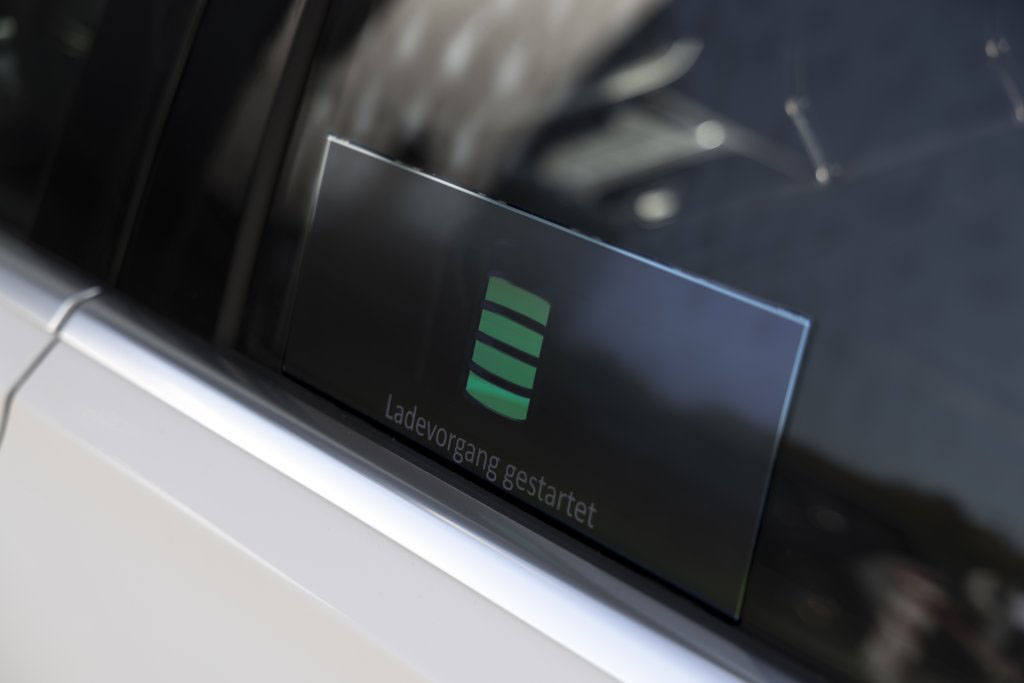
Mercedes is experimenting with two different LED technologies to make the concept work. Mini LEDs are better suited for larger surfaces such as rear windows, where simple warning symbols and traffic information can be displayed clearly. Higher-resolution Micro LEDs could be used in smaller areas, including side windows, to show more detailed graphics and animations. For example, an electric Mercedes could display its battery charge status directly on the side glass, or the car could present a personalized greeting when the driver approaches. Mercedes says the embedded display elements become almost invisible when switched off, preserving the appearance of conventional automotive glass. Of course, we’d want to see that in person before making any judgments about how seamlessly the technology blends into a vehicle’s design.
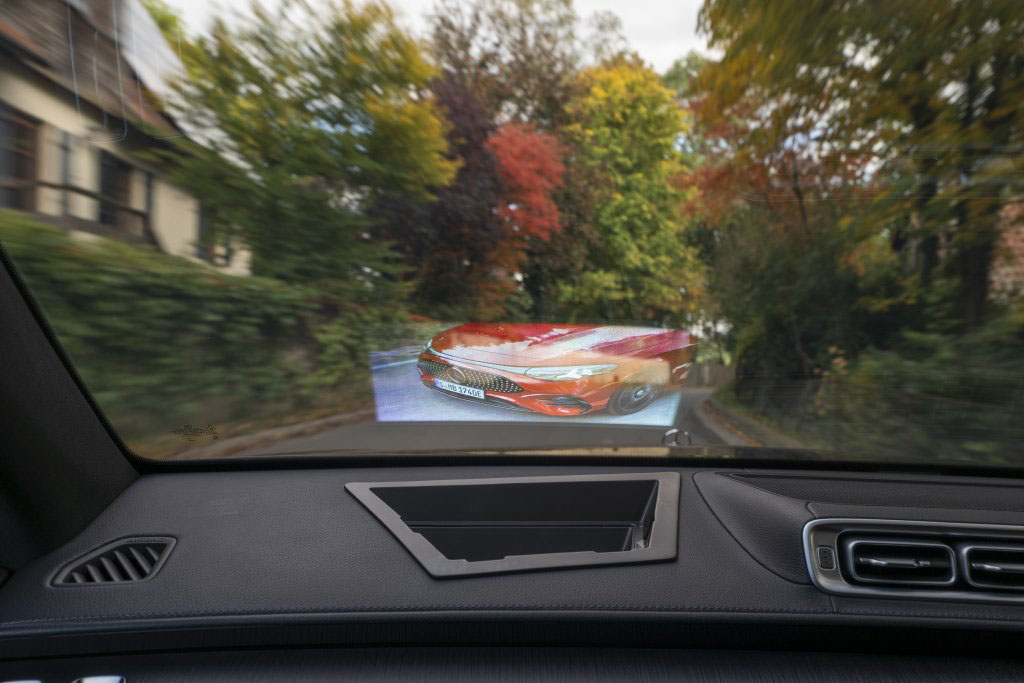
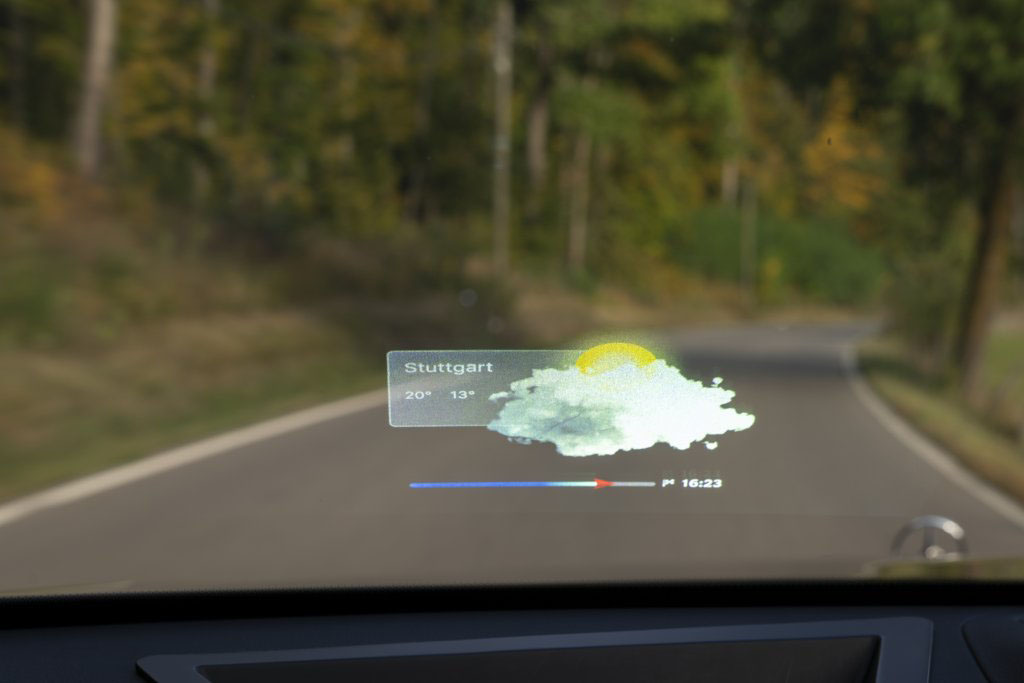
The second innovation might be even more intriguing. Mercedes calls it Holographic Display, and it essentially takes the familiar head-up display concept to another level. Instead of projecting relatively simple speed and navigation information onto the windshield, the new system uses a projector inside the dashboard and a specially developed transparent film laminated into the glass. This allows detailed, full-color images to appear across designated areas of the windshield. The technology is also designed to control viewing angles, meaning the front passenger could potentially watch a movie while the driver sees navigation information without the two displays interfering with each other. It’s a clever concept, especially if Mercedes can deliver the experience without compromising visibility or creating additional distractions.
Interestingly, this approach could eventually reduce the need for some of the enormous dashboard screens we’ve become accustomed to seeing in modern luxury vehicles. Rather than filling every available interior surface with another touchscreen, Mercedes could integrate information into areas that already exist, displaying content only when necessary. That’s something we could appreciate, particularly if it allows designers to return to cleaner dashboards with fewer distracting digital elements. However, there are legitimate questions about long-term durability, repair costs, windshield replacement expenses, and how these displays might perform in bright sunlight or poor weather. There’s also the matter of ensuring that any projected information meets safety regulations and doesn’t interfere with a driver’s view of the road.
For now, Mercedes-Benz emphasizes that both Intelligent Display in Glass and Holographic Display are experimental technologies, with no confirmed production models or launch dates. The company is exploring their potential as part of its broader research into future automotive technology, which also includes advanced electric vehicle power management systems. From our perspective, the safety-related applications seem considerably more useful than simply finding new places to display entertainment or decorative graphics. We’d welcome a rear window capable of warning approaching motorists about an unexpected hazard, but we’re less convinced that every piece of automotive glass needs to become another digital display. Sometimes technology really does improve the driving experience, and other times it feels like innovation simply for the sake of innovation. We’ll be interested to see whether Mercedes can strike the right balance before any of these ideas reach production.


More Stories
2027 Chevrolet Silverado 1500 Invoice Price, Dealer Cost, and What You Should Pay
The 2027 Chevrolet Silverado 1500 is a full redesign — the first fully new Silverado in several years. It arrives...
2027 Audi A3 Invoice Price, Dealer Cost, and What You Should Pay
The Audi A3 is the entry point to the Audi sedan lineup and one of the more compelling arguments for...
2027 Audi A5 Invoice Price, Dealer Cost, and What You Should Pay
The Audi A5 is a mid-size luxury sedan that replaced the A4 in Audi’s U.S. lineup beginning with the 2025...
Trading In a Car That is Not Paid Off
Suppose a dealer offers $11,500 for your trade-in, but your loan payoff is $14,000. That leaves a $2,500 gap. When...
Suzuki Auto South Africa breaks 7,000-unit barrier with record October sales
Suzuki Auto South Africa has set a new overall monthly sales record, breaking the 7,000-unit barrier for the first time.
2027 Volkswagen Taos Invoice Price, Dealer Cost, and What You Should Pay
The Volkswagen Taos is a subcompact crossover that sits below the Tiguan in Volkswagen’s SUV lineup and delivers a European...