
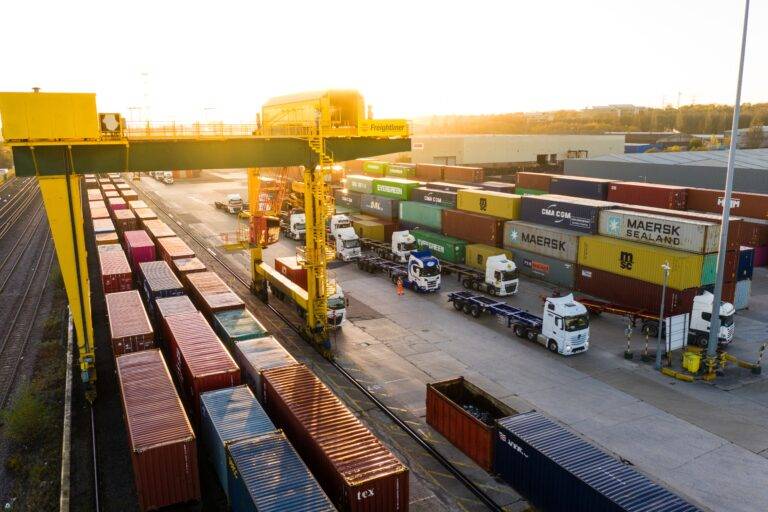
UK and EU agree draft food deal to scrap post-Brexit export checks

The UK and EU have agreed a draft deal to remove post-Brexit checks on food and agricultural exports, which the government says will eventually bring £5.1bn a year in benefits to the UK economy.
The 200-page draft text of the sanitary and phytosanitary (SPS) agreement has been circulated to EU member states in Brussels, the BBC reported. EU ambassadors are due to discuss it at a meeting of the body known as Coreper tomorrow, ahead of a UK-EU summit later this month.
Draft texts on emissions trading and a youth travel and work scheme have been circulated alongside it, with a 15-page draft joint statement for leaders.
What the deal would change
Under the draft, exports to the EU of fresh sausages, burgers, shellfish from domestic waters and seed potatoes would be able to resume. It is expected to remove the need for Export Health Certificates, which cost £200 each, and £25 phytosanitary certificates.
Inspector fees, organic certificates, some port fees and other checks on trade in both directions could also be removed. Pet passports for British animals travelling to the EU would return.
Defra figures published last year put the cost to UK firms of EU food export licences in 2024 at up to £65m.
In return, the UK is expected to commit to observing and adapting to existing EU rules on plant, animal and food trade standards, a process known as “dynamic alignment”. The government has said in guidance for food businesses that it intends the agreement to take effect in mid-2027, and that the rules will apply whether or not a business trades directly with the EU.
A European Partnerships Bill, already announced, would provide the legal mechanism for applying new EU rules. It would also allow the UK emissions trading scheme to be linked with the EU’s, so UK exporters would not have to pay the EU’s new carbon border tax.
In Northern Ireland, which stayed inside the EU single market for goods, the deal would ultimately end paperwork and physical checks on food arriving from elsewhere in the UK.
Business reaction
Jon Walsh, chief executive and co-founder of granola and yoghurt maker Bio&Me, told BBC 5 Live the draft sounded like “really good news”.
“We’re just a small company but when we were trying to export our yoghurts before, every time we’d send a pallet we had to pay a vet to inspect it and that was £140, and that meant that you’d lose money… so we had to stop,” he said.
William Bain, head of trade policy at the British Chambers of Commerce (BCC), told the BBC’s Today programme that business overall regarded following common rules as a “price is worth paying”, because companies would benefit from “lower costs, reduced delays [and] increased market access”.
He said Export Health Certificates can currently add thousands of pounds in costs to each truck. The BCC said in new analysis of its members’ views that the current trade relationship is “failing to deliver”.
Supermarkets and farmers’ representatives have backed the food trade plans, while some pro-Brexit campaigners have criticised the reapplication of EU rules.
Political response
The summit would already have taken place had Labour not replaced Sir Keir Starmer as leader in July. Andy Burnham, his successor, said last month he would argue for closer integration with the EU at the summit.
Burnham told ITV that “public opinion has changed nationally” since the 2016 referendum, but that he would “not run ahead of public opinion”. He said he had not proposed a return of freedom of movement.
Conservative leader Kemi Badenoch told the BBC the UK should “work closely” with the EU, but that dynamic alignment would be a red line and would “actually take us backwards”.
Al Pinkerton, the Liberal Democrats’ Europe spokesperson, called the draft “a step in the right direction” but “a patch, not a fix”, and said the solution was to rejoin the single market and establish a customs union.


More Stories
Universal Quantum launches chip and calls for more UK quantum funding
A quantum computing company based in East Sussex has launched a chip that it says will “significantly” accelerate the industry’s...
Poundland bosses to meet minister with 12,000 jobs at risk
The government will meet Poundland’s leadership this week as political pressure builds to prevent the discount chain’s collapse, which would...
Virgin Media O2 to cut thousands of jobs as it targets £800m savings
Virgin Media O2 is to cut thousands of jobs as it seeks to reduce staff costs by 30 per cent...
Avi Itzcovich and the Economics Behind International Property Investment
Understanding those differences is central to assessing real estate in Europe and the Middle East, where the sources of opportunity...
Bingo licences could let gaming arcades keep business rates relief
Hundreds of high-street adult gaming centres excluded from business rates relief in last Wednesday’s Budget could still qualify for a...
Why most trade websites don’t win work, and what fixes it
Picture a homeowner who has just been given your name. Maybe a neighbour recommended you, maybe they searched “builder near...