
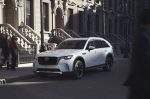
2027 Mazda CX-90 Invoice Price, Dealer Cost, and What You Should Pay

The 2027 Mazda CX-90 lineup expands to eleven trims across three powertrains, with Mazda announcing pricing on October 27, 2026, and simultaneously discontinuing the CX-70. The two-row CX-90 now replaces the CX-70 entirely, making the CX-90 the single nameplate covering both two-row and three-row buyers who want Mazda’s flagship inline-six or plug-in hybrid powertrain. The CX-90 also receives a revised rear suspension crossmember and updated rear bushings across all trims for improved ride comfort. Here is what dealers paid and what you should target when you shop.
2027 Mazda CX-90 Invoice Prices
The 2027 CX-90 spans eleven configurations: six gas-powered inline-six trims (including two-row and three-row variants on select trims), three plug-in hybrid trims, and the high-output Turbo S variants at the top of the gas lineup. All are AWD standard. Prices below exclude the $1,645 destination charge.
Mazda announced 2027 CX-90 pricing on October 27, 2026. Dealer invoice data for the 2027 model year has not yet been published in automotive pricing databases. The invoice estimates below are calculated at 2.5% below MSRP, consistent with the historical invoice gap AutoFinder has tracked across the 2024, 2025, and 2026 CX-90 lineups. Verify with your dealer or check AutoFinder and similar databases as 2027 invoice data becomes available in the coming weeks.
2027 CX-90 3.3 Turbo (Gas)
Trim
MSRP
Est. Invoice
Est. Gap
3.3 Turbo Select
$39,700
$38,708
$992
3.3 Turbo Preferred
$43,850
$42,754
$1,096
3.3 Turbo Premium Sport (2-row)
$46,880
$45,708
$1,172
3.3 Turbo Premium Sport (3-row)
$48,080
$46,878
$1,202
3.3 Turbo Premium Plus
$50,670
$49,403
$1,267
3.3 Turbo S Premium Sport (2-row)
$53,540
$52,202
$1,338
3.3 Turbo S Premium Sport (3-row)
$54,740
$53,371
$1,369
3.3 Turbo S Premium Plus
$57,970
$56,521
$1,449
2027 CX-90 PHEV (Plug-In Hybrid)
Trim
MSRP
Est. Invoice
Est. Gap
PHEV Preferred
$50,695
$49,428
$1,267
PHEV Premium Sport
$55,500
$54,113
$1,387
PHEV Premium Plus
$58,700
$57,233
$1,467
Invoice estimates above are calculated at 2.5% below MSRP, consistent with the CX-90’s established invoice gap from prior model years. Official 2027 invoice data will be published in coming weeks as dealers begin receiving inventory. MSRPs sourced from Mazda’s official October 27, 2026 pricing announcement and exclude the $1,645 destination charge.
What Is the Destination Charge on the 2027 CX-90?
Mazda charges $1,645 for destination and handling on the 2027 CX-90 ($1,690 in Alaska). With destination included, the 2027 CX-90 range runs from $41,345 on the 3.3 Turbo Select to $60,345 on the PHEV Premium Plus.
What Changed for 2027
The 2027 CX-90 brings several significant structural and content changes to the lineup:
The CX-70 is discontinued. Mazda is retiring the two-row CX-70 nameplate and absorbing it into the CX-90 lineup. The 3.3 Turbo Premium Sport and 3.3 Turbo S Premium Sport are both now available in two-row or three-row configurations, making the CX-90 the single nameplate for buyers who want either body style with these powertrains.
Revised rear suspension. All 2027 CX-90 models receive an updated rear suspension crossmember and new rear bushings, targeting improved passenger comfort. This is the most substantive mechanical change for 2027.
PHEV quieter at low speeds. The plug-in hybrid models receive an updated electric drive motor with external insulation, reducing low-speed motor noise in EV mode.
Content upgrades by trim. The Preferred trim gains roof rails as standard. The Premium Sport adds Alexa Built-In. The Premium Plus gains Mazda Online Navigation. The PHEV Premium Sport and Premium Plus both add Alexa Built-In standard. These were previously optional or unavailable.
New exterior colors. Navy Blue Mica, Aero Gray Metallic, Melting Copper Metallic (two-row only), and Zircon Sand Metallic (two-row only) join the color palette. Premium paint adds $595 to the MSRP on eligible colors.
Price increase. The 3.3 Turbo Select starts $400 above the 2026 model’s $39,300 base price.
2027 Mazda CX-90 Specs
3.3 Turbo and 3.3 Turbo S (Gas Inline-Six)
The 2027 CX-90 3.3 Turbo uses a 3.3-liter turbocharged inline-six with a 48-volt mild hybrid system. Standard output is 280 horsepower and 332 lb-ft of torque, routed through an 8-speed automatic transmission and Mazda’s i-Activ AWD system standard across all trims. Regular 87-octane fuel is sufficient; premium is not required on Turbo trims.
The 3.3 Turbo S raises output to 340 horsepower and 369 lb-ft on 91-octane premium fuel, or 319 horsepower on 87-octane regular. The Turbo S adds Mi-Drive with Towing mode and is rated for up to 5,000 lbs of towing with Mazda Genuine Towing Accessories. Standard Turbo and Turbo Preferred trims are rated up to 3,500 lbs.
EPA fuel economy (gas trims): 23 city, 28 highway, 25 combined mpg. Figures are consistent across Turbo and Turbo S trims in prior model years and are expected to carry over for 2027. Confirm EPA-rated figures for the 2027 model year once they are published.
Seating and cargo (gas trims): The three-row configuration seats seven or eight passengers depending on whether captain’s chairs or a bench is chosen for the second row. The two-row configuration is available on Premium Sport and Turbo S Premium Sport trims. Cargo behind the third row is approximately 14.9 cubic feet, expanding to approximately 74.2 cubic feet with all rear seats folded.
Curb weight: approximately 4,846 lbs for the 3.3 Turbo, 4,945 lbs for the 3.3 Turbo S.
PHEV (Plug-In Hybrid)
The CX-90 PHEV uses a 2.5-liter naturally aspirated four-cylinder gasoline engine paired with an electric motor and a 17.8-kWh lithium-ion battery pack. Combined system output is 323 horsepower and 369 lb-ft of torque. All PHEV trims are seven-passenger with standard AWD and an 8-speed automatic.
Electric range: approximately 26 to 27 miles of all-electric operation on a full charge. The 2027 PHEV models receive an updated electric motor with external insulation for quieter low-speed EV operation. Combined MPGe when running on electricity is 56 MPGe. When running on the gasoline engine after the battery is depleted, expect economy similar to or slightly below the gas-only CX-90.
Charging: The CX-90 PHEV supports Level 1 and Level 2 AC charging. Level 2 charging from a home charger or public station is recommended for daily overnight use. DC fast charging is not supported.
PHEV towing: 2,500 lbs. The PHEV’s tow rating is lower than the gas CX-90’s, which is a practical consideration for buyers who tow regularly.
Mi-Drive modes (PHEV): Normal, Sport, Off-Road, and EV modes are available. EV mode prioritizes electric-only operation at low to moderate speeds when the battery is sufficiently charged.
What Each Trim Includes
The 3.3 Turbo Select ($39,700) is the entry point and is more generously equipped than many competitors’ base trims. Standard content includes the 3.3L turbo inline-six with mild hybrid, i-Activ AWD, an 8-speed automatic, a 10.25-inch center display with wireless Apple CarPlay and Android Auto, dual-zone automatic climate control, heated front seats, 19-inch wheels, a power liftgate, and Mazda’s full driver-assist package including blind-spot monitoring, rear cross-traffic alert, lane-keep assist, and adaptive cruise. Seating is eight passengers on a three-row bench-configured layout. The Select does not include ventilated front seats, the 12.3-inch display, or roof rails.
The 3.3 Turbo Preferred ($43,850) steps up meaningfully. It adds the larger 12.3-inch center display, ventilated front seats, 21-inch wheels, wireless charging, and roof rails (newly standard for 2027). The Preferred is the first trim with a ventilated driver’s seat, which adds everyday summer comfort in warm climates. The $4,150 gap between Select and Preferred represents the lineup’s largest single step and the biggest feature jump in the CX-90 range.
The 3.3 Turbo Premium Sport is available in two-row ($46,880) and three-row ($48,080) configurations and replaces the discontinued CX-70 for buyers who want a two-row Mazda six-cylinder crossover. The Premium Sport adds a blackout exterior styling package, Bose audio, a panoramic moonroof, a head-up display, and Alexa Built-In (newly standard for 2027). Second-row captain’s chairs are available as an option, converting the three-row from eight to seven seats.
The 3.3 Turbo Premium Plus ($50,670) is the top of the standard-output gas lineup. It adds Nappa leather seating, adaptive front lighting, a 360-degree surround view monitor, and Mazda Online Navigation (newly standard for 2027). Available in seven or eight-passenger configurations with a choice of captain’s chairs or a second-row bench.
The 3.3 Turbo S Premium Sport in two-row ($53,540) and three-row ($54,740) form brings the high-output 340 hp powertrain (on premium fuel), Mi-Drive with Sport, Off-Road, and Towing modes, the 5,000-lb tow rating, and a panoramic moonroof. Alexa Built-In is standard. The Turbo S is the trim for buyers who plan to tow a boat or trailer regularly and want the power and modes to do it confidently.
The 3.3 Turbo S Premium Plus ($57,970) is the flagship gas trim. It is three-row only with seven-passenger captain’s chairs, ventilated second-row seats, the optional Japanese Premium interior with Maple Wood trim accents, and the full Turbo S powertrain and Mi-Drive suite. Mazda Online Navigation is standard. For buyers who want the complete CX-90 experience with the high-output engine, the Turbo S Premium Plus is the top of the gas lineup.
The PHEV Preferred ($50,695) is the entry into the plug-in hybrid lineup. It includes the 323-hp plug-in hybrid system, standard AWD, twin 12.3-inch displays, heated and ventilated front seats, wireless charging, and Mi-Drive with EV mode. Seating is seven passengers standard. The PHEV Preferred starts $45 above the gas Premium Plus despite significantly more powertrain technology, making it a compelling consideration for buyers who charge at home and drive primarily within the EV range.
The PHEV Premium Sport ($55,500) adds the blackout exterior package, a head-up display, Bose 12-speaker audio, and Alexa Built-In (newly standard for 2027). Optional second-row captain’s chairs are available. The PHEV Premium Sport is for buyers who want the plug-in hybrid with the sportier visual package.
The PHEV Premium Plus ($58,700) is the top trim across the entire CX-90 lineup. It adds 21-inch wheels, Nappa leather seating, the Driver Personalization System, ventilated front seats, and Mazda Online Navigation (newly standard for 2027). The Driver Personalization System uses facial recognition to automatically adjust seat, mirror, audio, and climate settings for different drivers, a feature found more commonly in luxury vehicles above $70,000.
Two-Row vs. Three-Row: The Buying Decision
With the CX-70 discontinued, buyers who want a two-row Mazda crossover with the inline-six now choose the two-row CX-90 Premium Sport or Turbo S Premium Sport. The two-row Premium Sport starts at $46,880, versus $48,080 for the three-row. The $1,200 price premium for the three-row version reflects the additional seat row and the packaging changes it requires.
The two-row CX-90 gives up the third row in exchange for a sportier roofline and slightly different interior proportions. Buyers who never use a third row and want the exterior design of the two-row body should consider whether the $1,200 savings over the three-row version, or conversely the $1,200 premium for the three-row’s flexibility, aligns with their usage. Families who occasionally carry a third row of passengers will find the three-row’s additional flexibility worth the premium. Buyers who genuinely never use a third row save money with the two-row and get a cleaner rear design.
CX-90 vs. CX-90 PHEV: The Powertrain Decision
The PHEV Preferred at $50,695 sits $45 above the gas Premium Plus at $50,670, an almost identical price point with significantly more powertrain technology. The PHEV’s advantages are meaningful for the right buyer: 26 to 27 miles of daily electric commuting at no fuel cost, 323 hp versus 280 hp on the gas Preferred, and lower running costs for buyers who charge at home. The disadvantages are a lower tow rating (2,500 lbs vs. 3,500 lbs on Turbo trims), no DC fast charging support, and additional vehicle weight from the battery pack.
For buyers who commute 30 miles or fewer per day and have a Level 2 charger at home, the PHEV’s math is compelling. Running on electricity alone for most daily driving effectively reduces the cost-per-mile significantly versus the gas engine. For buyers who do not have home charging access, or who regularly tow, the gas CX-90’s simpler powertrain and higher tow rating make more practical sense.
Current 2027 Mazda CX-90 Incentives
Mazda announced 2027 CX-90 pricing on October 27, 2026. As with any model whose pricing was just released, manufacturer incentive programs for the 2027 model year have not yet been published. Dealers are in the process of receiving 2027 inventory, and formal APR, lease, and cash rebate programs typically follow a model’s pricing announcement by several weeks to months.
For context on what buyers can expect, Mazda ran strong programs on the 2026 CX-90 through November 2, 2026: 0% APR for 60 months on the gas model, 0% APR for 72 months on the PHEV, cash rebates of up to $3,500 on the gas CX-90 and up to $5,000 on the PHEV, and conditional bonuses including $1,500 loyalty, $500 military, $1,000 mobility, and $500 vehicle donation bonuses. Those programs applied to 2026 inventory specifically and do not carry over to 2027 units automatically.
Check Mazda’s website or ask your dealer for the current month’s 2027 programs before finalizing any purchase or lease. Given that the CX-90 has been one of Mazda’s most incentivized nameplates, formal programs are likely to emerge as inventory builds in late 2026 and early 2027.
How to Negotiate the Best Price on a 2027 Mazda CX-90
The CX-90’s historical invoice gap is a consistent 2.5% below MSRP across all trims and model years. That gap translates to approximately $992 on the Select and $1,449 on the Turbo S Premium Plus. These are tighter gaps than many competitors at similar price points, which reflects Mazda’s consistent pricing discipline and the CX-90’s strong buyer demand relative to its inventory levels.
Invoice is your floor reference, not your target. On a freshly-priced model whose 2027 inventory is just arriving at dealers, asking for invoice price on day one is unlikely to succeed. A more realistic opening offer in the first month of 2027 availability is MSRP minus $500 to $800 on lower trims and MSRP minus $800 to $1,200 on the Premium Plus and Turbo S trims. As inventory builds over the winter, negotiating room typically expands.
The Preferred trim is the value anchor in the gas lineup. The $4,150 step from Select to Preferred buys ventilated seats, the 12.3-inch display, 21-inch wheels, wireless charging, and roof rails. For a buyer who will own the vehicle three to five years, that feature set is harder to live without once you have tested it. The Preferred represents more everyday comfort per dollar than any other step in the gas lineup.
Watch for end-of-quarter and end-of-year pricing. Mazda historically uses quarter-end and model-year-end periods to clear inventory with larger incentive programs. Buyers who can wait until December 2026 or March 2027 may find substantially better programs than first-month pricing allows.
The PHEV’s federal tax credit status. The federal $7,500 EV tax credit that previously applied to plug-in hybrid vehicles was eliminated by the One Big Beautiful Bill Act signed on July 4, 2025, effective for purchases after September 30, 2025. The CX-90 PHEV does not qualify for a federal tax credit on purchases made today. Some states still offer their own incentives for plug-in hybrid vehicles; check your state’s EV incentive programs independently before factoring any credit into your budget.
Shop multiple dealers by email. The CX-90 is carried by Mazda dealers in most metro markets, and pricing can vary. Sending the same specific trim inquiry to three or four dealers and requesting their best out-the-door price before visiting creates the competition that moves asking prices. The out-the-door figure should include all fees, so dealer documentation charges and accessories packages are visible before you compare quotes.
How the 2027 CX-90 Compares to the Segment
The CX-90 competes primarily against the Kia Telluride, Hyundai Palisade, Toyota Highlander, Honda Pilot, and Volkswagen Atlas in the three-row family crossover segment. Against the Palisade and Telluride, the CX-90 positions itself as a more premium product with stronger powertrain output and a more European driving character, at a price point roughly $5,000 to $8,000 above the Korean competitors’ comparable trims.
The Toyota Highlander Hybrid is the most direct comparison for the gas CX-90 on fuel economy, delivering 36 combined mpg versus the CX-90’s 25 combined. Buyers who prioritize fuel economy in a three-row SUV will find the Highlander Hybrid’s efficiency lead significant. The CX-90’s advantage over the Highlander is its inline-six powertrain character, substantially more interior refinement, and a more premium cabin feel at comparable price points.
The CX-90 PHEV’s direct competitors in the plug-in hybrid three-row space are the Kia Sorento PHEV and the Mitsubishi Outlander PHEV at lower price points, and the Toyota Grand Highlander PHEV at a similar one. The CX-90 PHEV’s 323-hp output exceeds most rivals in the segment, and Mazda’s interior execution at the Premium Plus level competes with vehicles priced $10,000 to $15,000 higher from European brands.
The CX-90’s strongest arguments are its inline-six powertrain (rare at this price point, as most competitors use four-cylinders), Mazda’s reputation for interior quality exceeding its price tier, the newly-revised suspension for 2027, and the flexibility of the two-row and three-row options under a single nameplate now that the CX-70 has been retired. For buyers who want the feel of a near-luxury three-row crossover without the $60,000-plus entry price of a German or domestic luxury brand, the 2027 CX-90 remains one of the most complete packages in the segment.

More Stories
Porsche Profits Rebound as 911 Sales Surge and Major Turnaround Strategy Begins Paying Off
Porsche is finally showing signs of a much-needed financial recovery after a difficult stretch that saw profits collapse and its...
2027 Dodge Charger Mopar ’27 Celebrates 90 Years With Carbon Fiber Upgrades and Limited Production
Dodge is celebrating 90 years of Mopar with a special edition of its latest Charger muscle car, appropriately named the...
How to Choose the Best Tonneau Cover for Your Truck
Ask pickup owners which upgrade made the biggest difference day to day, and truck bed covers come up fast. A...
Mazda Kills the CX-70 for 2027 and Replaces It With a Two-Row CX-90 That’s Basically the Same SUV
Mazda is making an interesting change to its SUV lineup for 2027, officially discontinuing the CX-70 and replacing it with...
Toyota Unleashes Five Snowhunter Concepts for SEMA With Snow Tracks and Serious Off-Road Upgrades
Toyota is taking its reputation for building capable off-road trucks and SUVs to another level with the introduction of five...
Crypto to Car Keys: How to Navigate Your Next Vehicle Purchase With Digital Assets
Cryptocurrency has changed how people think about money, investments and everyday purchases. What began as an alternative form of digital...