
Global Central Banks Kept Buying Gold This Summer

By Andrew Moran
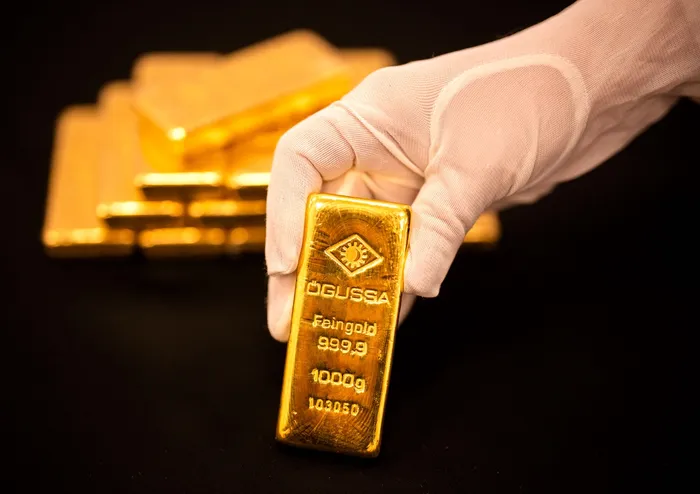
Global central banks went on a gold-buying spree this summer, according to an international trade association for the gold industry.
In recent years, central banks have been accumulating the precious metal to shield their economies from the blows of geopolitical conflict, tariff pressures, and inflation.
World Gold Council data show that these institutions purchased a net 62 tons of gold in July and August.
Demand was primarily driven by the same institutions that have been scooping up gold this year, according to Marissa Salim, senior research lead at the World Gold Council.
China continued its gold purchases for the 22nd consecutive month in August, adding 20 tons to its reserves. The People’s Bank of China has purchased 80 tons of the yellow metal year-to-date.
Gold accounts for approximately 9 percent of China’s total reserves, according to the World Gold Council.
Although Beijing was the biggest gold buyer in August, the National Bank of Poland has been aggressively buying gold this year.
In the first eight months of 2026, Poland bought 98 tons, including an 8-ton purchase in August.
The central banks of Uzbekistan and Kazakhstan have also been major gold buyers, accumulating 50 tons and 36 tons, respectively, year-to-date. Gold accounts for 90 percent and 79 percent of Uzbekistan’s and Kazakhstan’s reserves, respectively.
Conversely, Russia and Jordan were net gold sellers in August. Moscow offloaded 6 tons, and Amman sold 3 tons.
“This suggests that central bank activity continues to reflect longer-term reserve objectives, while monthly fluctuations are more likely to capture differences in implementation, market conditions, and country-specific liquidity requirements,” Salim said in the report.
Overall, Goldman Sachs projects that central banks will buy an average of 50 tons of gold per month this year, up from an average of 17 tons per month prior to 2022.
Gold Price Forecasts
Robust central bank demand could lift gold prices in the home stretch of 2026, Goldman Sachs said. It forecasts the precious metal will climb to $4,900 per ounce.
Central bank buying is not the main catalyst behind gold’s potential increase. Still, it could help establish a long-term floor, according to Rick Kanda, managing director at The Gold Bullion Company.
“If these elevated levels of central bank demand persist, gold prices will likely increase over the long term or at least be heavily supported,” Kanda told The Epoch Times.
“When central banks increase their gold reserves like this, they add another source of demand to a market already influenced by many factors.”
Interest rates and geopolitical uncertainty are other factors.
But as central banks tighten monetary policy amid the war-driven energy shock, higher rates could cap gold prices. A rising-rate environment typically impacts the opportunity cost of holding non-yielding bullion.
The U.S. Federal Reserve and many of its counterparts followed through on a quarter-point rate hike to offset the potential second- or third-order inflation effects of surging oil prices. Futures markets do not expect these institutions to be finished, as traders are pricing in further rate increases before the year’s end.
Another factor that could affect gold prices is the U.S. dollar.
The U.S. Dollar Index—a measure of the greenback against a weighted basket of currencies—has surged by more than 3 percent this year. A strong U.S. dollar is generally bearish for dollar-denominated commodities such as gold because it makes it more expensive for foreign investors to purchase.
At the same time, de-dollarization could also be at play, Kanda said.
Anti-dollar efforts have cooled off since President Donald Trump returned to the White House for a second term amid tariff threats. But officials worldwide have made it clear that they want to ditch their dependence on the dollar.
“I believe central banks are looking beyond gold’s traditional safe-haven appeal and increasingly using it to reduce reliance on the U.S. dollar,” he said.
“I suspect China’s significant purchases reflect this wider shift.”
Gold prices rose modestly mid-week.
The yellow metal ticked up by about 0.4 percent to above $4,150 per ounce on the COMEX division of the New York Mercantile Exchange. But gold is still down by about 4 percent this year and remains well below its record high of $5,600, set earlier this year.


More Stories
Virginia Senator L. Louise Lucas Charged With Federal Drug Trafficking, Money Laundering
By Jack Phillips Federal prosecutors charged Democratic Virginia state Sen. L. Louise Lucas on Thursday with allegedly leading a criminal...
France Bans Illegitimate Protest Groups as Macron Blames Far-Left for Riots
By Rachel Roberts French President Emmanuel Macron said Thursday that “illegitimate” protests would be banned in the coming days and...
Ilhan Omar Says Threats Forcing Her to Move Home After Federal Agents Searched DC Apartment
By Guy Birchall Rep. Ilhan Omar (D-Minn.) says she will have to move out of her Washington apartment due to...
SBA Refers Nearly 700 Businesses for Government Audits Over Potential Fraud
By Naveen Athrappully The Small Business Administration (SBA) has referred 689 companies that were removed from a federal program to...
Late October Is the Best Time to Buy – Especially in Midterm Election Years
By Louis Navellier In the first half of October, the S&P 500 was basically flat, while the NASDAQ is off...
More Than 40 Charged in 1st Nationwide SNAP Fraud Crackdown
By Janice Hisle CINCINNATI—The United States’ first nationwide surge against food-assistance fraud has led to charges against more than 40...