
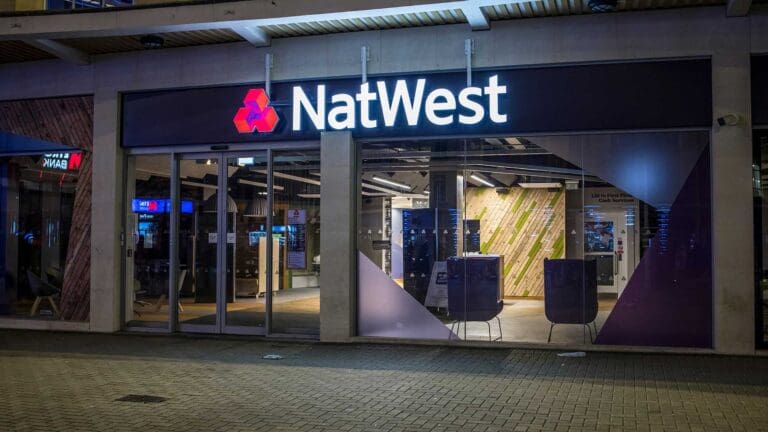
NatWest tells 30,000 staff to work in the office two days a week

NatWest has told more than 30,000 of its UK staff that they must work from its offices at least two days a week from February 2027, prompting a row with the Unite union.
The change applies to the bank’s remote-first and hybrid employees, some of whom are currently required to attend the office for only two days a month.
It is the latest push by a company to tighten working arrangements after the widespread shift to hybrid working that followed the Covid pandemic, when lockdowns forced white-collar employees out of offices.
NatWest, one of Britain’s biggest banks, employs about 40,000 people in the UK and has operated three working patterns since the pandemic.
Almost 17,300 staff, including those in back-office roles, are on a hybrid pattern that requires at least three days a fortnight in the office. A further 13,500, including employees in the bank’s digital functions, are classed as remote-first and must attend for a minimum of two days a month.
The rest of its UK workforce, including branch and other customer-facing staff, must already attend at least four days a week. Staff overseas work on different patterns.
The new two-days-a-week minimum covers the remote-first and hybrid groups. NatWest said the change was aimed at “introducing a more consistent approach across the bank”. The lender will allow exceptions for workers who need extra flexibility because of their personal circumstances.
The three-tier model dates from 2021, when the bank, then led by chief executive Alison Rose, set out plans for its post-pandemic working patterns. At the time it expected 32 per cent of staff to work mainly from home with at least two days a month in the office, 55 per cent to mix home and office, and 13 per cent to be mainly office-based.
Sharon Graham, general secretary of Unite, which represents NatWest staff, called the move “yet another kick in the teeth for workers who have suffered years of real-terms pay cuts and who are struggling to make ends meet”.
She said the bank “must ditch these proposals and engage properly with its workers”, adding: “Thousands of workers face higher travel and childcare costs, and disruption to caring responsibilities.”
A NatWest spokesman said: “We recognise this will be a change for some colleagues and we’re giving them time to plan ahead and will support them through the transition.
“Flexible working remains an important part of how we work, but we’ve also learnt more about the value that spending time together brings for our colleagues and customers.”
Unite also clashed with Barclays in September over plans to raise office attendance for full-time employees from two days a week to three, due to start this month. Barclays later delayed the start date to the beginning of 2027.
JPMorgan Chase, the American bank with about 23,000 staff in the UK, has required all employees to attend the office five days a week since March 2025.
Commuting costs have featured in earlier research on office attendance. In a survey of 3,600 employers and employees, recruitment firm Hays found that 59 per cent of respondents said financial worries would reduce their willingness to spend more time in the office, Business Matters reported in July 2025.
Hybrid working remains common across the wider workforce. Figures from the Office for National Statistics show that 28 per cent of working adults in Great Britain were hybrid workers between January and March 2025, with the pattern more common among full-time workers and employees than among part-time and self-employed workers.


More Stories
Music collaboration app CHAOS raises £1m ahead of public launch
CHAOS, a London-based app that brings music creators’ messaging, files and live writing sessions into one place, has raised £1m...
Starling founder Anne Boden sells final stake at £1.7bn valuation
Anne Boden, the founder of Starling, has sold her remaining 2.7 per cent stake in the digital bank at a...
Haldane urges Chancellor to “do no further harm” to business at Budget
Andy Haldane, president of the British Chambers of Commerce (BCC), has called on the Chancellor to use next week’s Budget...
Photon Bridge raises €10m to scale laser supply for AI chips
Photon Bridge, a photonics start-up based in Eindhoven, has raised €10m to develop laser sources for the optical connections that...
Google Cloud outage in London hits Revolut, Lloyds and DPD
A power failure at a Google data centre in London disrupted Google Cloud services across the company’s London region this...
British firms set to win £330m of contracts in Guinea and Benin
British companies are set to win more than £330m of export contracts on nine infrastructure projects in Guinea and Benin,...