
Concorde or easyJet? Tesla’s flying Roadster and the robotaxi future

In the summer of 1984, aged nine, I sat cross-legged in front of the television and watched a man in a white jumpsuit fly into the Los Angeles Coliseum on a rocket belt. He landed perfectly, saluted, and walked off. I spent the rest of that summer certain I’d be commuting by jetpack before I was old enough to shave.
I’m now 51, I shave daily, and I’ve never once flown to work – flying to our offices in different countries excluded.
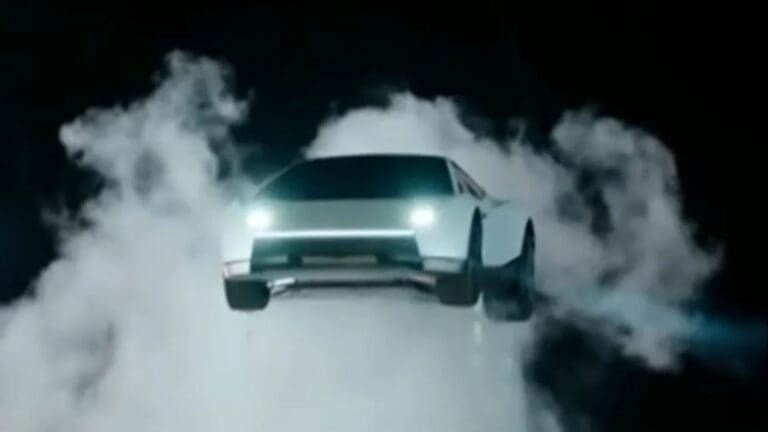
So on Thursday night I was up far later than is decent, watching the new Tesla Roadster drive upside down around a vast curved ramp at a SpaceX test site in Texas, then launch itself into the air and flip, steadied by bursts of compressed air.
Elon Musk declared that the future does have flying cars after all. The nine-year-old in me felt the hairs on the back of my arms stand on end.
This 51-year-old, who has sat through a great many product launches, tried hard to be cynical and failed completely. Yes, nobody was in the car. Yes, as EV Powered’s report on the launch points out, nobody will be driving one home before production starts in 2028, and even then the flying version won’t be allowed on public roads. And for the privilege of waiting, Tesla would like a $250,000 deposit, which is roughly what a family in Luton pays for a house. I’d still queue.
Which brings me, as everything eventually does, to Concorde.
Concorde was the most beautiful machine Britain ever helped build. It crossed the Atlantic in three and a half hours and served lobster at twice the speed of sound. Hardly anyone ever flew on it, and it never made its money back, but it did something no balance sheet can measure. It made an entire nation look up and believe that the future had arrived.
Meanwhile, in 1995, a young Greek-Cypriot entrepreneur called Stelios Haji-Ioannou rented two Boeing 737s, painted them a colour best described as alarming, and started flying people from Luton to Glasgow for the price of a pair of jeans. No lobster, no glamour, and a queue for the toilet. easyJet changed how Britain travelled more than Concorde ever did, because it was dull, cheap and everywhere.
The flying Roadster is Concorde. The robotaxi is easyJet.
And the easyJet of motoring is already here. While the world gawped at Texas, Londoners have quietly been able to hail a self-driving taxi through the Uber app since September, with Wayve’s cars, a safety driver still sitting in for now, and Waymo is lining up its own service. Last year I was driven around Los Angeles by a Waymo with nobody at the wheel. Within five minutes I’d stopped gripping the door handle. Within ten I was checking my emails. That’s how revolutions actually feel: not like a barrel roll, but like boredom setting in.
Business readers will recognise the pattern, because it’s the oldest double act in technology. The halo product captures the imagination, the talent and the capital. The commodity product, dull and cheap and everywhere, changes the economy. In the 1960s an American Ford dealer called Bob Tasca Sr. summed up the first half in five words: win on Sunday, sell on Monday. It turns out you don’t even need to win. When Aston Martin supplied Formula One’s safety car and medical car, I’m told interest in the brand rose by 30% on the Monday after both cars had been deployed. Seen on Sunday, sold on Monday. Lawrence Stroll must have been the only man on the grid who cheered when the yellow flags came out. Thursday’s barrel roll will sell a great many robotaxi rides in exactly the same way, which is why the theatre in Texas and the taxi on your street are the same business plan.
So here’s the question that actually matters. In, say a decade, will 17-year-olds bother learning to drive?
In London, quite possibly not. Between the Tube, the robotaxi and insurance quotes for a young driver that could pay for a gap year, the argument for spending £2,000 on lessons is collapsing. The £42bn fight between black cabs and robotaxis is really a fight over who gets to replace the family car for an entire generation.
But robotaxis go first where the money is: dense, well-mapped streets with plenty of fares. The 17-year-old apprentice in north Norfolk, the farm hand in mid-Wales and the trainee chef in a Cotswold pub kitchen will still need a licence, a bus that’s stopped running, and a parent with a free Saturday. I’ve written before that Britain’s rural economy is already at breaking point. A mobility revolution that stops at the M25 makes that worse, because the rural employer will be hiring from a shrinking pool of young people who can actually get to work.
That’s the real policy test, and it has nothing to do with thrusters. If ministers want autonomy to boost growth rather than widen the gap between town and country, they need to license rural services, rural routes and rural pilots now, not after London has had its decade of fun.
As for flying cars, they’ll come the way every future does, first for the few, then for the rest of us.
The man in the white jumpsuit, I later learned, had about 20 seconds of fuel in his rocket belt. Thursday’s Roadster managed less. But I watched it with exactly the same grin I had at nine, and this time, unlike in 1984, the dull, brilliant, everyday version of the future is already parked outside, waiting to drive me home

More Stories
Healey weighs income tax on family business handovers
John Healey is considering proposals to levy income tax rather than capital gains tax when owners hand their companies down...
Profit warnings hit near two-year high ahead of Healey’s first Budget
UK-listed companies issued 65 profit warnings between July and September, the highest quarterly total since the end of 2024, according...
Nuveen Private Capital passes $100bn in committed capital
Nuveen Private Capital, the private credit platform formed from US manager Churchill Asset Management and European manager Arcmont Asset Management,...
Microsoft pulls out of Nscale’s £2bn Loughton AI data centre
Microsoft has pulled out of Nscale’s planned £2bn artificial intelligence data centre in Loughton, Essex, the BBC has reported, although...
Third of investors would pause UK investment if business taxes rise
A third of senior investors and corporate executives would consider pausing, reducing or stopping all UK investment over the next...
US threatens EU with ‘devastating’ retaliation over Starlink restrictions
The bloc has proposed reserving satellite spectrum for local firms, potentially limiting access for foreign players such as Elon Musk’s...