
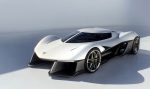
Electric Chevrolet Corvette Is Still in GM’s Plans, But There’s No Timeline for Its Arrival

The idea of an all-electric Chevrolet Corvette has been floating around for years, and it looks like General Motors still intends to make it happen. The bigger question is when. Back in 2022, GM President Mark Reuss confirmed that a fully electric Corvette was in the works, raising expectations that America’s iconic sports car would eventually trade its V8 soundtrack for battery-powered performance. Fast-forward to 2026, and we’re still waiting for something more concrete. Fortunately, GM hasn’t abandoned the idea, even if the company seems perfectly comfortable keeping enthusiasts guessing about when we’ll actually see one.
According to The Drive, which recently spoke with Corvette and GM Performance Executive Chief Engineer Tony Roma on its Drivecast podcast, an electric Corvette remains part of the long-term vision. Roma explained that electric vehicles represent the eventual destination for the Corvette, essentially reaffirming what Reuss announced four years ago. However, he stopped well short of offering a launch date or even hinting at which generation of Corvette might introduce a fully electric powertrain. His message was fairly straightforward, with Roma telling The Drive, “Someday we will fully electrify Corvette. But not today.” That’s probably reassuring news for Corvette purists who aren’t quite ready to give up the rumble of a small-block V8.
Of course, Chevrolet hasn’t exactly been sitting on its hands when it comes to electrification. The Corvette E-Ray introduced hybrid all-wheel-drive performance to the C8 lineup, demonstrating how electric motors could complement traditional V8 horsepower rather than replace it. That approach continues with the 2027 Corvette Grand Sport X, which combines a naturally aspirated 6.7-liter V8 with electric assistance to produce 721 horsepower. Then there’s the outrageous Corvette ZR1X, packing a combined 1,250 horsepower from its twin-turbocharged V8 and front-mounted electric motor. These machines prove that Chevrolet knows how to make electrification work in a Corvette, but they also show why the company might not be in a rush to eliminate the gasoline engine altogether.
What makes the situation particularly interesting is where the Corvette currently stands in its development cycle. The mid-engine C8 has been around since the 2020 model year, and with Chevrolet continuing to expand the lineup, attention will eventually shift toward the next-generation C9. There was once speculation that a battery-electric Corvette might arrive during the C8’s production run, but that possibility appears increasingly unlikely as the current generation matures. GM hasn’t confirmed whether the electric Corvette will debut with the C9 or arrive even further down the road. There is also the challenge of maintaining everything enthusiasts expect from a Corvette, including relatively accessible performance, engaging driving dynamics, and the kind of personality that has helped make the nameplate an American automotive institution for more than seven decades.
For now, Chevrolet seems content to let its increasingly powerful hybrid Corvettes carry the electrification torch while engineers continue exploring what comes next. And frankly, that might not be such a bad thing. An electric Corvette will need to deliver more than impressive acceleration figures to win over loyal fans, especially when today’s gasoline-powered and hybrid models are already capable of astonishing performance. Battery weight, driving range, track endurance, and the overall driving experience will all play important roles in determining whether an electric Corvette can live up to the badge. GM clearly sees a fully electric future for its legendary sports car, but until the company is ready to reveal its plans, Corvette enthusiasts can continue enjoying some of the most powerful V8 machines Chevrolet has ever built.


More Stories
How a Car Wreck Lawyer Strengthens Your Accident Case
Highways like I-10, I-35, and US-281 funnel commuters, commercial trucks, and through-travelers into the same stretches of pavement in San...
Who Is at Fault? Determining Liability in Auto Accidents
McAllen’s location along the U.S.-Mexico border means there is heavy cross-border traffic, commercial vehicles, and congested intersections throughout the city....
How to Quickly Discover Crucial Legal Help After a Car Accident
In Durham, the hours after a car accident are a blur of phone calls, pain, and paperwork, and the clock...
Hyundai Recalls Nearly 95,000 Genesis Sedans Over Fire Risk, Urges Owners to Park Outside
Hyundai Motor America is issuing another serious safety recall, this time affecting 94,622 vehicles in the United States due to...
Best Voice AI for Automotive Dealers
Automotive dealerships face mounting pressure to respond to customer inquiries faster than ever before. Voice AI solutions now handle incoming...
Cyprus September 2026: Jeep Avenger and BYD Seal U reach ranking records
The BYD Seal U reaches a record third place in Cyprus in September. According to data by our local partners...