
Consumer Prices Rise 0.6 Percent, Lifting Annual Inflation Above Expectations

By Andrew Moran
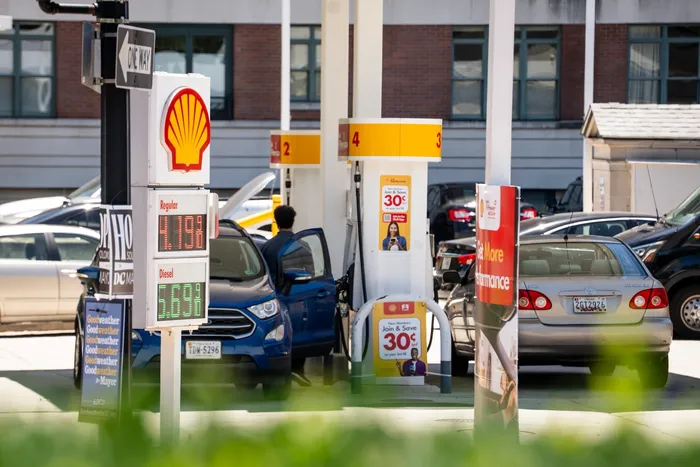
Consumers faced higher monthly cost pressures in September as surging gasoline prices resulted in hotter annual inflation, U.S. government data show.
From August to September, consumer prices rose 0.6 percent—the fastest pace since April—in line with consensus forecasts.
September’s annual inflation rate climbed to 3.7 percent, from 3.4 percent in the previous month, according to the Bureau of Labor Statistics’ consumer price index (CPI) released on Oct. 14.
Economists had forecast a 3.6 percent increase.
The pain at the pump accounted for more than half of last month’s increase, the bureau said.
The gasoline index climbed more than 9 percent, following a 3.9 percent jump in August. On a 12-month basis, gasoline is up 34 percent.
Crude oil accounts for about half of gasoline costs. With oil prices firmly above $90 per barrel because of the war in Iran, now approaching its ninth month, motorists are paying more than $4 per gallon, according to the American Automobile Association.
It is not just gasoline that is climbing. Fuel oil, such as diesel, also spiked more than 15 percent in September.
The overall energy index jumped 5.2 percent after a 4.2 percent increase in August.
“Inflation is cooking with gas,” Jamie Cox, managing partner at Harris Financial Group, told The Epoch Times in an emailed note.
“It is abundantly clear where the inflation impulse originates, but two wars need to end before we get any relief.”
Shelter inflation was another factor lifting consumer prices last month, the bureau reported. The index rose 0.4 percent and is up 3.2 percent year over year.
Food prices were flat and up 2.5 percent from a year ago.
Stripping out the volatile energy and food prices, core inflation edged up to 2.6 percent, from 2.4 percent. This came in higher than economists’ forecast of 2.5 percent.
Core inflation also ticked up by a higher-than-expected 0.3 percent.
Looking ahead to the next batch of CPI data, early estimates indicate consumer inflation might have peaked.
The Cleveland Fed projects October’s annual inflation rate will be 3.6 percent and rise 0.3 percent monthly.
Truflation, a popular real-time inflation measure, warns that inflation has not yet spilled into the broader economy.
“Inflation is not yet broadening decisively at the consumer level, but the upstream pipeline is becoming more inflationary,” Truflation said in a report shared with The Epoch Times.
“Energy and tariffs threaten renewed goods inflation, while weaker employment and wage growth limit demand-driven pressures. The key risk is supply costs spreading into core inflation.”
The Federal Reserve raised interest rates last month for the first time in three years to cushion the possible blow of oil-driven second- and third-order inflation effects.
The next major inflation report will be the September producer price index on Oct. 15.
Market Reaction
U.S. stocks slipped following the September CPI report as Treasury bond yields surged.
The benchmark 10-year yield rose about 8 basis points to 5.3 percent. The 30-year yield edged up 5 basis points to 5.61 percent. The 2-year yield, which typically tracks Fed policy expectations, rose 12 basis points to almost 4.92 percent.
The U.S. dollar index—a gauge of the greenback against a weighted basket of currencies—reversed its recent losses and climbed about 0.5 percent to an 18-month high of 102.68.
Outlook at the Fed
While financial markets expect the inflation-fighting Fed to raise rates at least one more time this year, the debate unfolding is whether the hike will happen this month or in December.
Investors have priced in a 56 percent chance of a pause at the October Federal Open Market Committee policy meeting; 70 percent expect a hike at the final meeting of 2026.
Expectations shifted after a softer September jobs report. The economy added just 29,000 new jobs last month, and the unemployment rate ticked up to 4.2 percent as almost 500,000 individuals joined the workforce.
Comments from various Fed officials indicate a muddled outlook.
New York Fed President John Williams, in an Oct. 13 interview with Bloomberg News, suggested one more rate hike would be appropriate this year. But he also hinted the Fed might not tighten policy further in 2027.
“I haven’t changed my view that it may be appropriate to have one more rate hike,” Williams stated. “I don’t think at this time I have any reason to believe that we would need to do more.”
He said overall inflation should be close to the central bank’s 2 percent target next year, adding that he sees “disinflationary forces at play.”
“In fact, my forecast for inflation for next year is inflation to come down quite a bit,” Williams said.
Cleveland Fed President Beth Hammack proposed ripping off the band-aid immediately and making quick, incremental changes to monetary policy.
“When feasible, I generally think it’s preferable to make smaller adjustments, and to do so relatively quickly, rather than to wait and risk needing a larger course correction,” Hammack said at a National Association of Business Economics event on Oct. 12.
“Considering all the inputs that factor into my reaction function, a restrictive monetary policy stance is appropriate to ensure a timely return to 2 percent inflation.”
The Summary of Economic Projections—the Fed’s quarterly outlook for policy and the economy—shows officials expecting its preferred inflation measure to fall sharply in 2027 and 2028.
The median personal consumption expenditures (PCE) inflation rate is forecast to slow to 2.3 percent next year and 2.1 percent in 2028. After stripping out volatile energy and food components, policymakers expect the median core PCE inflation rate to be stickier, at 2.5 percent in 2027 and 2.2 percent the following year.
Cox noted that the Fed made a COVID-19 pandemic-era mistake by calling inflation transitory, but now the central bank is “set to make the same mistake in reverse on the energy supply shock.”

More Stories
Saudi Arabia Reports Aramco’s Administrative Building on Fire After Being Struck
By Aldgra Fredly A fire broke out at an administrative building owned by Saudi Arabia’s state-owned oil giant after it...
Who is Lisa Bonet? Recent News, Early Life, Marriage, and More
Readers often look for clear details about Lisa Bonet, the famous actress best known for playing Denise Huxtable on the...
US Hits Bank of America With $1.2 Billion in Penalties for Security Violations
By Jill McLaughlin The U.S. Treasury fined Bank of America $1.21 billion for violations of anti-money laundering and sanctions laws,...
Tens of Thousands of People Double-Enrolled, Removed From Obamacare: Officials
By Zachary Stieber Health officials poring over death records and other data have found that 189,000 people were improperly enrolled...
Is Lanterns Season 2 Renewed? Plot, Release Date, and Episodes
Television series by Chris Mundy: Lanterns update! Fans are excited to know the renewal status of the famous superhero series...
US Embassy Warns Americans to Reconsider Travel to Saudi Arabia Amid Houthi Strikes
By Jack Phillips The U.S. Embassy in Saudi Arabia’s capital on Tuesday issued renewed warnings about traveling to the country...