
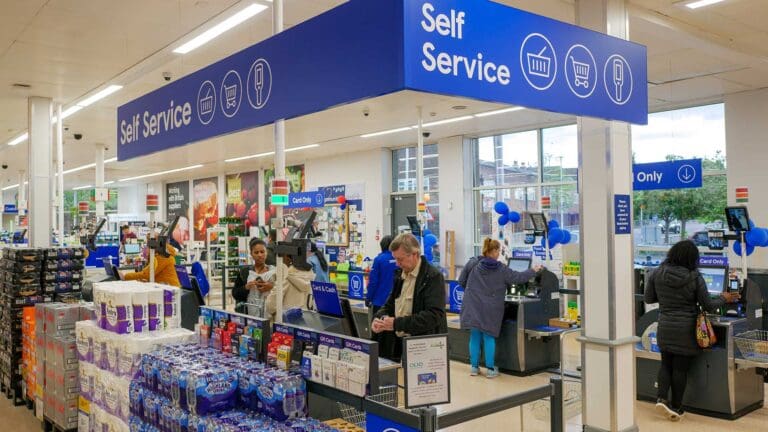
Tesco raises profit forecast and lifts share buyback to £950m

Tesco have raised the lower end of its full-year profit forecast and expanded its share buyback programme to £950m, as Ken Murphy, the chief executive, predicted that “resilient” shoppers would spend more this Christmas.
The UK’s largest supermarket chain said it now expects adjusted operating profit of between £3.15bn and £3.3bn, compared with the £3bn to £3.3bn range it set out in April. Tesco said at the time that the wider range reflected “increased uncertainty” amid the conflict in the Middle East. It posted a profit of £3.15bn last year.
Shares in the grocer rose 5 per cent to 499½p this morning after the improved guidance and the increase in the buyback from £750m.
Tesco’s half-year results showed total revenue up 3.7 per cent to £37.3bn in the six months to the end of August, while adjusted operating profit climbed 6.5 per cent to £1.8bn.
UK like-for-like sales rose 1.5 per cent, the company said, compared with 4.9 per cent growth in the same period last year. Group like-for-like sales increased 1 per cent. The figures follow the slower first-quarter sales growth that Tesco reported in June.
Online sales grew 8 per cent over the half, Tesco said. Sales at Whoosh, its one-hour grocery delivery service, rose 37 per cent and the service is on track for sales of more than £500m this year. Revenue from the premium own-label Finest range rose 9 per cent.
Murphy said online shopping had been “growing across all metrics”, including its own quick commerce service, grocery home shopping and partnerships with Uber and Deliveroo.
Like-for-like sales at Booker, the cash and carry business owned by Tesco, fell 2.6 per cent, which the company attributed partly to the continued decline of the tobacco market. Home and clothing like-for-like sales declined 0.6 per cent because of higher markdown sales and discounting.
Murphy said: “Consumers in the UK have been pretty resilient in an uncertain environment and there is a sense that customers want to enjoy Christmas, given everything that is going on in the world.”
The retailer has bought more key Christmas lines and increased slots for online deliveries by 10 per cent.
Murphy predicted a “more moderate Christmas from an alcohol point of view” because of the rise of weight-loss drugs and consumers attempting to be healthier. “We think low and no alcohol will see strong growth,” he said, adding that he expects many shoppers will still want to “indulge”.
He said he was not expecting food supplies to be hit by this summer’s drought. Tesco had hedged its energy costs into next year and was making savings across the business to help keep prices down for shoppers, he added.
The results follow reports this week that Sainsbury’s had held discussions with Morrisons over a potential merger.
Asked whether the UK grocery sector needed some form of consolidation, Murphy said he “doesn’t dwell too much” on merger speculation. “Whatever happens in the market, we’ll respond to it. Our plan is to stay ahead through consistently investing in the business,” he said.
He added that he “wouldn’t be inclined to speculate on any rumours in the market”, including reports that Tesco is considering a bid for Majestic Wine Group, the UK’s largest wine retailer, which was put up for sale by its private equity owner over the summer.
Asked for his thoughts on the UK rejoining the EU, Murphy said he would welcome “anything that makes food more accessible”. He said: “Tesco has always adapted to whatever decisions the British public make, and the British government make.”
Analysts at RBC Capital Markets said they viewed Tesco as a “best-in-class player in the UK food retail space, with a strong business model and an experienced management team”.
They added: “We are mindful that market share gains have moderated in recent periods, and we expect this trend to continue given competitors in the UK are starting to stabilise their volume losses.”
Tesco has a 28 per cent market share, almost twice that of Sainsbury’s, its nearest rival. Murphy said the business still had room for growth.

More Stories
SFO to pay staff extra commuting costs after Canary Wharf move
The Serious Fraud Office (SFO) will reimburse staff for the extra cost of commuting to its new headquarters in Canary...
Imagination Technologies warns of ‘material uncertainty’ over future
Imagination Technologies, the Hertfordshire microchip designer owned by Chinese-backed investors, has warned of “material uncertainty” over its future after revenue...
Red Bull paid Christian Horner £33.5m for loss of office, filings show
Red Bull Racing paid Christian Horner £33.5m in compensation for loss of office after his departure as team principal and...
Arad Moaf: The Entrepreneur Connecting Education, Technology and Business Growth Across MENA
As the founder of Rastad, Moaf works across education, commercial partnerships and digital product design. His career began in financial...
EU seeks to target US Big Tech without angering Trump – FT
Brussels is reportedly considering a broader corporate tax to avoid singling out Apple, Meta, and Google The European Union is...
UK reaches 17 million mental health sick days in 2026, analysis finds
The UK reaches 17 million working days lost to mental ill-health in 2026 today, according to analysis by Simplyhealth, the...