
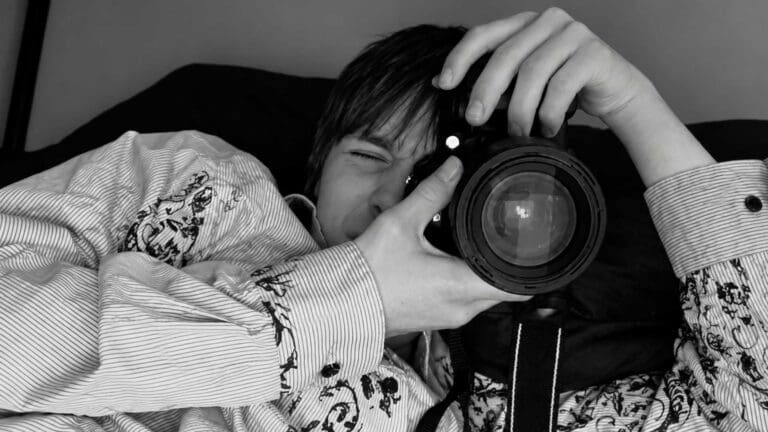
Scott Kresan Tilbe on Creativity, Structure, and Building a Career Across Different Interests

Raised in Goderich and Barrie, Tilbe developed an early interest in both structured and creative activities. He played saxophone, earned recognition at local music festivals, studied karate to black belt level, and became interested in photography, history, science, and visual art.
His education followed a similarly varied path. After studying introductory media, he completed programmes in digital photography and web design at Georgian College. He later studied computer science at Laurentian University and film and television at Canadore College.
Scott Kresan Tilbe has worked as an independent photographer and web designer and has held photography roles with organisations including Auction House Barrie and Edge Imaging. Earlier customer-facing roles at Toys “R” Us and RONA also gave him experience in sales, support, and communication.
For the past four years, he has worked as an office administrator at a gastroenterology clinic in Barrie. His role involves supporting day-to-day office operations, managing priorities, and helping maintain an organised environment for staff and patients.
Across each stage of his career, Tilbe has continued to build practical skills while maintaining his creative interests. His experience shows how technical knowledge, visual thinking, and strong organisation can complement one another across different professional settings.
How did your early interests shape the direction of your career?
I had a lot of different interests when I was younger, and I think that shaped the way my career developed. I played saxophone and competed in local music festivals. I also trained in karate and eventually earned my black belt. At the same time, I became interested in photography, history, science, art, and computers.
Those things may sound unrelated, but they all taught me something useful. Music required practice. Karate required discipline. Photography trained me to notice details. History and science encouraged me to keep asking questions. I think I carried all of that into my education and later into my work.
You studied several different subjects. Was that always intentional?
Not completely. I knew I was interested in media and visual work, but I also liked technology. I studied introductory media and then completed programmes in digital photography and web design at Georgian College. Later, I studied computer science at Laurentian University and film and television at Canadore College.
I was interested in understanding both the creative and technical sides of media. Photography taught me composition and visual communication. Web design made me think about how people interact with information. Computer science introduced a more structured approach to problem-solving.
I do not think every educational experience has to lead to one specific job. Sometimes the value is in the way it changes how you think.
What did working in photography teach you about professional responsibility?
Photography is creative, but professional photography also requires a great deal of preparation and organisation. You have to understand what the client needs, pay attention to deadlines, manage equipment, communicate properly, and still produce work that meets a certain standard.
I worked independently and also had photography roles with organisations such as Auction House Barrie and Edge Imaging. Those experiences taught me that having technical ability is only part of the job. You also need to be dependable.
A good photograph may be the final result people see, but there is usually a lot of planning behind it.
How did web design add to that perspective?
Web design made me think more about the person using the finished product. Something can look impressive but still be difficult to navigate. I learned to think about layout, clarity, function, and how information is presented.
When I worked on independent web design projects, I tried to balance visual appeal with practicality. I still use that way of thinking in other areas. You have to ask what someone actually needs rather than only thinking about what you personally like.
You also worked in retail. What did those roles contribute to your career?
Working at Toys “R” Us and RONA gave me experience dealing directly with customers and working as part of a larger team. Retail can teach you a lot about communication because you interact with many different personalities.
You also learn that people do not always explain exactly what they need. Sometimes you have to listen carefully, ask the right questions, and then help them find a solution. That is useful in almost any profession.
How did you move into office administration?
For the past four years, I have worked as an office administrator at a gastroenterology clinic in Barrie. It is different from photography or web design, but there are more similarities than people might expect.
Administration requires attention to detail, prioritisation, communication, and the ability to manage several responsibilities at once. I use schedules and task lists to decide what needs immediate attention and what can be handled later.
I like having structure. At the same time, office work can be unpredictable, so you have to be able to adapt when priorities change.
Has your creative background helped you in administrative work?
Yes. Creative work teaches you to look at a problem from more than one angle. In photography, moving a few feet or changing the lighting can completely change the result. In web design, changing how information is organised can make something much easier to understand.
I think that translates into administration. If a process is not working well, I naturally start thinking about how it might be organised differently.
What do you think makes someone dependable in the workplace?
For me, it comes down to completing work properly and on time. I want the finished result to meet the standards of the people I am working with, but I also have my own standards.
I measure success partly by whether I can look at something I have completed and know that I gave it the attention it required. Positive feedback matters, but you also have to be able to evaluate your own work honestly.
How do you continue developing professionally?
I read constantly, especially about history and science, and I attend conferences or learning opportunities when they relate to my interests. I also like talking with people who know more about a subject than I do.
I think curiosity is important. Your formal education ends at some point, but learning does not have to.
What has your career taught you about having several professional interests?
I used to think that having several interests might make it harder to define what I do. Now I see it differently.
Administration, photography, and web design each use different skills, but there is overlap. They all require organisation, patience, communication, attention to detail, and the ability to understand others’ needs.
I do not think everyone has to fit neatly into one category. Sometimes having experience in several areas gives you a better way of approaching the work in front of you.

More Stories
Wonderful AI opens London office and plans to hire hundreds
Wonderful AI, a Dutch-Israeli start-up that helps companies adopt artificial intelligence, has opened an office in London and plans to...
UK borrowing hits £18.3bn in August as debt interest costs climb
Government borrowing rose to £18.3bn in August, above City and official forecasts, as higher debt interest payments added to the...
Getting to know you: Jordan Richards, founder and CEO, &above
Jordan Richards joined Google as an apprentice at 18 and became a design lead before founding &above, a London AI...
TUC urges Burnham to act as UK loses 200,000 manufacturing jobs
The UK has 200,000 fewer manufacturing jobs than in 2010, a fall of 7 per cent, according to an analysis...
The Soundtrack Line Item: What Music Actually Costs a Small Business Making Video
It is a small problem that consumes a disproportionate amount of time, and it is one of the few genuinely...
WhatsApp behind seven in ten harmful-content alerts outside U16 ban
WhatsApp accounted for 71.82 per cent of harmful-content alerts from identified apps outside the Government’s planned under-16 social-media ban, according...