
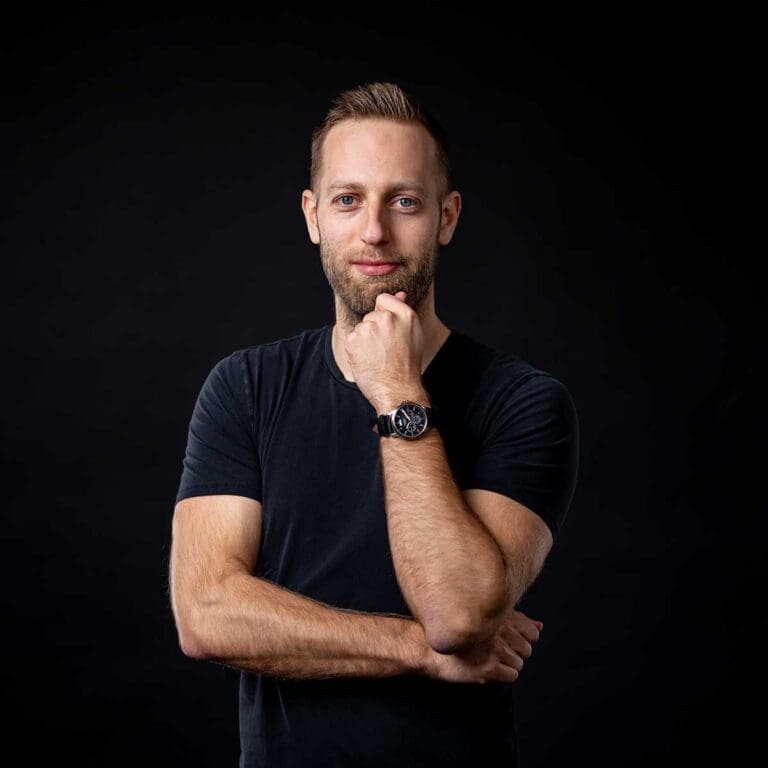
Getting to know you: Filip Pesek, founder and CEO, DonnaPro

Filip Pesek is the founder and CEO of DonnaPro, a Slovenia-headquartered agency that places EU-based executive assistants with founders and chief executives in the UK and across Europe.
The company says it rejects more than 99 per cent of applicants, can have an assistant ready to start within nine business days and keeps 91 per cent of clients after a 60-day trial. Pesek previously ran a marketing agency and spent years managing assistants of his own before building the model. He tells Business Matters why the assistant is only half the answer, what he would tell his younger self and the ten-day test every founder should try.
What do you currently do at DonnaPro?
I am the founder and CEO of DonnaPro. We take the admin off founders’ plates so they can get back to running their companies. Every client gets an executive assistant based in the EU, hired, trained and still managed by us.
The assistant is the part you see. The team behind her is the part that makes it work. It is why 91 per cent of our clients stay on after the 60-day trial.
My role has changed a lot as we have grown. In the early days I did most things by hand, from sales to recruitment to whatever needed doing that week. Now we have a lot of assistants and a proper team on the corporate side.
So my work has moved to people, strategy and making sure the systems hold up as we keep growing. If DonnaPro cannot run without me sitting in the middle of everything, I have built the wrong thing.
Two things I am keeping for now. I still take a lot of first calls with founders, and I still do the final interview with every person we hire.
What was the inspiration behind your business?
It started with my own problem. Then our clients confirmed it.
I have worked with assistants for years, going back to when I ran my marketing agency. Some were great, some were not. Whenever one left, replacing them landed on me. I had to find someone new, train them and work out again how we would work together. I spent a lot of time managing assistants who were supposed to be saving me time.
Eventually I got it down to a science. But even with a great assistant, the company still had a bottleneck, and it was me. That was not because of her. It was because I had not built the systems underneath. Between making the assistant relationship work and putting out fires across the company, I never gave the business the structure it needed.
Then two things happened. People around me saw how I worked with my assistant and started asking where I found her and how I trained her. And at the agency, we were doing our job well. We flooded our clients with leads, and all the admin that came with that growth landed on the founders’ plates.
That is when it clicked. I had one problem, which was no systems. They had two: no systems and no assistant. And the assistant part is where most founders get stuck, because they end up doing what I did, spending hours managing the person who is supposed to save them time.
So that is the part we take away. With DonnaPro, we hire, train and manage the assistant, so the founder gets the time back without the management work. Our assistants come from the top 1 per cent of assistant talent in the EU, and they have our whole team behind them. We reject more than 99 per cent of the people who apply, and those who get through have two weeks of intensive training before they start with a client.
That support is why they often help put simple structure in place along the way. Better processes, clearer handovers, fewer things living only in the founder’s head. We do not come in as consultants. But a good assistant with proper support makes a company more organised the longer she is there.
Who do you admire?
I admire a lot of people, and they come from very different places. What they share is that they are exceptional at something.
In business, it is the founders I meet who have built something with real value that does not need them in the day to day. They can run it from a high level, or step back completely if they choose. Plenty of people build big companies. Far fewer build one that does not own them.
Then there are people I admire for how they think. Charlie Munger is one. I will be honest, I know him more from Poor Charlie’s Almanack than from his investing, but that book changed how I make decisions.
And I have a lot of respect for athletes who stay at the top of their game. Lindsey Vonn is one who comes to mind. She retired, had her knee rebuilt with titanium, came back after almost six years away and won World Cup downhills again at 41.
Looking back, is there anything you would have done differently?
Yes. I would have started DonnaPro sooner.
And once I did start, I would have been braver. I would have taken on more capital at the beginning and made a bigger bet. I was careful, and careful felt responsible. But when the demand is clearly there, careful mostly means slower.
The cost of thinking small is that you rarely see it. Nothing breaks. You grow, you are reasonably happy with it, and you never find out what the bigger version would have looked like.
Most founders answer this question with a mistake they made. Mine is more about the risks I was too careful to take. If I could tell my younger self one thing, it would be to dream much bigger, much sooner.
What defines your way of doing business?
Thinking long term, and actually living by it, which is the hard part.
When we hire someone, the plan is that they are still with us in five years. That changes how you treat people. If you want someone around in year five, you cannot burn them out in the first six months.
It shows up in boring, specific rules. Internal messages get checked once a day, not all day. Notifications are off by default. If something is really urgent, we call each other.
New people find this a bit scary at first, because they think being always online is what good looks like. It is not. Someone who replies to every message within seven minutes has spent the whole day reacting and no time thinking.
I try to run myself the same way. I have a son who is nearly five and obsessed with sport. I want to watch him play, not watch my phone while he plays.
What advice would you give to someone starting out?
Try this on yourself. Imagine you disappear for ten days, with no calls and no email. Does the business dip, hold, or actually run better? If it dips, you have found your problem, and it is not your team. It is the system you have not built yet.
Then stretch it to 30 days, then 90. When the company would be fine without you for 90 days, you have built a business. Before that, you have built a job with a team attached.
And stop confusing busy with effective. There is a line I keep coming back to: if you do not have an assistant, you are one. Somebody has to handle the work that keeps a business running. If nobody has been hired for it, it is you, and you are the most expensive person in the company to be doing it.

More Stories
German auto workers protest historic job cuts
The country’s carmakers are scaling back production amid high energy costs, US tariffs and Chinese competition Tens of thousands of...
Getting to know you: James Williams, co-founder and CEO, Sero
James Williams is co-founder and CEO of Sero, a Cardiff-based B Corp that upgrades social housing with insulation, solar panels,...
Getting to know you: Sarah Horrocks, founder, PALAIR
Sarah Horrocks is the founder of PALAIR, a London-based brand making premium padel and activewear for women and men, designed...
Causes for Stagnant Growth and How to Overcome Them
For business leaders, stagnant growth can be frustrating, but it can also provide an opportunity to reassess the organisation and...
Yasmin Sarwar, A-Level Results and the Parent Feedback That Tells the Real Story
For parents, A-Level results day is often the culmination of a long and emotionally demanding journey. For students, it is...
10 Best Customer Service Software for Growing Businesses
More customers usually means more conversations, but volume is only part of the problem. Support requests may need to move...