
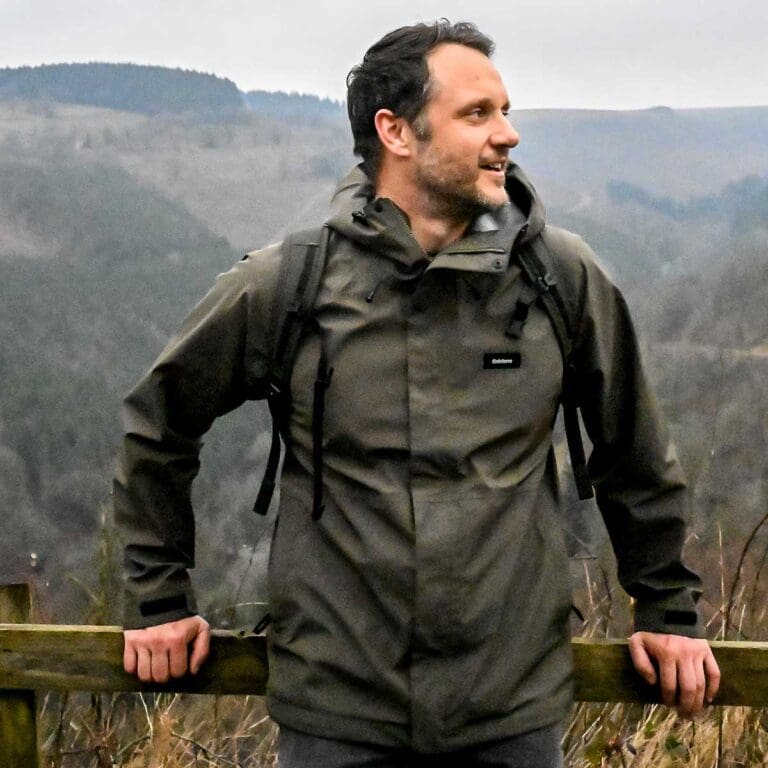
Getting to know you: James Williams, co-founder and CEO, Sero

James Williams is co-founder and CEO of Sero, a Cardiff-based B Corp that upgrades social housing with insulation, solar panels, batteries and smart energy services.
In February 2026 the company secured investment from Innovation Investment Capital, the fund backed by the Cardiff Capital Region, to scale work that already covers up to 2,500 homes across the UK, with a contracted pipeline of up to 10,000 more. Founded in 2017 with former architect Andy Sutton, Sero connects housing providers with impact investors through its Energy as a Service model. He tells Business Matters why purpose, values and trust sit at the heart of how he leads, and why cash is king.
What do you currently do at Sero?
At Sero, we help social housing providers improve the energy performance of their existing homes, making them healthier to live in, more affordable to run and better for the environment.
My role is to bring together the different pieces needed to make that happen at scale. We help landlords understand what improvements each home needs, whether that is insulation, ventilation, heat pumps, solar panels or battery storage, and we make sure those upgrades are designed and delivered to the highest possible standards. We currently work with partners on up to 2,500 homes across the UK, with a further contracted pipeline of up to 10,000.
One of the biggest challenges facing the sector is funding. Many housing providers want to improve their homes but do not have access to enough capital to do so at the pace and scale required. Government programmes only go so far, leaving many residents in the least efficient homes with the highest energy costs.
A significant part of what we do is overcoming that challenge. We have developed funding models that connect housing providers with impact investors, enabling retrofit programmes to move forward where they otherwise might not. Through our Energy as a Service approach, we are helping unlock investment into home improvements while creating long-term value for landlords and residents alike.
What excites me most is that we are doing more than upgrading buildings. We are helping to bring a new type of energy service into social housing, one that gives landlords greater responsibility for how homes are powered and helps residents reduce their bills. We can tackle climate change and fuel poverty at the same time.
What was the inspiration behind your business?
Before founding Sero, I worked in the energy sector, and I became increasingly convinced that one of the biggest opportunities to reduce carbon emissions sat right in front of us: our homes. The housing sector was not changing at the pace or scale needed to make a meaningful difference.
Around the same time, I had a serious cycling accident which left me with a long recovery and a lot of time to think. I came away with a renewed sense of purpose and a determination to build something that could contribute to solving one of society’s biggest challenges.
I then met my co-founder, Andy Sutton, a former architect who shared my passion for sustainable homes and brought deep expertise in how buildings are designed and perform. Together, we founded Sero in 2017 with the ambition of helping create a net zero future.
Our original vision focused on new-build homes, but as we spent more time with housing providers, we realised the greatest opportunity for impact lay elsewhere. The UK already has millions of existing homes that need upgrading, and many of the people living in them are struggling with high energy bills, poor thermal comfort and ageing housing stock. Retrofitting those homes could deliver some of the biggest environmental and social benefits.
That insight shaped the business we are today. Whether it is new funding solutions, better retrofit delivery or helping landlords take a more active role in how homes are powered and heated, we are constantly challenging conventional approaches.
While net zero remains an important goal, I have come to believe that the outcome matters just as much as the technology. Our mission is to help create homes that are healthier, more comfortable and more affordable to live in. If we can improve people’s quality of life while reducing carbon emissions, we are achieving exactly what we set out to do.
Who do you admire?
I have always admired Henry Engelhardt, the founder of Admiral. What he achieved in building one of Wales’ most successful businesses is impressive in its own right, but what stands out most is the culture he created along the way. When people talk about Admiral, they talk about the way people were treated, the values embedded in the organisation and the environment created for employees to thrive.
I believe culture is one of the most important responsibilities of a leader. Businesses succeed through people, and creating a place where people want to work and stay is something I admire enormously.
More broadly, I admire people who challenge convention and are not afraid to take on established systems, pursue big ideas and work relentlessly to create positive change. I am particularly drawn to leaders who combine ambition with purpose and focus on meaningful impact rather than growth for growth’s sake. Purpose and culture are the two things that matter most to me.
Looking back, is there anything you would have done differently?
Honestly, no, although that should not be confused with saying everything has gone perfectly.
Every business experiences challenges, setbacks and mistakes, and we have made our share. But some lessons can only be learned through experience. Much of the advice entrepreneurs receive is valuable, but often it only resonates once you have experienced the challenge yourself.
I compare it to health and fitness. Most people know what they should be doing, but they do not always change until they have a reason to. Business is very similar.
What I have learned is the importance of surrounding yourself with good people. Mentors are incredibly important, not because they tell you what to do, but because they give you perspective when things do not go to plan.
I do not have regrets because every decision was made with the best information available at the time and for the right reasons. It is easy to look back with hindsight, but leadership requires making decisions in the moment. As long as you are guided by your values and act with integrity, you have to trust the process and keep moving forward.
What defines your way of doing business?
Three things define my approach: purpose, values and trust.
First, it is important to know why you are doing something. For me, business has never been solely about financial performance; it has always been about creating positive impact. A clear purpose makes decisions much easier because you understand what you are ultimately trying to achieve.
Second, values matter. They provide the framework for decision-making, especially when there is no obvious answer, and help ensure decisions are consistent with what you stand for.
Third, trust is essential. I believe in hiring talented people, giving them responsibility and trusting them to deliver. The strongest organisations are not built around control; they are built around empowering people to do their best work. If people understand the purpose, share the values and feel trusted, extraordinary things can happen. That is the foundation of how we have built Sero.
What advice would you give to someone starting out?
The simplest advice I would give is this: cash is king.
It may not be the most exciting answer, but it is one of the most important lessons I have learned. I have seen many businesses with excellent products, talented people and strong market opportunities fail because they ran out of cash at the wrong moment. When you are starting out, it is easy to focus on growth, investment or new capabilities, but without careful cash management even the best business can find itself in trouble.
So understand your cash position early, monitor it closely and always plan ahead. Do not allow cash flow to be the thing that stops an otherwise great business from succeeding.
Alongside that, seek out mentors and experienced people who can support you. Entrepreneurship can be challenging and often lonely, and people who can offer perspective and guidance are invaluable.
Most importantly, stay true to your purpose. Building a business takes resilience, and there will always be obstacles. If you are passionate about what you are trying to achieve and manage the fundamentals well, you give yourself the best possible chance of success.


More Stories
Getting to know you: Sarah Horrocks, founder, PALAIR
Sarah Horrocks is the founder of PALAIR, a London-based brand making premium padel and activewear for women and men, designed...
Causes for Stagnant Growth and How to Overcome Them
For business leaders, stagnant growth can be frustrating, but it can also provide an opportunity to reassess the organisation and...
Yasmin Sarwar, A-Level Results and the Parent Feedback That Tells the Real Story
For parents, A-Level results day is often the culmination of a long and emotionally demanding journey. For students, it is...
10 Best Customer Service Software for Growing Businesses
More customers usually means more conversations, but volume is only part of the problem. Support requests may need to move...
Airbus to add nearly 900 jobs at Broughton to meet A321 demand
Airbus is increasing its workforce at Broughton in Flintshire by nearly 900, or 15 per cent, as it expands wing...
The Real Cost of Falls From Height at Work
Understanding the true cost of it is the first and best reason to take the risk seriously. The figures are...