
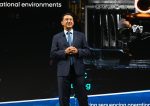
Hyundai CEO Warns Chinese Automakers Could Shake Up the U.S. Car Market

Hyundai Motor CEO Jose Munoz is sounding an increasingly familiar alarm across the global auto industry. Chinese automakers have become major competitors at remarkable speed, and Munoz believes the United States could eventually experience the same kind of market disruption already unfolding in Europe if trade protections and market-access requirements disappear. For American car buyers, that could mean an influx of aggressively priced vehicles loaded with technology. For established automakers, it could create an entirely different competitive landscape.
The pressure is already easy to see overseas. Munoz says Chinese vehicles can sell for roughly 30% to 40% less than competing models in markets such as France, Italy, and Spain. Chinese brands have continued expanding in Europe even as the European Union has implemented tariffs and other measures targeting China-built electric vehicles. The United Kingdom offers an even clearer example because it does not have comparable tariffs. Chinese-built cars captured about 14% of the U.K. market in 2025, and brands including BYD, Chery, Geely, and others have continued gaining visibility with increasingly competitive electric and electrified models.
Munoz believes something similar could eventually happen in America without what he describes as appropriate conditions for market access. Chinese EV imports currently face significant U.S. trade barriers, including tariffs that effectively make direct imports prohibitively expensive. The bigger question is what happens if Chinese manufacturers eventually establish production inside the United States. President Donald Trump recently said he would be open to Chinese automakers manufacturing vehicles domestically if doing so creates American jobs, adding another dimension to a debate that is likely to become increasingly important for the U.S. automotive industry.
Hyundai is not alone in preparing for that possibility. Ford CEO Jim Farley has repeatedly highlighted the growing capabilities of Chinese automakers and told employees earlier this year that Chinese brands could enter the American market within the next five to 10 years. Munoz has firsthand experience with the Chinese automotive industry after previously running Nissan’s operations in China, and he openly acknowledges how quickly the country’s automakers have advanced. Rather than dismissing them as manufacturers competing primarily on price, he has pointed toward their rapidly improving technology, innovation, and product development speed as reasons global manufacturers need to pay attention.
That competitive pressure also helps explain why software and advanced driver-assistance technology have become such critical battlegrounds. Hyundai recently pushed the introduction of its internally developed Level 2++ driver-assistance system from a previously targeted late-2027 launch to late 2029. Level 2 systems still require drivers to supervise the vehicle, but increasingly capable software can handle substantially more driving functions under appropriate conditions. Hyundai says it needs additional time to gather driving data, improve its system, and validate safety performance before putting its own technology into customers’ hands.
Rather than rush an unfinished system to market, Hyundai is turning to Nvidia for some help along the way. The companies are working together on Level 2+ and Level 2++ technology planned for Hyundai Motor Group vehicles beginning in 2028. That partnership gives Hyundai access to additional computing and software expertise while its engineers continue developing the company’s proprietary platform. Munoz has made clear that these partnerships are not intended to replace Hyundai’s internal technology ambitions. The long-term plan remains centered on controlling crucial technologies, including autonomous driving systems and batteries, rather than becoming permanently dependent on outside suppliers.
The two issues may seem unrelated, but Chinese competition and Hyundai’s delayed driver-assistance technology are really parts of the same story. The automotive business is increasingly being defined by software, batteries, manufacturing scale, cost, and development speed, areas where Chinese companies have made enormous progress. Tariffs can change where vehicles are sold and factories can change where they are built, but neither eliminates the underlying competition. Hyundai appears to recognize that reality. The company is supporting safeguards for established markets while simultaneously trying to become faster and more technologically self-sufficient. If Chinese automakers ultimately establish a meaningful presence in the United States, price alone may not be the biggest shock. The real surprise could be just how competitive their vehicles have become.

More Stories
2026 Alfa Romeo Giulia Invoice Price, Dealer Cost, and How to Get the Best Deal Near You
The 2026 Alfa Romeo Giulia is the most driver-focused compact luxury sedan available right now, and it is easier to...
Adaptive Cruise Control Is Not a Plan for Passing a Semi
A new car’s window sticker can read like alphabet soup. Forward collision warning. Lane keeping assistance. Blind spot warning. Adaptive...
Cyprus August 2026: Toyota up 47.3% to 15.3% share
The Toyota Yaris is estimated to rank #4 in Cyprus in August. Data shared with us by our local partners...
Test Drive: The BMW iX3
Unveiled in March, the BMW iX3 marks a new era for the carmaker. It is the first model to utilise...
Selling a Car Privately vs to a Cash Buyer: What You Actually Net
The decision of how to sell a used car usually gets framed around asking price. The private sale listing shows...
2026 Audi Q8 Invoice Price, Dealer Cost, and How to Get the Best Deal Near You
The 2026 Audi Q8 is delivering some of the strongest documented discounts of any full-size luxury SUV in this guide...