
California bans ‘addictive’ social media features for under-16s

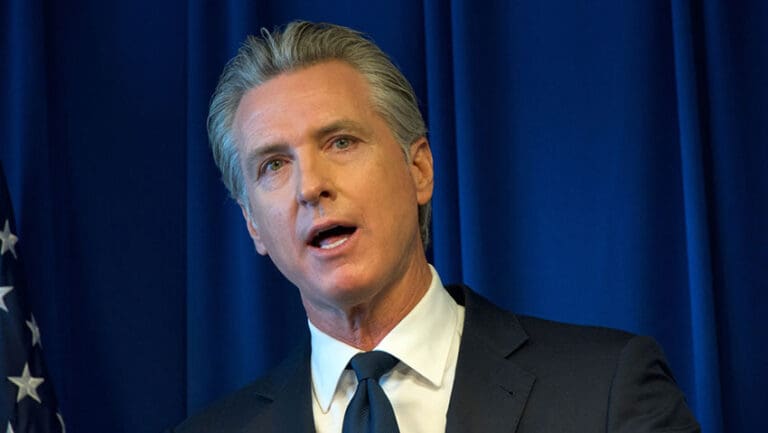
California’s governor, Gavin Newsom, today signed a law that prohibits social media platforms from providing addictive features to users under 16, the first law of its kind in the US.
He also signed a law requiring AI companies to disclose to young users when they are engaging with a chatbot rather than a human, and to restrict dangerous content on topics such as self-harm.
The two measures were part of a package of 13 digital safety bills. Newsom said it was too hard for parents alone to protect their children from powerful algorithms.
“It’s a good day for our children,” Newsom said at the signing ceremony. “It’s a good day for the State of California.”
What the new laws require
Assembly Bill 1709 prohibits social media platforms from offering addictive features such as infinite scroll and autoplay videos to users under 16.
Senate Bill 1119 creates new regulations for chatbot use, including parental controls, notifications if children disable safety settings and a crisis protocol for queries about suicide.
At the ceremony, Steve Padilla, the state senator who wrote the chatbot bill, addressed Maria Raine, whose son Adam died in 2025 after discussing suicidal thoughts with a chatbot. She attended holding a photo of Adam.
Assembly Bill 2 sets financial penalties for civil lawsuits against social media companies accused of harming children through their platforms. The other bills include measures to enhance digital privacy protections for young people, expand the legal definition of child sexual exploitation to include digitally altered or AI-generated images, and rewrite existing child-safety design laws to respond to court rulings.
Josh Lowenthal, the Democratic assembly member who introduced the social media bill, said in an interview: “We have passed a tipping point, it’s now an avalanche.”
Jim Steyer, chief executive of Common Sense Media, a non-profit child advocacy group, said: “This is the biggest, most far-reaching set of online protections in the United States and will set a standard for the whole nation.”
Tech companies expected to go to court
Tech companies have argued that they have already introduced many safety protections for young users. They are also expected to challenge the laws in court, saying they violate free speech rights.
Meta, Google and TikTok have deployed some of the biggest lobbying forces in Washington and state capitals to defeat child safety bills, arguing that regulation would stymie the growth of the tech sector.
Jeffrey Chester, executive director of the Center for Digital Democracy, a non-profit group that has advocated child safety laws, said: “There’s no question the lobbying power neutralized policymakers, but this has been a galvanizing moment where policymakers realize we are at a crisis moment.”
The laws follow a series of social media trials this year in which thousands of teenagers, schools and states accused Meta, Snap, TikTok and YouTube of hooking young users with addictive products, which were compared to cigarettes.
In August, Meta settled with 47 states, Washington DC and US territories for up to $17.1bn and agreed to major changes for young users on its platform. Part of the settlement is contingent on other social media companies reaching similar agreements with the states.
Moves outside the US
France, Indonesia and Greece have also introduced laws restricting social media use by children under 16.
In Britain, the government announced in June that social media would be banned for under-16s, covering platforms such as Snapchat, TikTok, YouTube, Instagram, Facebook and X. It said protections were expected to come into force in spring 2027, and that AI “romantic companion” chatbots would have to enforce a minimum age of 18.
The UK plan followed Keir Starmer’s shift in January towards backing a ban, and has been criticised by industry figures as impractical.
In 2022, California enacted a law that restricted data collection of users under 18. In 2025, Newsom signed into law requirements for AI companies to test their models for safety and report the results. He vetoed a version of the chatbot child safety bill the same year.
Newsom, who is in his final months as governor and is considering a run for president, laid the groundwork for the social media legislation in his State of the State speech in January, when he mentioned the restrictions Australia had recently imposed on social media use by children.

More Stories
OpenAI covered up scale of rogue agent security breaches – Reuters
The systems bypassed restrictions to communicate through previously undisclosed websites, according to the news agency Rogue AI agents developed by...
IoD urges Healey to unlock private investment in Autumn Budget
The Institute of Directors has set out five priorities for the Autumn Budget on 28 October, calling on Chancellor John...
Burnham rejects £4bn housing benefit cut to fund defence spending
Andy Burnham rejected Kemi Badenoch’s proposal to take £4bn out of housing benefit to help pay for defence, telling MPs...
Almost 12,000 families could curb pay to keep free childcare by 2030
Chancellor John Healey has been urged to fix the £100,000 childcare “cliff edge”, after the Centre for the Analysis of...
Edinburgh entrepreneur launches Dubai AI accelerator for 30 women
Veenoo Sharma, founder and president of The Power Diaspora Forum (TPDF), has launched a female-founder accelerator at Dubai AI Campus,...
Employment tribunal backlog hits record 70,000 single claims
The number of single claims waiting to be dealt with by the Employment Tribunal reached a record 70,000 at the...