

Koenigsegg CCGT1 Revives a Lost Le Mans Dream With 1,600 Horsepower

Koenigsegg has never been a company that leaves an interesting idea buried in the past, and the new CCGT1 is proof of that. Revealed during Monterey Car Week, the latest creation from the Swedish hypercar maker pays tribute to the original CCGT race car, a machine developed for GT1 competition more than two decades ago but sidelined before it ever had the chance to race at Le Mans. Now that original car is being prepared for historic competition, and Koenigsegg is celebrating the occasion with something even wilder.
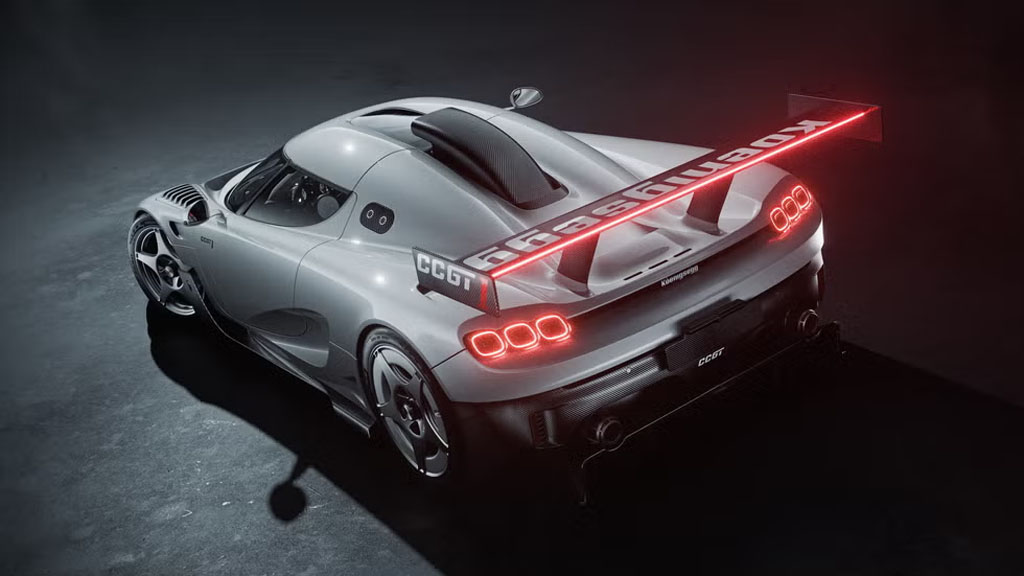
The new CCGT1 starts with the Koenigsegg CC850 as its foundation, but calling it a modified CC850 does not really capture the scope of the transformation. Nearly every exterior body panel has been redesigned, with only the roof and doors carrying over. The new shape is dominated by a towering active rear wing, an aggressive front splitter, and active aerodynamic elements underneath the car. At 155 mph, Koenigsegg says the complete package can generate roughly 1,763 pounds of downforce, which gives you a pretty good idea of how serious this machine is about track performance.
Power is equally outrageous. Koenigsegg’s twin-turbocharged 5.0-liter V-8 produces 1,280 horsepower on conventional pump fuel and as much as 1,600 horsepower on E85 biofuel. The engine sends its output to the rear wheels through the company’s nine-speed Light Speed Transmission, but the CCGT1 introduces a particularly interesting twist. Its standard Koenigsegg Sequential Shift system uses a clutch pedal for pulling away, then allows rapid clutchless sequential shifts once the car is moving. Buyers could also specify Koenigsegg’s Engage Shift System with a more traditional gated six-speed manual-style interface.
The aerodynamic work goes well beyond simply fitting a giant wing. The rear element can adjust through a wide range and alter its position for braking, cornering, and high-speed running, while active flaps underneath the front of the car help maintain aerodynamic balance. Koenigsegg also developed additional cooling hardware for sustained track use, including a prominent roof scoop. The body incorporates a lightweight material the company calls Ghost Fibre, another example of Koenigsegg’s obsession with reducing mass while pursuing increasingly extreme performance.
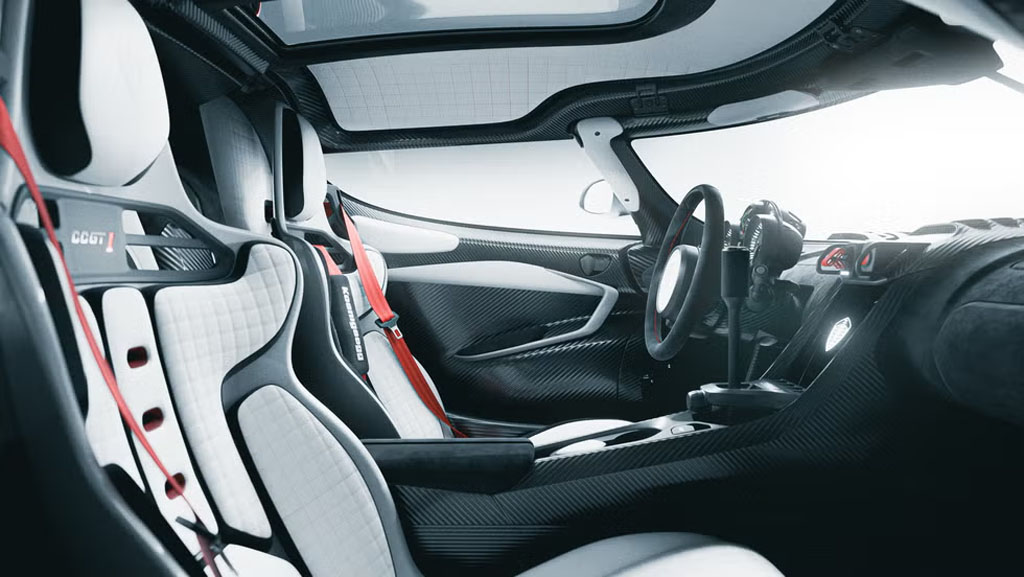
Inside, things are intentionally much less theatrical. The cockpit is focused around the driver, with carbon-fiber seats, racing harnesses, and the shifter positioned close to the steering wheel. Essential controls are arranged with track driving in mind rather than buried behind layers of menus. Koenigsegg has also developed an optional Track Package with more serious safety and performance equipment for owners who intend to use the CCGT1 the way its appearance suggests. Despite all of that, the car remains road legal, making it one of those increasingly rare machines that sits somewhere between a hypercar and a customer race car.
There is one catch for anyone who has suddenly decided that a 1,600-horsepower tribute to a lost GT1 racer belongs in the garage. Koenigsegg plans to build only 70 examples, and every car has already been spoken for. Pricing has not been publicly disclosed, but exclusivity was never going to be an issue with something this unusual. More importantly, the CCGT1 gives Koenigsegg a chance to finally close the loop on one of the most fascinating unfinished chapters in its history. The original CCGT may have missed its opportunity at Le Mans, but more than 20 years later, its spirit has returned in a machine that is faster, more advanced, and arguably even more outrageous.






More Stories
Netherlands September 2026: Tesla manages 1-2, BYD Top 10 brand
The Tesla Model Y is the best-selling vehicle in the Netherlands in September. The Dutch new car market advances by...
Why Certified Pre-Owned Is Often the Smartest Way to Buy
New cars get the spotlight, but for value-minded shoppers, a certified pre-owned vehicle is frequently the smarter choice. You get...
Tesla Model 3 Gets Bigger Screen, More Power and Quicker Acceleration
Tesla is giving the Model 3 another round of updates, and in typical Tesla fashion, the changes are arriving without...
Tesla’s Wild New Emergency Drive Away Feature Could Cause Up to $25,000 in Supercharger Damage
At first glance, Tesla’s new Emergency Drive Away feature looks almost like a joke or some kind of staged demonstration...
2027 Audi Q7 Invoice Price, Dealer Cost, and How to Get the Best Deal Near You
The 2027 Audi Q7 is a ground-up third-generation redesign arriving at US dealers in late 2026 with official pricing now...
Nissan’s U.S. Comeback Gains Momentum With 19-Month Sales Growth Streak
Nissan’s comeback in the U.S. market is becoming increasingly difficult to overlook. After spending years trying to regain momentum in...