
China new models July 2026: VW ID.UNYX 08 and BYD Seal 08 start

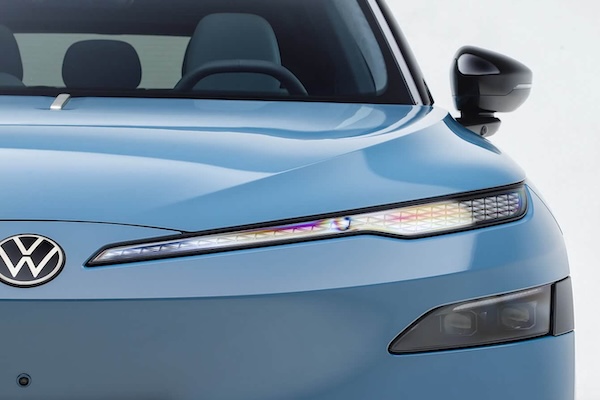
VW ID.UNYX 08
Now that July 2026 wholesales have been covered, let’s focus on the latest launches on the Chinese market. After a quiet June showing, in July we have no less than ten new models hitting the charts, eight of them Chinese. To fully understand the scope of the Chinese market, make sure you consult our Exclusive Guide to all 193 active Chinese Brands.
1. Wuling Starlight L (5,650 sales)
The Starlight L is Wuling’s new flagship mid-to-large 6-seater plug-in hybrid (PHEV) SUV. True to Wuling’s philosophy of making “people’s cars,” the Starlight L brings a spacious 3-row layout and 260 km of pure-electric range down to an accessible price point. The Starlight L debuts Wuling’s “Aerial Aesthetics” design language, featuring smooth SUV proportions, a sleek profile, and subtle chrome trim along the window line. Highlights include a clean front fascia with a horizontal trapezoidal air intake, full-width LED lighting strips at both the front and rear (complemented by small vertical light signatures), traditional pull door handles, and clean 5-spoke wheels. The Starlight L comes in at 4,980 mm long, 1,930 mm wide and 1,760 mm high with a 2,950 mm wheelbase.
Inside, the car features a 2+2+2 six-seat configuration designed for family usability with an efficient cabin room rate (~90%) so third-row passengers aren’t cramped. Equipped with a large central floating touchscreen, a digital driver instrument cluster and a column shifter. Second-row passengers also get dedicated convenience features and touch controls. It is powered by a 1.5-liter 4-cylinder engine paired with an electric drive motor. It uses a 37.9 kWh Lithium Iron Phosphate (LFP) battery pack for a pure electric range of 260 km (CLTC) and a combined range of up to 1,260 km with a full tank and full charge. It supports 3C fast charging (30% to 80% DC charge in ~15 minutes). Fuel consumption in a depleted-battery state is low at 4.9 L/100 km.
Wuling disrupts the usually expensive 3-row family SUV category with ultra-competitive pricing: from 109,800 to 132,800 yuan (14,100-17,100€ or US$16,300-19,700). It competes with the likes of the Leapmotor C16 (145,800-181,800 yuan), the Jetour Shanhai L9, BYD Song L and BYD Tang. The Starlight L has managed a successful entry in the market and should aim at maintaining its level above 5,000 monthly sales to be considered a success.
Bar for success: 5,000 monthly sales
2. Xpeng MONA L03 (2,870 sales)
The L03 is the second entry in Xpeng’s MONA series, positioned as a compact, tech-focused fastback SUV coupe sitting right below the Xpeng G6. It targets younger, digitally connected drivers with sleek aerodynamics, high AI computing power, and a choice between pure electric (BEV) and range-extended electric (EREV) powertrains. In parallel with its Chinese launch, Xpeng also introduced the L03 in Europe at a ceremony in Munich, aiming to leverage its European footprint and betting on the high-end assisted driving tech. The L03 has a drag coefficient of just 0.228 Cd—achieved through 22 aerodynamic optimisations, including active grille shutters. The vehicle was designed by a global team led by former Ferrari exterior design chief Juanma Lopez. The front styling carries over the MONA family’s signature T-shaped “Starship” LED matrix headlights (comprising 400 LED bulbs). The rear features full-width “Star Ring” taillights with integrated blue driver-assistance indicators. It also includes frameless doors, semi-hidden door handles, and optional 18- or 20-inch wheels with brightly coloured calipers.
The L03 comes in at 4,650 mm long, 1,920 mm wide, 1,600 mm high with a 2,850 mm wheelbase. Inside, the cockpit is minimalist yet tech-laden, anchored by a floating 15.6-inch 2.5K central touchscreen and a large 26.8-inch W-HUD (Windshield Head-Up Display). The centre console features active-cooled dual 50W wireless charging pads. Front-row seats feature standard heating, ventilation, and memory functions. The front passenger gets a “zero-gravity” recline throne with a 4-way power legrest and 14-point massaging matrix. The car features a 20-speaker 1000W+ AI surround sound system with headrest speakers, a 1.31 m2 Low-E panoramic glass roof, a 102-litre frunk (BEV models), and 539 litres of trunk space expanding to 1,640 litres with seats folded. It is powered by XPeng’s VLA 2.0 Pure Vision system and an in-house Turing AI chip, running the Dimensity AIOS cockpit ecosystem.
The MONA L03 offers both pure electric and range-extended hybrid setups. The BEV has a single rear motor producing 183 kW (245 hp) and 280 Nm of torque. Select AWD export/performance trims offer dual-motor options. It is offered with 52.5 kWh to 69 kWh LFP battery packs from CALB, yielding 525 km to 650 km of CLTC range. 0–100 km/h is achieved in 6.6 to 7.5 seconds, top speed of 180 km/h. The EREV has a 1.5-litre naturally aspirated engine (91 hp) acting purely as a generator for the 183 kW electric drive motor. The 37.2 kWh LFP battery offers 315 km of pure electric driving (CLTC). The combined range reaches up to 1,330 km to 1,380 km. Fast charging takes 10% to 80% in 15 minutes.
Xpeng positioned the MONA L03 with highly competitive pricing to dominate the budget-to-mid compact SUV market: it is available from 123,800 to 156,800 yuan (15,900-20,200€ or US$18,400-23,200) and will compete in one of the most crowded segments in China against the likes of the BYD Yuan Plus (115,800-149,900 yuan), Deepal S05 (119,900-151,900 yuan) and Leapmotor C10 (122,800-142,800 yuan). The MONA M03 has been met with tremendous success in China, lifting the brand to new heights and peaking at 16,593 units in May 2025. We have high hopes for the L03.
Bar for success: 10,000 monthly sales
3. Leapmotor A05 (2,249 sales)
Leapmotor is on a roll at the moment, breaking its volume record seemingly every month and now even threatening Volkswagen for the 4th spot in the national brands ranking. One of the reasons behind this success has been the constant flow of new models hitting dealerships, and this month is no exception. June saw the launch of the D99 MPV, and in July it’s the A05, the hatchback variant of the uber successful A10 crossover (which ranked #2 overall in July). Known as the B03 in export markets, the A05 is an entry-level, tech-focused subcompact electric hatchback aimed primarily at urban commuters and younger drivers. Positioned on Leapmotor’s A-platform alongside the A10 crossover, the A05’s defining hallmark is bringing premium technology—most notably a 128-line LiDAR system—down into China’s fierce sub-100,000 yuan EV segment.
The A05 features rounded, friendly hatchback proportions with smooth body contours and a closed front fascia. Optional two-tone paint schemes give it a youthful appearance. It comes equipped with LED headlights, flush-look door handles, symmetrical camera-integrated side mirrors, and 16- or 17-inch alloy wheels. Higher trims feature a roof-mounted LiDAR unit. The A05 comes in a 4,200 mm long, 1,800 mm wide, 1,560 mm high with a 2,605 mm wheelbase. Its cockpit is anchored by an 8.8-inch digital driver display and a 14.6-inch floating central touchscreen. Infotainment is powered by either a Qualcomm Snapdragon 8155 chip or a higher-performance Snapdragon 8295 chip depending on the trim.
The A05 offers 33 interior storage compartments and front seats that can recline 100% flat to create two in-car beds. Higher trims feature a 128-line LiDAR-based ADAS suite capable of automatic emergency braking (AEB) up to 130 km/h, automatic emergency steering (AES) and urban/highway Navigate on Autopilot (NOA). The A05 operates on a front-wheel-drive (FWD) single-motor configuration offered in two battery/power levels. The first is a 70 KW (94 hp) permanent-magnet synchronous motor with a 39.8 kWh air-cooled Lithium Iron Phosphate (LFP) pack for a CLTC range of 405 km. The second is a 90 kW (121 hp) electric motor with a 52 kWh liquid-cooled LFP pack for a 510 km CLTC range.
The A05 is priced from 63,900 to 90,900 yuan (8,200-11,700€ or US$9,500-13,500) and competes primarily with the Geely Xingyuan (EX2), the segment’s and national best-seller, as well as the Wuling Bingo Pro, BYD Seagull, Nammi 01 and Chery QQ3 EV. Given Leapmotor is on a shooting star trajectory at the moment, we see big potential for the A05.
Bar for success: 10,000 monthly units
4. BYD Seal 08 (2,216 sales)
The Seal 08 is BYD’s new flagship full-size executive fastback sedan in the Ocean series. It showcases BYD’s latest hardware platform, second-generation Blade Battery technology, and megawatt-level flash charging. Its exterior is built around BYD’s “Ocean Aesthetics 2.0” design language, featuring a sleek, low-slung fastback silhouette with a power-bulged hood and a closed-off front grille. It has semi-concealed door handles, a full-width rear LED light bar, and a roof-mounted LiDAR unit. The Seal 08 comes in at 5,150 mm long, 1,999 wide, 1,505 high with a 3,030 wheelbase. Inside, the cockpit features a 12.3-inch digital driver cluster, a 15.6-inch floating central infotainment screen, and a 26-inch AR-HUD. All seats feature heating, ventilation, and massage functions. Rear seats gain power legrests, airline-style fold-out tray tables, and a center armrest control touchscreen.
Luxury Amenities include a 20-speaker Devialet sound system, double-glazed acoustic glass, a mother-of-pearl ambient lighting effect, a built-in heating/cooling refrigerator (−6°C to 50°C), dual 50W wireless phone charging pads, and a 160-litre power-opening front trunk (frunk). The Seal 08 rides on an 800V high-voltage platform utilising BYD’s 2nd-generation Blade LFP batteries and supports ultra-fast 5-minute flash charging (replenishing up to 400 km of range). The Dual Motor (AWD) EV variant achieves 0–100 km/h in 3.3 seconds and delivers CLTC pure-electric ranges of 775 km to 905 km. The PHEV variant (DM-i) is powered by a 1.5L turbocharged 4-cylinder petrol engine paired with electric drive motors and offers 270–300 km of pure-electric range (WLTP) and a comprehensive combined cruising range of up to 1,660 km.
The Seal 08 also features a standard DiSus-A dual-chamber air suspension with LiDAR-based road-preview bump prediction, rear-wheel steering (yielding a tight 4.95-meter turning radius), and BYD’s “God’s Eye B” LiDAR-based autonomous driving suite. BYD positions the Seal 08 as a direct value-disruptor in the full-size flagship segment, with prices ranging from 196,900 to 239,900 yuan (25,300-30,900€ or US$29,200-35,600). Competitors include the Xiaomi SU7 (219,900-303,900 yuan), Zeekr 007, Luxeed S7 and Stelato S9. This is a somewhat new area for BYD and the Seal 08 could be instrumental at slowing the brand’s decreasing sales at home.
Bar for success: 6,000 monthly sales
5. Voyah Passion S (1,249 sales)
Voyah has been rather discreet lately so this Passion S, a premium electric fastback SUV crossover, is a breath of fresh air. Positioned as a direct high-performance, intelligent-driving challenger in the mid-to-large crossover market, it combines an 800V high-voltage SiC platform with Huawei’s Qiankun ADS 3.0/5.0 smart driving suite and a quadruple LiDAR hardware setup. The silhouette features a sleek, aerodynamic coupe-SUV crossover profile designed to minimise drag (0.24 Cd) and is a direct copy of the Xiaomi YU7. Upfront, it incorporates split LED matrix lighting connected by a full-width light bar with an illuminated Voyah emblem. The side profile highlights frameless doors, semi-flush door handles, dynamic alloy wheels, and an active electric rear wing. The Passion S features a unique 4-LiDAR setup (including roof-mounted and side-fender sensors) seamlessly integrated into the body for 360° high-definition autonomous perception. It comes in at 5,050 mm long, 1,998 mm wide, 1,656 mm high with a 3,000 mm wheelbase.
Inside we have a minimalist yet tech-heavy 5-seat layout using eco-friendly suede and Nappa leather upholstery. Anchored by a large floating central infotainment touchscreen paired with a digital driver cluster and a massive Augmented Reality Head-Up Display (AR-HUD). It runs an AI-integrated OS powered by high-performance cockpit silicon. Cabin amenities include an active fragrance diffuser and a panoramic glass roof. The car is equipped with Huawei’s Qiankun ADS intelligent driving system supporting urban and highway point-to-point Navigation on Autopilot (NOA). It is built on an 800V Silicon Carbide (SiC) high-voltage platform. Single motor RWD variant has a 402 hp rear motor and achieves the 0–100 km/h in ∼5.5 seconds; top speed 200 km/h. AWD variant has a combined output of 637 hp for a 0–100 km/h in ∼3.0 to 3.5 seconds.
Range varies from 630 km to 700 km depending on the battery pack. 800V architecture enables 30% to 80% DC fast charging in approximately 10–12 minutes. The Passion S is already famous for the “tunnel loop” challenge. The car, allegedly a standard production version without any modifications, completed a 360° tunnel loop at a closed test tunnel in Wuhan, making it the first production vehicle in the world to achieve this extreme manoeuvre. The Passion S is priced from 249,800 to 299,800 yuan (32,100-38,600€ or US$37,000-44,500) and as its physique indicates, its main competitor is the Xiaomi YU7 (233,500-389,900 yuan), as well as the Tesla Model Y and Xpeng G6/G9. The Passion S is already the third best-selling Voyah model at launch, with the best-seller being the Dreamer at 5,599 sales in July. Similar targets would make it a success.
Bar for success: 4,000 monthly sales
6. VW ID.UNYX 07 (914 sales)
The ID.UNYX 07 is a mid-size electric fastback sedan produced by Volkswagen Anhui. It is the second model under VW’s “gold badge” ID.UNYX sub-brand after the 06 and holds significant importance as the first VW vehicle co-developed with XPeng to feature the China Electrical Architecture (CEA) zonal platform. It features VW’s signature gold front and rear emblems, sharp matrix LED headlights, an aggressive lower bumper intake, full-width LED light bars, a panoramic sunroof and a wide-opening rear hatchback tailgate. It comes in at 4,853 mm long, 1,852 mm wide, 1,566 mm high with a 2,826 mm wheelbase. The cockpit is built on the XPeng-assisted CEA software architecture, which uses a central computer and zonal controller structure for faster, localised digital processing. The interior features integrated sports seats with available heating, memory, and massage functions. It offers a practical rear cargo hold starting at 710 litres expanding up to 1,580 litres with the rear seats folded.
The ID.UNYX 07 combines VW’s MEB hardware platform with a localised LFP battery ecosystem: the RWD single-motor setup embarks a 170 kW (231 hp) electric motor delivering 350 Nm of torque and a 59.9 kWh Lithium Iron Phosphate (LFP) battery pack (supplied by Gotion) yielding 558 km of CLTC range. The 0–100 km/h is reached in 8.1 seconds. Fast DC charging replenishes 30% to 80% in approximately 25 minutes. These are not particularly good scores and will impede the model’s success in China. VW priced the ID.UNYX 07 aggressively to compete directly with domestic Chinese EV manufacturers: from 114,900 to 124,900 yuan (14,800-16,100€ or US$17,000-18,500). Competitors include the Tesla Model 3, BYD Seal 07/Qin L EV, Deepal L07 and Qiyuan A07. All new Volkswagen launches have the hard task to return the brand to success (-41% in July)…
Bar for success: 5,000 monthly sales
7. AvatR 06T (855 sales)
The Avatr 06T is a luxury sports touring wagon (shooting brake), the first by the Avatr brand. It serves as the wagon/estate variant of the Avatr 06 sedan, offering high performance, Huawei smart driving software, and CATL ultra-fast charging. Designed with a low, wide “Falcon” hunting posture and a sleek shooting brake profile, it features splitters, sporty side skirts, dynamic roof rails, and an integrated rear downforce spoiler, as well as double-strip F-wing LED daytime running lights, a lower active grille shutter, an illuminated logo, and a rear without a traditional window glass (uses a digital camera rear view). The 06T measures 4,940 mm long, is 1,960 mm wide, 1,455 mm high with a 2,940 mm wheelbase.
The cockpit runs Huawei’s HarmonyOS on a multi-screen setup featuring a 35.4-inch 4K Panoramic Star Ring Display across the dashboard, a 15.6-inch central touchscreen, and dual 6.7-inch digital mirror displays. The vehicle offers dual zero-gravity front seats and 14-way electrical adjustment with heating, ventilation, and massage functions. Upholstered in Nappa leather and microsuede. There is a 25-speaker, 2016-watt Meridian surround sound system and an active nanometer ionisation air purifier. The trunk offers 517 litres of capacity, expanding to a 2.15-metre deep cargo area with one-touch power-folding rear seats. The car is equipped with Huawei Qiankun LiDAR (896-line array) supporting full urban and highway intelligent driving.
The 06T is available in BEV and EREV configurations. BEVs offer 673 and 955 hp output with 72.9 kWh or 89.3 kWh CATL 5C Shenxing LFP batteries yielding 652 km to 741 km(CLTC). Recharges 30% to 80% in under 10 minutes. The EREV runs on a 1.5T turbocharged gas engine range extender combined with a 45.1 kWh CATL Freevoy battery and offers a 330 km pure electric range (CLTC) and over 1,250 km total range. It is priced between 219,900 and 279,900 yuan (28,300-36,000€ or US$32,600-41,500). Competitors include the Zeekr 001, Nio ET5T and Denza Z9GT in an expanding wagon segment. The 06 sedan peaked at 6,368 sales in May 2025 but cratered to just 396 in July. We’d want the 06T wagon to perform at least halfway between the two figures.
Bar for success: 3,500 monthly sales
8. Dongfeng Forthing Xinghai V6 Plus (537 sales), V6 (10 sales)
The Xinghai V6 Plus is an affordable, tech-focused mid-size electric family vehicle blending MPV space with SUV crossover styling. produced by Dongfeng Liuzhou Motor in partnership with Huawei. It stands out in China by bringing Huawei Qiankun ADS smart driving technology and a true 2+2+2 six-seat layout down to the under-¥130,000 market. The V6 Plus uses a “Tri-Form Unity” design concept that combines the boxy interior packaging of an MPV with the higher ground clearance of an SUV and a streamlined crossover profile. It achieves an aerodynamic drag coefficient of 0.269 Cd. It is 4,835-4,900 mm long, 1,900 mm wide, 1,755 mm high with a 2,900 mm wheelbase. The V6 Plus offers a 2+2+2 Seating Layout, a true 6-seat configuration featuring middle-row individual captain’s chairs with dedicated aisle space for easy third-row access.
Inside, we have a dual display layout standard with an 8.8-inch digital driver cluster and a 14.6-inch floating central touchscreen, upgradable to a 15.6-inch 2.5K screen powered by the Qualcomm Snapdragon 8295 chip on upper trims. The car features Huawei’s Qiankun ADS intelligent driving system for advanced highway and urban driver assistance in a budget-friendly segment. The V6 Plus is built on Dongfeng’s Mach Electrification Architecture. It is offered in Single-motor Front-Wheel Drive / Rear-Wheel Drive setups, with a 135 kW (184 hp) electric motor and two battery packs: 45.5 kWh LFP Pack that yields 400 km of CLTC range and 60.5 kWh LFP Pack that yields 510 km of CLTC range. It is priced from 89,900 to 124,900 yuan (11,600-16,100€ or US$13,300-18,500). Competitors include the BYD Yuan Plus, Leapmotor C10 and Geely Galaxy L7. Limited prospects for this model.
Bar for success: 2,500 monthly sales
9. VW ID.UNYX 08 (133 sales)
The ID.UNYX 08 is Volkswagen Anhui’s flagship full-size electric crossover SUV. It is a landmark model as the first vehicle mass-produced under Volkswagen’s joint vehicle development agreement with XPeng, leveraging German engineering with XPeng’s smart EV architecture. The exterior design is very “un-VW” and features a bold, executive full-size SUV silhouette influenced by VW’s ID. Code design study, with clean lines, short overhangs, and a long 3,030 mm wheelbase (the car is 5,000 mm long, 1,954 mm wide and 1,672 mm high). It is equipped with slim upward-sweeping LED matrix headlights and hidden flush door handles. Emblazoned with VW’s signature gold “ID.UNYX” and “与众08” badges, along with an illuminated rear VW emblem. An optional 1.74 m2 smart dimmable panoramic sunroof is available.
The interior is built around a wraparound digital cockpit featuring dual 14.96-inch 2.5K integrated touchscreens, a 10.25-inch driver instrument cluster, and dual wireless phone charging pads. It is wrapped in 95% soft-touch materials with Nappa leather seats and a suede microfibre headliner. Features a “Queen’s Co-Pilot” front passenger seat with 14-way electric adjustment, leg rest, and 10-point pneumatic massage. Rear occupants get 10∘ seat recline adjustment, heating, and fold-down tray tables. It also includes a standard 20-speaker premium audio system and is driven by XPeng’s Level 2++ advanced driver assistance suite with over-the-air (OTA) update capability and a large language model-powered AI voice assistant.
The ID.UNYX 08 is built on XPeng’s 800V high-voltage Silicon Carbide (SiC) architecture powered by CATL Lithium Iron Phosphate (LFP) batteries. RWD power output is 308 hp and AWD is 496 hp. 0-100 km/h lasts 4.9 seconds. 82.4 kWh or 95 kWh battery packs are available and deliver up to 700–730 km of driving range. The ID.UNYX 08 is priced sharply from 209,900 to 269,900 yuan (27,000-34,700€ or US$31,100-40,000). Competitors include the Tesla Model Y (263,500-313,500 yuan) and Xpeng G9 (248,800-278,800 yuan).
Bar for success: 5,000 monthly sales

More Stories
Why Certified Pre-Owned Is Often the Smartest Way to Buy
New cars get the spotlight, but for value-minded shoppers, a certified pre-owned vehicle is frequently the smarter choice. You get...
Tesla Model 3 Gets Bigger Screen, More Power and Quicker Acceleration
Tesla is giving the Model 3 another round of updates, and in typical Tesla fashion, the changes are arriving without...
Tesla’s Wild New Emergency Drive Away Feature Could Cause Up to $25,000 in Supercharger Damage
At first glance, Tesla’s new Emergency Drive Away feature looks almost like a joke or some kind of staged demonstration...
2027 Audi Q7 Invoice Price, Dealer Cost, and How to Get the Best Deal Near You
The 2027 Audi Q7 is a ground-up third-generation redesign arriving at US dealers in late 2026 with official pricing now...
Nissan’s U.S. Comeback Gains Momentum With 19-Month Sales Growth Streak
Nissan’s comeback in the U.S. market is becoming increasingly difficult to overlook. After spending years trying to regain momentum in...
How to Book Car Hire for a Smooth Travel Experience
Key Highlights Car hire in Australia is easiest when you compare vehicle options, pick-up locations, and pricing before booking. A...