
US Annual Inflation Rate Stabilizes in July, Slowing to 3.4 Percent

By Andrew Moran
Stabilizing energy prices have helped cool off inflation pressures for the second straight month, new government data released on Aug. 12 show.
July’s U.S. annual inflation rate slowed to 3.4 percent, from 3.5 percent in the previous month, according to the Bureau of Labor Statistics’ consumer price index report.
This was in line with economists’ expectations.
Crude oil and gasoline prices fell early last month amid optimism that the war in Iran would be winding down after both sides reached an earlier fragile ceasefire deal. The agreement eventually fell through, with Washington and Tehran accusing each other of violating the memorandum of understanding. They resumed fighting, sending energy prices higher after the Strait of Hormuz was disrupted again, affecting traffic in the narrow Gulf channel.
The sharp slide in oil markets was enough for the energy index to register back-to-back declines for the month, falling by 1.5 percent in July. Due to the conflict in Iran, annual energy costs are up by nearly 15 percent.
Gasoline fell by almost 3 percent, while fuel oil decreased by nearly 2 percent, the bureau said.
“Energy prices fell in July as investors had high hopes that the Middle East crisis would improve,” Jeffrey Roach, chief economist at LPL Financial, told The Epoch Times in an emailed note. “The decline in energy prices helped soften the inflation pressures of the month. Unfortunately, those high hopes were short-lived.”
Prices have reaccelerated this month. Brent crude futures rose by 90 cents, or 1 percent, to $89.81 per barrel as of 3:57 a.m. ET on Aug. 12, while U.S. West Texas Intermediate crude climbed by 88 cents, or 1.1 percent, to $84.08. Both benchmarks had earlier gained more than $1.
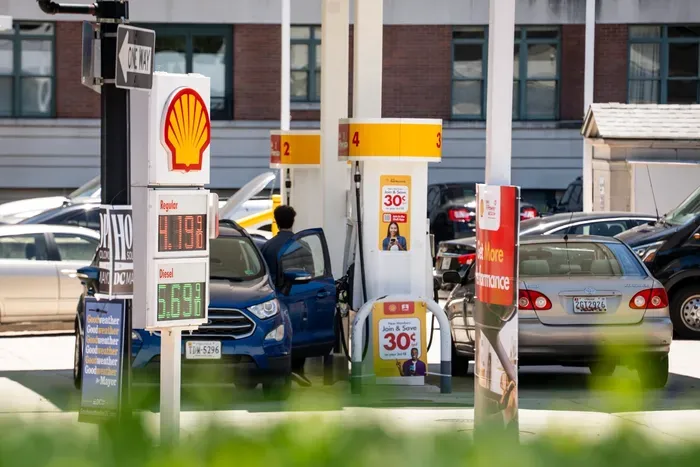
The national average for a gallon of gasoline remains above $4, according to the American Automobile Association.
On a monthly basis, consumer prices rose by 0.1 percent, matching the market forecast.
The shelter index accounted for about two-thirds of July’s tepid increase, rising by 3.2 percent year over year.
Shelter inflation has remained stubborn over the past few years, despite economists and monetary policymakers widely expecting it to cool sharply by now.
Food prices rose by 0.1 percent. Supermarket costs slipped by 0.1 percent, but food away from home advanced by 0.3 percent.
Meat prices fell by almost 1 percent, driven by a 0.8 percent decline in beef, a 1.5 percent drop in pork, and a 0.7 percent decrease in chicken. Eggs were little changed, but are down by almost 26 percent year over year.
Underlying inflation remained tame, providing a modicum of relief for the Federal Reserve as it wrestles with the prospect of raising interest rates next month.
Excluding the volatile energy and food categories, the 12-month core inflation rate also eased to 2.5 percent, from 2.6 percent.
From June to July, core inflation jumped by 0.2 percent. Both readings matched the consensus forecast. Prices for tariff-sensitive items picked up steam in July.
The indexes for new vehicles and apparel ticked up by just 0.1 percent.
Appliances rose by 0.8 percent, televisions increased by 1.8 percent, smartphones climbed by 1.1 percent, and canned fruits and vegetables dropped by more than 1 percent.
Looking ahead to the August consumer price index, the Cleveland Fed Inflation Nowcasting Model anticipates the 12-month rate holding steady at 3.4 percent.
“As the economy reaches the end of the year, we should expect inflation to decelerate to 2.7 percent as transportation costs and health care costs ease,” Roach said.
Following last week’s weak jobs report and stable consumer prices, investors could brace for the central bank to keep policy intact.
The U.S. economy unexpectedly shed 23,000 jobs last month, mostly driven by local government education, leisure and hospitality, and retail.
“The big surprise with a report that had no surprises all of the data came perfectly in line with the estimates is that a situation where inflation isn’t reaccelerating, coupled with the most recent, weak jobs report, gives the Fed more time to wait,” Chris Zaccarelli, chief investment officer for Northlight Asset Management, said in a note emailed to The Epoch Times.
“Typically, the market would be buoyed by the thought of rate cuts, but in a world where many are expecting rate hikes, anything that can delay—or squash the need for—rate hikes will be viewed positively.”
The Fed will hold its next two-day September policy meeting on Sept. 15 and Sept. 16.


More Stories
Take Charge of My Heart: Release Date, Trailer, Plot, and More
Are you also hunting for the next Korean romantic-comedy drama? Then your search ends here. Take Charge of My Heart...
Minerva Academy: Release Date, Plot, Cast, Trailer, and More
Netflix’s latest Italian drama Minerva Academy is currently streaming online on the popular streaming network Netflix. Its original title is...
8 Best Commercial Skylight Companies for US Projects (2026)
Getting commercial daylighting wrong is expensive in a way residential work rarely is. A leaking curb on a house is...
Is Sweet Magnolias Season 6 Renewed? Latest News and Review
Netflix’s romantic drama Sweet Magnolias has finally come to an end. In September 2026, Deadline officially announced that one of...
The Inbetweeners 3: Release Date, Cast, Trailer, and Updates
The Inbetweeners 3 is finally coming back on the popular streaming Network, Netflix. The original four stars of the series,...
7 Essential Components of a Modern Corporate Training Tech Stack
What the seven components need to accomplish Your LMS isn’t obsolete. It may simply need to play one part in...