
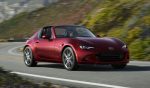
Mazda MX-5 Miata Could Go Electric Eventually but Lightweight Fun Still Comes First

The Mazda MX-5 Miata has survived because Mazda understands what makes it special: low weight, rear-wheel-drive balance, simple controls, and a driving experience that feels alive at normal speeds. That is why any talk of an electric Miata immediately makes enthusiasts nervous. In a recent interview with Germany’s Auto Motor und Sport, Mazda CEO Masahiro Moro offered a little more clarity, saying the next-generation MX-5 must be engineered for a future where a combustion engine may no longer be part of the equation. In other words, an electric Miata is not confirmed for launch, but Mazda is clearly preparing for that possibility.
That does not mean the next Miata is about to abandon gasoline. Mazda has repeatedly signaled that the upcoming roadster will keep the core formula intact, and Moro’s latest comments reinforce that weight remains the biggest challenge. Engineers are reportedly targeting a curb weight between roughly 2,200 and 2,645 pounds without relying on exotic materials like carbon fiber. That is a very Miata way to approach the problem, because Mazda has always treated lightness as a philosophy rather than a marketing slogan.
The difficult part is that batteries are heavy, and the MX-5 has never been about brute force or huge numbers. A typical EV skateboard platform would likely add too much mass and raise too many packaging questions for a car that depends on delicacy and balance. Mazda appears to understand that, which is why past patent activity showing battery modules placed around the transmission tunnel, behind the seats, and ahead of the cabin is so interesting. That kind of layout could help preserve the low-slung, rear-drive feel that defines the car.
For now, the smartest path may be exactly what Mazda seems to be doing: keep the next MX-5 gasoline-powered while engineering its basic structure to accept electrification later. That gives the company flexibility as regulations tighten and battery technology improves, without rushing the Miata into a compromise that longtime fans would reject. A mild hybrid or other electrified assist setup could also help bridge the gap if Mazda can do it without dulling the experience.
An electric Miata may eventually happen, but Mazda knows it cannot simply build a small EV and call it an MX-5. The car has to feel playful, balanced, approachable, and connected in a way few modern cars manage. If Mazda can protect that character while preparing the roadster for a future beyond combustion, the Miata may continue doing what it has always done best: reminding drivers that performance is not only about power, but about feel.


More Stories
2027 Nissan Murano Invoice Price, Dealer Cost, and How to Get the Best Deal Near You
The 2027 Nissan Murano is on dealer lots now with pricing confirmed directly from Nissan’s official press release, and TrueCar’s...
Singapore August 2026: GAC at all-time high, Chinese at 51.7% share
GAC sales are up 145.1% year-on-year in August. 4,549 new cars hit Singaporean roads in August, a -2.2% year-on-year contraction....
2027 Hyundai Kona Invoice Price, Dealer Cost, and How to Get the Best Deal Near You
The 2027 Hyundai Kona is on dealer lots now with confirmed pricing and an 89-transaction TrueCar dataset already showing buyers...
2027 Jeep Wrangler JL-2A Pays Tribute to the Original Civilian Jeep With Retro Style and Rubicon Capability
Jeep is reaching deep into its history for one of its most interesting special-edition Wranglers yet. The new 2027 Jeep...
Tesla Roadster Finally Set for October 1 Reveal With SpaceX Thrusters in the Spotlight
Tesla’s next-generation Roadster may finally be ready to step back into the spotlight. CEO Elon Musk has confirmed that Tesla...
Volkswagen Mission Efficiency EV Pushes Nearly 900 Miles of Range With Record-Setting Aerodynamics
Volkswagen has a new electric concept that looks like it was shaped almost entirely by airflow, and that is not...