
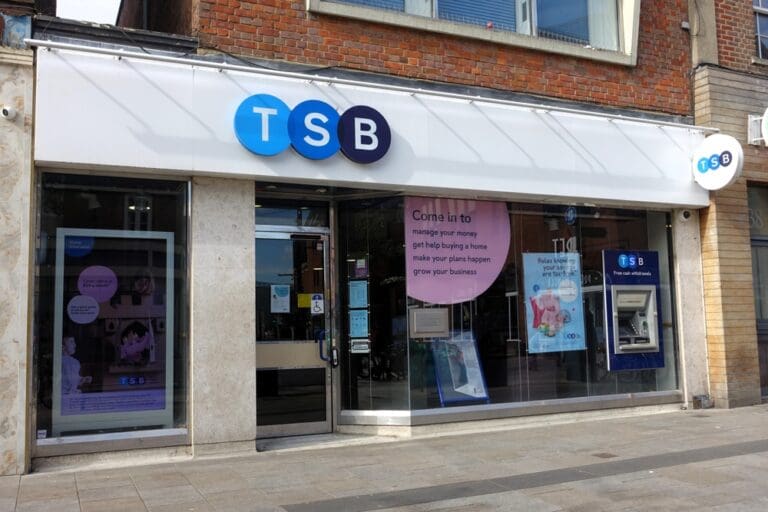
Union prepares tribunal cases over TSB three-day office rule

TSB has told its workforce of about 5,000 staff that they will be required to work in an office three days a week from April 2027, and the TBU union is preparing to take cases to the Employment Tribunal in response.
The requirement follows Santander’s £2.65 billion takeover of TSB, which completed in April. The Spanish banking group is progressing with a merger of the two banks’ operations and policies so that the entire workforce is aligned. TSB is currently operating as a standalone entity.
The bank did not previously have a formal requirement for how much time staff must spend in an office.
Staff representatives at the TBU are preparing to take cases to the Employment Tribunal over concerns that some members will be unable to change their arrangements due to personal and medical reasons, amid a broader backlash against the changes and whether they are enforceable.
The union pointed to comments it made in its internal newsletter that a significant number of people had medical or personal reasons for their current working arrangements and that “all roads are going to lead back to employment law”. The TBU added that it was “prepared to fight cases at the Employment Tribunal”.
A source close to TSB said the bank had launched talks between staff and management aimed at putting in place exceptions for individuals with personal and health issues requiring a more flexible approach.
All parties declined to comment.
Under government guidance on flexible working, employees cannot complain to a tribunal solely because a request has been refused, but can do so where an employer has not handled a request in a reasonable manner. Complaints must be made within three months of the employer’s decision, and the maximum award is eight weeks’ pay.
The row is the latest example of a clash within a business about plans to get staff back into the office more regularly following the Covid-19 crisis. Santander itself tightened its hybrid working policy in September 2024, telling 10,000 UK office-based employees to work the equivalent of three days a week at its sites, up from two.
TSB has already announced that it will make 130 redundancies in the wake of the Santander deal as the two operations undergo an integration process.
Mahesh Aditya, chief risk officer of Banco Santander, took charge of Santander UK at the beginning of March to lead the integration, which also comes as the lender seeks to navigate the mis-selling scandal that has engulfed Britain’s motor finance industry.
TSB has become mired in controversy as a result of technical difficulties from past operational overhauls. Sabadell attempted to switch the UK lender to a new IT platform, but mishaps during the transition caused chaos for millions of customers and months-long disruptions to its services.
TSB was formerly known as Trustee Savings Bank and was first established by the Rev Henry Duncan in Dumfriesshire in 1810. The brand was maintained when the lender merged with Lloyds Bank in 1995. Sabadell, another Spanish bank, acquired the British lender at book value for £1.7 billion in 2015, before agreeing the sale to Santander.
Santander first entered the British market in 2004 with the purchase of Abbey National for £9 billion. It then expanded its footprint during the 2008 financial crisis with the acquisitions of Alliance & Leicester and the savings business of Bradford & Bingley. Dame Ana Botín, who leads the wider Banco Santander group, previously ran its UK business between 2010 and 2014.


More Stories
The next scientific frontier may be inside us, says Nicole Junkermann
As artificial intelligence converges with life sciences at an accelerating pace, the founder of NJF Holdings argues that the most...
Government Plans for the Shipping Industry in 2026
The UK’s position as a leading maritime nation and a key player in achieving its Net Zero obligations will be...
Tony Buzbee on the Clients Who Walk Through the Door and What They Actually Need
Tony Buzbee founded The Buzbee Law Firm in Houston in 2000. The firm takes on personal injury claims, workplace accidents,...
How to Launch a Personal Training Business Fast
Smart entrepreneurs move from initial concept to signing paying clients by following a clear, step-by-step setup framework. Secure Recognised Fitness...
What Can an iPhone Data Recovery Tool Recover? From Photos and Messages to Pages, Numbers, and Keynote
You delete a few old photos, clear some messages, or lose an important work file—and then realize you needed it...
Gallagher brothers confirm 38 Oasis dates for 2027 after $400m reunion run
Oasis have confirmed 38 dates for a global tour in 2027, including a return to Knebworth in Hertfordshire. The announcement...