
Britain claims world’s third-highest number of billion-dollar start-ups

Britain has cemented its position as Europe’s undisputed home for high-growth business, with a record 80 “unicorn” companies now valued at more than $1 billion apiece.
The country’s strength in building promising financial technology and artificial intelligence firms has helped it record the third-highest number of unicorns anywhere in the world. Only the United States and China are home to more private companies worth in excess of $1 billion, according to a new global ranking.
The UK now boasts a record 80 unicorns worth a combined £242.4 billion, overtaking India to take third place in the annual index produced by the Hurun Research Institute, the Shanghai-based firm behind the closely watched Global Unicorn Index.
With 23 new unicorns minted over the past 12 months, the research concluded that Britain had reinforced its “position as Europe’s undisputed start-up capital”, noting that it now has more unicorns than Germany, France, the Netherlands and Sweden combined.
The nation’s unicorn count has nearly doubled since 2016, and the “pipeline of new companies entering the billion-dollar club is the strongest it has ever been”, Hurun said. In total, the firm tracked 1,603 unicorns across 52 countries, with the combined value of the world’s unicorns rising 43 per cent to $8 trillion.
The number of unicorns a country produces is watched closely as a barometer of the health of an economy, its appetite for innovation and its ability to create companies with the potential to scale globally.
Britain’s continued strength comes against a backdrop of concern about the appeal of the London Stock Exchange as a home for the most promising businesses, as well as government efforts to nurture emerging domestic technology firms amid questions over the wisdom of relying on a handful of American giants for essential technology.
Ministers have already stepped in to keep home-grown talent listed in the UK, part of a wider push to strengthen the appeal of the London Stock Exchange after a run of de-listings and companies shifting their primary listings overseas. That includes fresh government backing for AI firms weighing a domestic float.
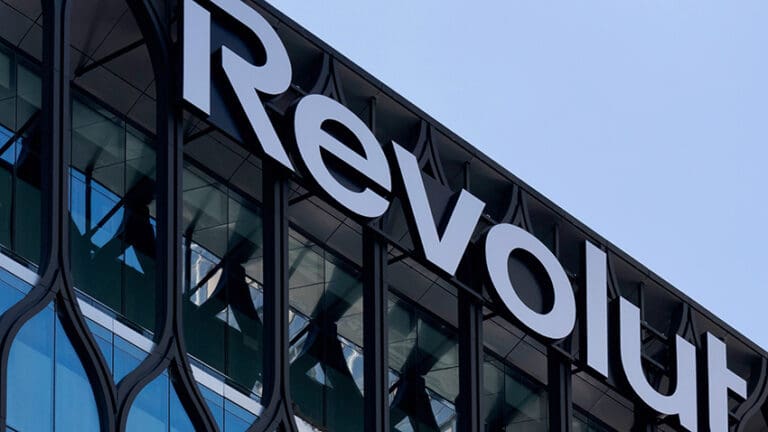
Revolut, the financial services group, remains the UK’s most valuable unicorn with a £57.8 billion valuation, having recently leapfrogged Barclays in value after an Nvidia-backed deal. It is followed by Nscale, the artificial intelligence data centre business, worth £11.6 billion at its last funding round, Hurun said.
Fintech companies account for a third of the UK’s unicorns and more than half of their total value. It is a sector in which fresh names keep emerging, from data platforms to challenger lenders, with recent arrivals such as 9fin reaching unicorn status with British Business Bank support.
Artificial intelligence, meanwhile, was the fastest-growing sector for UK unicorns, with nine such companies worth a combined £40.6 billion, quadrupling in value in a single year. Just ten of the UK’s 80 unicorns are developing physical products, with the rest building software or services.
Rupert Hoogewerf, chairman and chief researcher at Hurun Research Institute, said the UK had shown it was “the best gateway into European tech” for international investors.
Hurun’s broader global report identified a record 1,603 unicorns worldwide, with six of the world’s ten most valuable examples working on AI, an industry that also dominated the list of private companies posting the largest valuation increases.
“The concentration of economic power in a small number of AI companies is unprecedented,” the report said.
The enormous valuations attached to leading AI businesses have prompted concern about a bubble in public markets, and there are signs the boom is reshaping the venture market too. Analysts say the capital-raising environment has tilted towards founders working in AI, while remaining challenging for many entrepreneurs in other sectors.
AI is accounting for an unprecedented share of total deal value in European venture capital, and “non-traditional investors” such as corporations and hedge funds are joining funding rounds at record levels.
Other sectors producing UK unicorns include energy, with four such businesses, among them Octopus Energy, the UK’s largest energy supplier, and its spin-off Kraken Technologies, as well as life sciences, which accounts for eight unicorns.
Hurun’s analysis of the 136 founders behind the UK’s largest private technology companies underlined the industry’s continuing lack of diversity. More than one in four attended Oxford or Cambridge. Only eight are women, prompting Hurun to warn that “the UK is failing to capture the full potential of its female entrepreneurial talent.” More encouragingly, more than half of all the founders were born outside the UK.
The UK’s unicorns have an average valuation of £3.2 billion, Hurun said, and took an average of 3.6 years to reach the $1 billion mark.


More Stories
Burnham hands EV targets decision to Haigh over wife’s industry links
Andy Burnham has stepped aside from a decision on Britain’s electric car sales targets because of a potential conflict of...
Roobet Philippines Open Pool Championship Kicks Off in Quezon City
The venue is part of what makes this such a special event. Hosted in the atrium of the massive Gateway...
Europe’s Late Effort To Save Its Industry
Openness caused a demand for global supply chains and a shift of production to lower-cost countries as well. Europe wasn’t...
6 Best Sites to Buy LinkedIn Followers, Likes and Connections in UK
Even with valuable content, getting noticed can be difficult when your follower count is low and your posts receive little...
6 Best Sites to Buy YouTube Views, Subscribers and Likes in UK
That is why some creators and businesses choose to buy YouTube views, subscribers and likes. These services increase visible engagement,...
How much development capacity is sitting in your deposit?
New research from property finance platform Brickflow, published in full in its report “The UK’s Most Expensive Mistake”, suggests the...