
Met Council weighs W. 7th Street bus rapid transit, expanding services

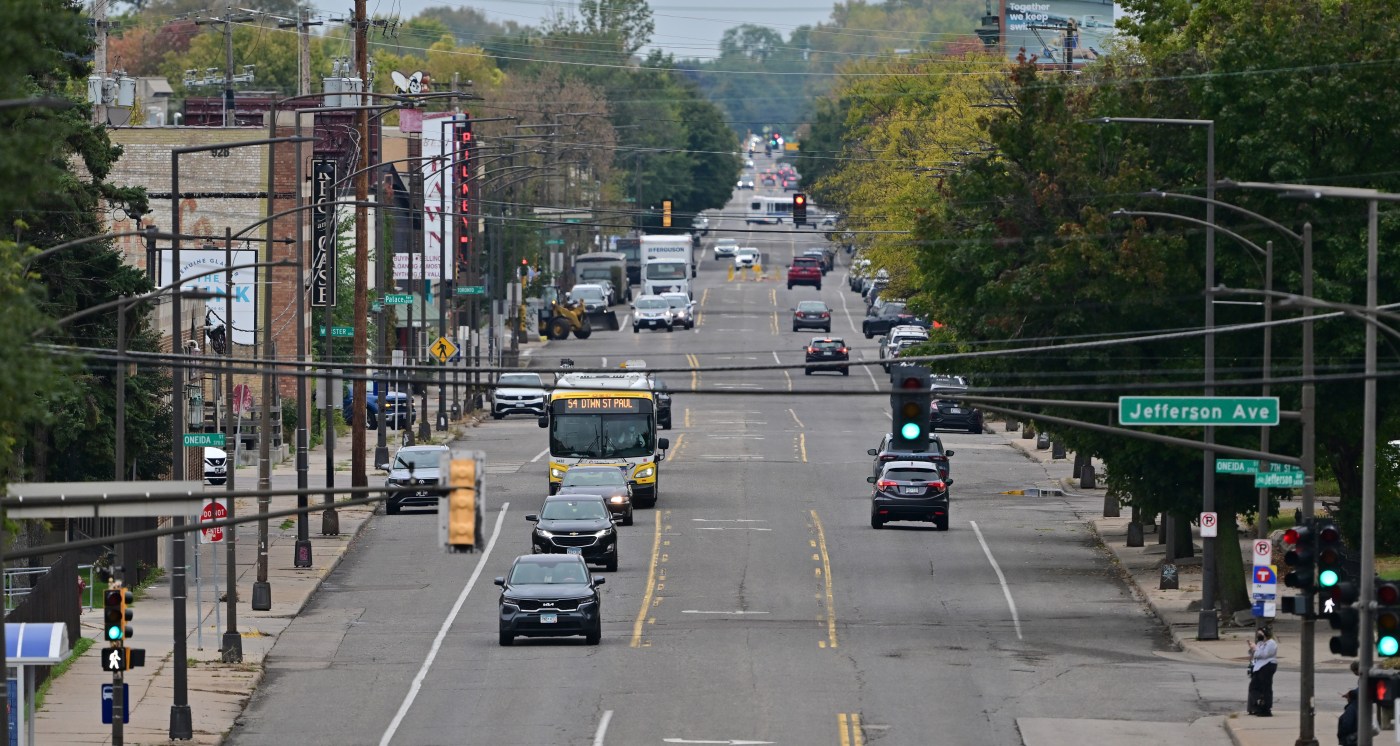
In March, the Metropolitan Council will consider a recommendation from Metro Transit to install a new bus rapid transit service to travel along West Seventh Street in St. Paul and south to the Mall of America in Bloomington — the Metro J Line, a kind of spiritual successor to the long-planned and recently aborted Riverview Corridor.
The BRT recommendation was praised Wednesday by St. Paul City Council President Rebecca Noecker and Council Member Saura Jost, who said their political wards have waited for decades for major investment in the West Seventh corridor, which could be fully reconstructed in 2029 if funding comes together and discussions between the city, county, state and Met Council are fruitful.
“I’m just so grateful to everyone who stepped up when that (Riverview Corridor) process ended,” said Jost, as the council voted to approve a resolution supporting the J Line on West Seventh.
Another proposal coming before the seven-country metro’s regional planning agency is the future Metro K Line, which would follow Nicollet Avenue in Minneapolis down to American Boulevard in Bloomington. If approved, both bus routes would roll out between 2030 and 2035.
The two “arterial” BRT services, which would operate in normal traffic rather than separated lanes, were forwarded from among 17 options considered by Metro Transit about a year ago, and in some ways, they’re the tip of the iceberg.
In 2024, Metro Transit set a goal of expanding its transit services by 35% by late 2027. Dubbed “Network Now,” the vision called for 20 new bus routes, additional service on 65 existing routes, and light-rail trains that pull into stations every 10 minutes during workday hours. Funding would come, in part, from a 0.75 cent regional sales tax that took effect across the Twin Cities in October 2023.
How’s progress? Network Now isn’t sleeping. The leading transit provider for the Twin Cities will soon be 40% of the way there following a series of additional bus services scheduled to get rolling on March 14.
Passengers board a Metro Transit bus. (Courtesy of Metro Transit)
Added service
Notably, the Route 94 bus connecting downtown Minneapolis to downtown St. Paul will offer trips every 15 minutes during peak periods, a boon for rush-hour commuters accustomed to departures every 20 to 30 minutes. The new schedule will result in 115 trips per day, up from 100 daily trips.
Added service also is coming to Route 270, which offers morning and late afternoon trips between Maplewood Mall and downtown Minneapolis along Minnesota 36. That bus route will launch a new midday service.
Other changes include expanded service on Route 17, which serves Hopkins, St. Louis Park and Minneapolis, and Route 22, which serves Brooklyn Center and connects to the Blue Line. Come mid-March, schedules and travel times will be adjusted on 23 bus routes to account for road construction.
Looking out a little further, Metro Transit plans to open the Green Line extension from downtown Minneapolis to Eden Prairie in 2027.
Also in the works is the extension of the Metro Gold Line, an all-day bus rapid transit service that currently connects Woodbury to downtown St. Paul. The Gold Line extension would continue to downtown Minneapolis.
Report on high-subsidy routes
Before transit enthusiasts get too excited, it might behoove a review of a recent 10-page report compiled by the Met Council at the request of Minnesota House lawmakers.
The report takes a critical look at high-subsidy regular-route transit service. Historically, most public transit services don’t cover operating costs through fares and their rather limited advertising revenue alone. Some require heavier infusions of tax dollars than others, a finding not lost on lawmakers during a Feb. 18 hearing before the House Transportation Finance and Policy Committee.
A weekday ride on the Green Line light rail, for instance, requires a per-passenger taxpayer subsidy of $4.25. On Sundays, that subsidy climbs to $6.92.
If that sounds high, brace yourself. That’s actually a handsome return on investment, relatively speaking. The recently discontinued Northstar Commuter Rail line required a per-passenger operating subsidy of more than $116.
Bus rapid transit that follows highways from the suburbs to the cities — the Orange and Red lines — require per-passenger subsidies of about $13 to $18 per ride. Urban BRT routes need a relatively modest per-passenger infusion of $6 to $8.80.
Traditional urban bus routes, dubbed “core local bus” routes in the report, rely on per-passenger subsidies that can range anywhere from $8 to $30 per trip. That’s small potatoes compared to most south metro suburban bus services run by the Minnesota Valley Transit Authority, where per-passenger subsidies can climb as high as $200 per passenger ride.
The MVTA, which is overseen by its own board composed of seven member cities, operates independently of Metro Transit and answers directly to the Legislature, albeit with guidance from the Met Council, which distributes some of its state and federal funding, including Motor Vehicle Sales Tax dollars.
Courtesy of MVTA
A Minnesota Valley Transit Authority bus in downtown St. Paul. (Courtesy of MVTA)
Of MVTA’s 48 suburban bus routes, about 17 to 20 fall in the category of “high subsidy,” with per-passenger subsidies landing at least in the high double-digits — say $50 or more. Six MVTA corridors exceed per-passenger subsidies of $90. MVTA serves seven suburbs, including Apple Valley, Burnsville, Eagan, Rosemount, Savage, Prior Lake and Shakopee.
Those numbers reflect day-to-day operating costs, not the cost of capital construction or new train cars or buses. Eliminating high-subsidy routes could yield some $23 million in annual savings from operating costs alone, but the report notes that would leave some suburban communities stranded. Those savings would likely flow into new or existing services that require less subsidy, reads the report, which makes no specific recommendations for lawmakers.
Still, of 264 routes studied across five transit providers, the report found 28 that would be considered especially high subsidy, and ripe for restructuring or elimination. That includes nine Metro Transit routes, or 4% of Metro Transit lines.
“We work on a quarterly basis to adjust our service to meet demand,” said Charles Carlson, executive director of the Met Council’s Metropolitan Transportation Services, addressing the House committee. “The council’s guidelines are that we should not have high-subsidy routes, and they should be addressed through minor, moderate or major changes.”
Lawmakers appeared eager to revisit that suggestion.
“If 4% of rides are extremely expensive to provide, I think our challenge is how do we remedy that to respect the taxpayers, and still continue to provide good transit service that people actually need, and not highly subsidized routes that people aren’t using?” said committee co-chair Jon Koznick, R-Lakeville, during the hearing.
Staffing, public safety
Meanwhile, Metro Transit, which struggled greatly in recent years with staffing, added 113 new bus and train operators last year through heavy recruitment and signing bonuses, growing its total to 1,500 operators, as well as dozens of new maintenance workers. The hope is that filling out the ranks will lead to fewer canceled trips and increased reliability, a key part of drawing passengers back to a transit system that lost scores of riders during the pandemic.
For many riders, public safety remains a concern. The Transit Rider Investment Program, or TRIP, which launched two years ago, now employs more than 130 civilian agents who ride light-rail and bus rapid transit lines to inspect fares and serve as a second set of eyes to maintain standards. The agents recently began riding the Orange Line, which connects the Burnsville Transit Station to the Fifth Street Station in downtown Minneapolis.
A Metro Transit Police car seen in St. Paul on May 28, 2025. (Mara H. Gottfried / Pioneer Press)
The Metro Transit Police Department employs an additional 35 community service officers, or students who work part time for Metro Transit while earning their law enforcement degrees, which is the most in department history.
An expanded security contract that rolled out late last year brought private security officers to 15 stations, some of which are staffed up to 24 hours per day.
Beat officers return to trouble spots
Have all those public safety efforts actually paid off? It depends how you look at the numbers. Reports of serious crimes such as assault dropped 14% from 2024 to 2025, continuing a two-year trend toward improvement, according to the Metro Transit Police Department.
Meanwhile, documented “proactive calls” for police service increased nearly 32% — which is a good thing, in eyes of Metro Transit officials, who say the measure reflects how often police are addressing unwanted behaviors they observe on the transit system, including nuisance issues like smoking.
Overall, there was a 17% increase in reported crime year over year from 2024 to 2025.
Still, “serious crimes on transit are low and dropping, but any amount of criminal activity is unacceptable, which is why we will continue doing everything we can to be present and to prevent crimes from ever happening in the first place,” said Joe Dotseth, interim chief of the Metro Transit Police Department, in a written statement.
Metro Transit reinstituted a team last year dedicated to trouble spots, including areas such as downtown St. Paul, downtown Minneapolis, University Avenue and the Blue Line’s Franklin Avenue and Cedar-Riverside stations. The hope is that creating a regular beat for officers will help them develop a presence, visibility and contacts in the area.
Metro Transit also roped in social service providers and prosecutors to focus specifically on the Green Line corridor last year.
This spring, the transit authority will contract with a community-based organization to offer resources to transit riders experiencing behavioral health challenges and unsheltered homelessness. The St. Paul Downtown Alliance currently maintains Safety Ambassadors at downtown St. Paul light-rail stations, and Metro Transit is looking into possibly developing a similar partnership in Minneapolis.
Related Articles
MnDOT extends public comment period on ‘Rethinking I-94’ to March 23
‘Oh, For Sleet’s Sake’ top vote-getter in MN Name a Snowplow contest
Here are three options being considered to revamp I-94 in St. Paul
St. Paul: Bridge work this weekend to close I-94 in both directions east of downtown — again
St. Paul: I-94 closure scrapped Saturday as workers struggled with bridge beam


More Stories
Why Private Health Insurance Has Never Mattered More to UK Employees
There is a version of this conversation that HR professionals have been having for years. Private health insurance is a...
Call blocker firm fined £190,000 for making the nuisance calls it claimed to stop
A company that sold call-blocking devices to elderly people has been fined £190,000 after the regulator found it was responsible...
Karl D’Angelo Santa Rosa: Building Success Through Change
For Karl D’Angelo Santa Rosa, success did not happen all at once. It came through years of learning, hard work,...
Colman’s Mustard put up for sale as Unilever clears path for £48bn McCormick merger
Colman’s Mustard has been put up for sale by Unilever, as the FTSE 100 group moves to head off competition...
Burnham’s business rates adviser called for £9bn tax cut for high streets
Andy Burnham’s new business rates adviser has previously called for up to £9bn of tax cuts for businesses, arguing the...
Loss of cheap energy harmed EU economy – Von der Leyen
The bloc saw oil and natural gas prices soar after it drastically reduced Russian imports over the Ukraine conflict European...