
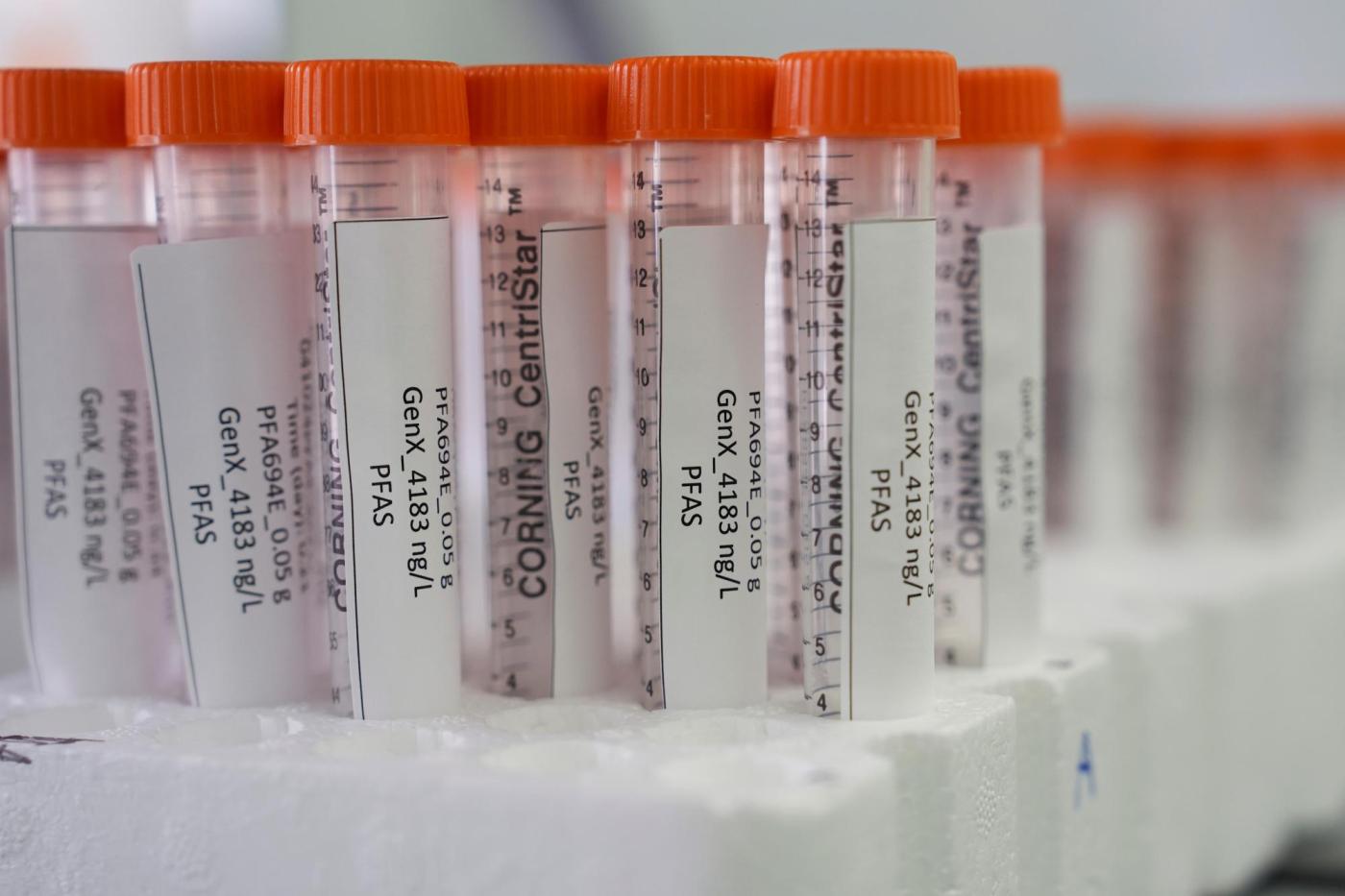
Town of Pepperell sues industrial giants over PFAS

PEPPERELL — The town of Pepperell is suing several industrial giants of the presence of toxic PFAS chemicals in the town’s water supply.
The law firm Napoli Shkolnik, with offices in Clinton and New York, has filed a federal lawsuit in the District of Massachusetts on behalf of the town against six industrial defendants, including Honeywell International and Georgia-Pacific, alleging that decades of industrial operations along the Nashua River have released per- and polyfluoroalkyl substances, known as “forever chemicals,” PFAS, into the environment, contaminating the town’s drinking water supply, which serves over 9,000 residents.
The town is seeking to hold the defendants responsible for covering the costs of cleaning up its water supply and ensuring safe drinking water for its residents. PFAS exposure in general has been linked to serious health conditions, including cancer, immune system damage and developmental complications, the suit states.
“Thousands of Pepperell residents have been drinking PFAS-contaminated water for decades because Honeywell and other companies released dangerous chemicals from their facilities into the waterways feeding the community’s drinking supply,” said Paul Napoli, founding partner at Napoli Shkolnik, who is a nationally recognized environmental lawyer. “These are real families who will face real health consequences from these toxins. We are working on behalf of the Town of Pepperell to hold parties accountable, push for remediation, and advocate for changes to ensure this doesn’t happen again.”
The lawsuit notes that the town’s public water system draws from five gravel-packed wells at an average depth of 60 feet, but one of those wells, “Nashua Road Well No. 1 has been offline since June 2021 due to elevated levels of PFAS.” And “all wells are located in an aquifer with high vulnerability to contamination due to the absence of hydrogeologic barriers that can prevent contaminant migration, which facilitates the infiltration and migration of PFAS contamination.”
The suit states that, in 2020, Pepperell’s drinking water was sampled for the presence of PFAS. Results showed detected levels of PFAS in all five wells, some above EPA’s maximum contaminant levels. Then in 2021, when Nashua Road Well No. 1 again topped allowable PFAS concentrations, it was taken offline by the town.
“The town itself isn’t responsible for the PFAS in our water,” said Town Administrator Andrew MacLean, “but our citizens have to pay to eliminate this and we would like to have those responsible pay those costs. … Essentially, we’re desperate, we can pay for (it), spread it out over several years, but it’s not fair to the citizens of this town.”
The suit states that running the water system without access to that well has increased costs to the town.
Also, “Pepperell has begun planning and designing a water treatment system to remove PFAS contamination from its water supply in order to protect the health of its residents and consumers and to comply with state and federal drinking water standards. Due to the PFAS contamination, Pepperell must build special filtration facilities to remove PFAS since traditional water treatment technologies do not remove these contaminants.
“Pepperell has engaged consultants to evaluate, identify, and determine methods to remove PFAS contamination from its water supply and to protect its drinking water supply from ongoing PFAS contamination. Pepperell has incurred and will continue to incur significant cost to design, construct, and operate and maintain this new treatment plant.”
MacLean said the town is going out to bid in the spring on a $20 million carbon filtration plant to eliminate the PFAS chemicals from the town’s water supply. He noted that the cost overall to the town will be more in the range of $30 million. He notes the town has received about $7 million grants to help deal with the problem and about $1 million from a previous class-action lawsuit over PFAS, but he said it doesn’t put much of a dent in the town’s cost to deal with it.
“We know what the causes are, we know where they are from, so we’re able to chase down the manufacturers of specific products because of that,” MacLean said.
The suit says studies show associations between perfluorooctanoic acid (PFOA) and perfluorooctanesulfonic acid (PFOS) levels in blood and an increased risk of several adverse health effects, including problems with the liver, the immune system, increased risk of high blood pressure, changes in thyroid hormone, ulcerative colitis (autoimmune disease), pre-eclampsia (a complication of pregnancy that includes high blood pressure), and kidney and testicular cancer. In addition, PFOA is associated with high cholesterol, decreases in antibody responses to vaccines, high blood pressure and preeclampsia during pregnancy, and decreased birthweight.
“These injuries can arise months or years after exposure to PFAS,” according to the lawsuit.
It also states that “PFAS in general cause significant health impacts, such as diminished antibody responses to vaccines and reduced immune cell function leading to increased susceptibility to infections … ” and that the “EPA has concluded that PFOS and PFOA are likely to be carcinogenic to humans.”
The suit states that the defendants “are liable, jointly and severally, for Pepperell’s necessary response costs, and damages regarding contamination to Pepperell’s public water supply from PFOA and PFOS.”
While several factories that used PFAS were located in Pepperell historically, the suit extends to companies that operated in Fitchburg and Groton, as well, saying that contaminants moved down-river to Pepperell.
“In July 1965, the Pollution Control Division released a report about the pollution of the Nashua River (“Nashua River Pollution Report”). On information and belief, by that time the Nashua River was known as one the 10 most polluted rivers in the United States, widely characterized as biologically degraded to near dead river conditions, and cited commonly as a textbook industrial pollution case prior to the modern Clean Water Act,” the suit states.
The suit concludes that “As a result of Defendants’ actions, omissions, and conduct in the use, release, storage, handling, and/or disposal of PFAS and PFAS-containing materials at, near, or within the vicinity of the source water protection area for Pepperell’s Water Source, PFAS have been caused to migrate into and exist in Pepperell’s Water Sources and property, thereby damaging and injuring Pepperell.”
Defendants include Georgia-Pacific, which through several changed of ownership ended up owning the former Pepperell Paper Mill, historically associated with St. Regis Paper Co., which was located on the Nashua River at Babbitasset Falls in East Pepperell.
Another defendant is Weyerhaeuser, owners of the former Weyerhaeuser Mill on the banks of the North Nashua River, at about what is now 44 Old Princeton Road, Fitchburg.
Defendant Neenah Paper, as the owner of FiberMark, is being claimed liable in regards to contamination at the former Fitchburg Paper Company Mill at 642 River St., Fitchburg.
Defendent Ahlstrom-Munksjo Paper Inc. of Delaware is said to be the surviving owner of the former Fitchburg Paper Mill.
Also Honeywell International of Delaware is being sued as the current owner of the former Conductorlab facility at 430 Main St., Groton, which was operated as a circuit board and semiconductor production facility between 1958 and 1985.
Also, the suit targets Hollingsworth & Vose Co. of East Walpole, which operates a facility at 219 Townsend Road, West Groton, where for decades it has manufactured specialty paper and paper-based filtration media along the Squannacook River, a tributary of the Nashua River, the suit states.
In Fitchburg, Mayor Sam Squailia acknowledged the history of mills in the city that produced toxins but said that while the city has show evidence of traces of PFAS in the water, none of the tests have been above the allowable level.
“It’s these mills that for years and years and years produced these products that contained PFAS in the products,” and which has resulted in Pepperell being forced to build an expensive filtration plant to filter out the toxins, which brought on the suit, said attorney Hank Naughton of Napoli Shkolnik.
He said that PFAS are known to exist across America, saying 75 percent of the country “have PFAS impacts” … but that “In Pepperell we know where they came from and that allowed us” to get to the level of being able to bring suit, Naughton said.
He added that his law firm is in talks with other cities and towns in North Central Massachusetts and Middlesex County and may file additional lawsuits based on the conditions in each city or town.

More Stories
How SMEs Can Turn Compliance into a Competitive Advantage
Yet many established, trusted brands operate in the most tightly regulated industries, among them banking, aviation and pharmaceuticals. Far from...
Entrepreneurs back Clarkson after he questions starting a UK business
Entrepreneurs have backed Jeremy Clarkson after the broadcaster and publican asked the Conservative Party conference this week why anybody would...
New European player plans to back the data centres British businesses will rely on for AI
Ask most British business owners where their AI tools actually run and you will get a shrug. The honest answer...
How to Open a Company in Poland in 2026: A Practical Guide for Founders
If you are planning to open a company in Poland this year, the difference between a smooth launch and a...
Putin clears UniCredit sale in Russia
The Italian lender has faced pressure from European regulators to scale back its operations in the country Russian President Vladimir...
Healey tells bank chiefs no decision made on windfall tax
John Healey, the chancellor, told the chief executives of Britain’s biggest banks today that the UK faces a tough fiscal...