
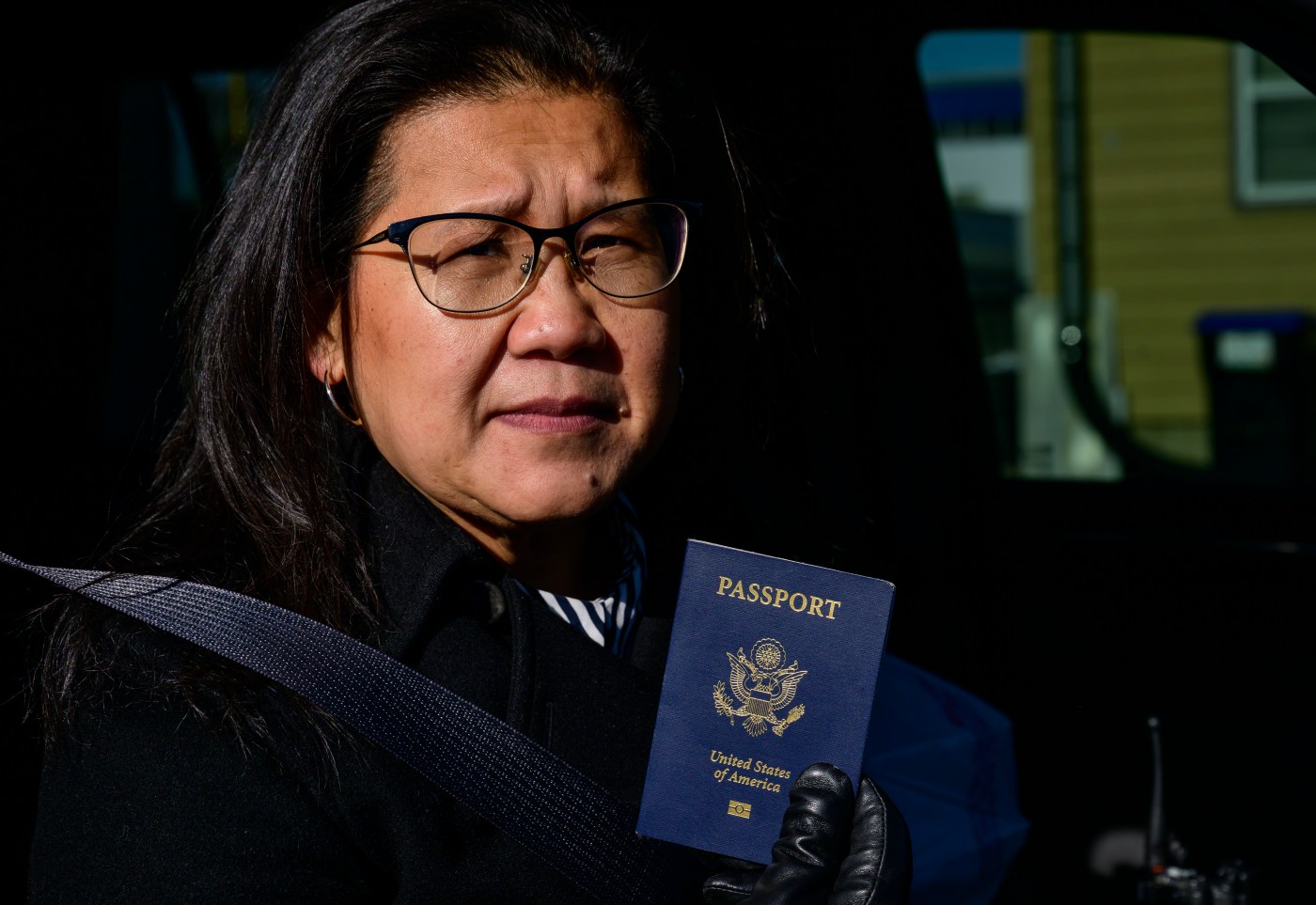
A month of learning, advocacy, frustration for St. Paul Mayor Kaohly Her

Whenever she leaves home, Kaohly Her carries her passport in the event she’s stopped by federal agents. That might be notable enough given that Her, a U.S. citizen, arrived in the American Midwest as a small child nearly 50 years ago, alongside a wave of Hmong refugees fleeing persecution in Laos.
Adding to the painful irony for Her is that she’s the newly elected mayor of Minnesota’s capital city. After unseating a two-term incumbent in November, St. Paul’s first female, first Hmong, first Asian-American and first refugee mayor now presides over a city where U.S. Immigration and Customs Enforcement agents have gone door to door looking for immigrants, including members of her own ethnic group.
For Her, a former finance worker, school board administrator and state representative, her first month in the St. Paul’s mayor’s seat has been an overnight education in television appearances, legal fighting, fear and heartache. The mayor’s inaugural gala, initially scheduled for Jan. 30 at the downtown RiverCentre, was canceled.
Her makes the rounds with immigrant vendors who say they can’t make sales because their customers — even those with U.S. citizenship or another legal status — are too scared to leave the house, fearful their limited language skills won’t prevail if they’re stopped by ICE.
Detainments
When images circulated of a Hmong man just a few years older than her being led out from his home into the snow, handcuffed and wearing nothing more than Crocs, boxer shorts and a baby’s blanket, Her noted with sorrow that she knew the family. The man, a U.S. citizen with no criminal history, was fingerprinted and released.
“Now we have incident after incident after incident of American citizens being detained and being injured at the hands of ICE, people with no criminal record at all,” said Her, during a Jan. 21 interview on “PBS News Hour.” “We are hearing more of those cases than actual situations where someone had a criminal record.”
Her’s first month in office has also been spent meeting with St. Paul City Council members in their wards, conferring with other mayors and lawmakers, and making repeat appearances on CNN and other local and national news broadcasts, where she has reiterated her opposition to “Operation Metro Surge.”
“People are afraid,” she told PBS News. “They are frustrated and they are angry. But there’s also a lot of hope that we see on the ground as well with the love and the care and the kindness that they’re showing each other.”
Lawsuit against federal government
Then there’s the question of suing the federal government. On Jan. 12, Her joined Minnesota Attorney General Keith Ellison and Minneapolis Mayor Jacob Frey to announce a lawsuit against the U.S. Department of Homeland Security, the latest in a growing series of legal efforts to block federal funding cuts or, in this case, militarized federal enforcement on city streets.
Days later, Ellison, Frey, Her and Gov. Tim Walz were served subpoenas — or demands to testify — in a federal Department of Justice probe of what is described as a conspiracy to impede federal immigration officers.
Still, the everyday work of being mayor goes on. On Jan. 28, Her helped unveil a smokey asphalt recycler known as a Bagela, which helps St. Paul Public Works fill potholes. The next day, she filmed a firefighter-recruitment video at a St. Paul training facility.
St. Paul Mayor Kaohly Her joined street maintenance superintendent Jericho Huggar and St. Paul Public Works Director Sean Kershaw on Wednesday, Jan. 28, 2026 to see the city’s Bagela asphalt recycling machine in action. (Frederick Melo)
On Jan. 21, she joined Frey for the annual “Breakfast with the Mayors” event, which is hosted by the two cities’ chambers of commerce, where she repeated her concerns that ICE enforcement would shutter small businesses and hurt tax remittances to the state.
“Closing a business happens very quickly, but starting one up can take years, which means this is going to impact us,” Her said. “Even if (ICE) were out of here in another couple of months, this is going to have a lasting economic impact.”
The following interview, conducted Jan. 29 at the mayor’s office in downtown City Hall, has been edited for length and clarity.
Q: You’ve been making a lot of local and national media appearances. What are we not seeing?
A: I’m working on a visit to an ethnic Karen family. They had all of their paperwork in order, and they were sent to Texas. And one of them just got back. There was one family that had ICE knocking at their door, and the mother in that home was expecting, and there was so much fear and anxiety around federal agents pounding at their doors that she lost her baby. I’m trying to go and visit them as this terror is being inflicted on our community members. Those are the things that happen that we don’t ever show other people, that we need to get done. People need to have support that doesn’t always show up in the media.
Q: You’ve said that some immigrant businesses — especially in the Hmong shopping centers and Latino community — are down to just a few customers per day?
A: They were telling me that their revenues are down 60% to 70%. It’s heartbreaking. That was consistent across all of the markets, all of the retailers, everyone that I had visited, and I visited a lot of them. The governor has declared February “Shop Local” month, encouraging everyone to go out and just frequent our immigrant refugee businesses.
Q: You’ve called St. Paul a city “under siege.” You’ve joined Minnesota Attorney General Ellison and Minneapolis Mayor Frey in suing the federal government, and then you were subpoenaed by the DOJ soon after. Do you think that’s tit-for-tat political retribution?
Related Articles
Appeals court affirms Trump policy of jailing immigrants without bond
Her son’s injury never got its day in vaccine court. Their lawyer is now advising RFK Jr. on its overhaul
Judge orders Trump administration to bring back 3 families deported to Honduras, other countries
Justice Department will allow lawmakers to see unredacted versions of released Epstein files
Feds can’t withhold social service funds from 5 Democratic states amid fraud claims, judge rules
A: I can’t comment on the subpoena and existing lawsuits. But what I can say is that (President Donald) Trump promised retribution. We are a state that never voted for Trump in any of the elections, and we are very solidly a state that really loves and cares about our residents, and we try to do right by them. And that’s just something that has been completely under attack. And so we’re not surprised by the actions that have been taken by the federal government against us. We’re not surprised by the tactics that have been used.
Q: The St. Paul City Council is poised to approve and strengthen its separation ordinance (the council approved it on Wednesday, Feb. 4), further barring St. Paul police from assisting federal immigration agents. They plan to ban ICE from staging at city parks and city-owned lots. We already saw a Hmong man get detained in the parking lot of the Hallie Q. Brown Community Center, which is a city-owned building. Do you think these rules will really be enforceable? Do they have any teeth?
A: For this particular one, we do have some levers. ICE did stage over at Como Park, and we did send officers and our lawyers there with a cease-and-desist order. And they did leave. I think that at this moment in time, we have to try to pull every lever we can. I think that enforcement is always difficult, right? Regulating the federal government is actually quite challenging. They have broad authority, and all of our cities and states are within the federal government’s jurisdiction. All we can do is do our best to try to use the levers that we have. Our police department created a position specifically designated to only work on issues around ICE.
Q: After St. Paul police used force to dispel protesters on Rose Avenue last year, you met with some community members on Jan. 8 at the Indigenous Roots cafe, but Police Chief Axel Henry was not with you. It sounded like there was a point in your speech where you were almost fighting tears. Why wasn’t he there?
A: Well, I would say that it’s not a matter of whether he wanted to be there or not. Chief Henry has always been open to showing up in community, wherever community needs him. But because the city council had already passed their resolution in order to request an active independent investigation, Chief Henry could not come to speak about an incident that is under investigation. And I think that that’s what people forget. It is not a matter of whether I wanted him there or he wanted to be there. And I said, even if he was there, he couldn’t have answered any questions. And that would have just been really frustrating for community members to think that he was coming there not to answer questions.
So I offered to go instead. I could at least answer some community questions. If it wasn’t for the investigation, he would have been there.
Q: What’s the typical day look like for you right now?
A: A typical day starts at 6 a.m. for me, almost every single day, and it doesn’t end until probably 9, 10, 11 o’clock at night. I mean, they’re pretty long days, and they’re usually packed back to back. It ranges from meeting with groups — like today, we met with credit unions, we did press conferences, we also met with the Union Gospel Mission to really understand some of the work that they’re doing and how that impacts St. Paul. It’s a mix of everything from media to partners to departments to understanding some of the processes that we need to work through. We spend a lot of time here at City Hall, but we’re out a lot meeting with many, many different people.
Q: You did a press event with St. Paul Public Works debuting the new Bagela asphalt recycler, which is filling potholes with hot mix. Beyond that, with ICE here, is any normal day-to-day work really getting done?
A: It is. And you know what? I’m proud, because I had a lot of pushback from people when I changed the mayor’s office structure. We are the first administration to not have a mayor/deputy mayor, and I’m so thankful we made that change, because while First Assistant Mayor Erica Schumacher and I have been putting out fires and dealing with what has been happening with ICE and the shootings, and pushing back against the federal government by working on these lawsuits, Assistant Mayor Nick Stumo-Langer continues the work when it comes to what I promised around Planning and Economic Development and Department of Safety and Inspections and Public Works, about how we’re going to work better together. And he’s been the one convening all of our meetings with our directors. They’re trying to do cross-departmental work. We’re looking at the inefficiencies that might have been issues of why it is that we don’t track certain things, and to make sure that requests are getting done. That work continues, and it’s really important for people to know that we can do all of these things all at one time. We can put out fires in the moment that we need to, but we can continue the city’s work.
And sometimes there’s overlap. Assistant Mayor Jodi Pfarr is working with Parks and Rec and libraries, but when there was ICE staging in our parks and rec lots, there was a lot of coordination between the different assistant mayors. We’re learning as we’re going but the work keeps moving. And I’m really proud of that.
We continue to meet with the Downtown Alliance about the development in downtown here, we continue to meet with some of the financial institutions as we’re talking about how to build out the urban wealth fund. My assistant mayors are stepping up and meeting the moment, and I’m really proud of them for that.
Q: Do you expect to make further changes to your top staff, including your Cabinet and department heads?
A: We didn’t do the thing that most administrations do, where they move people out of positions and move others into director positions right away. We wanted to give people a chance. I anticipate as we continue to evaluate there could still be changes that would be coming, yes.
Q: Are we talking about in the short term or are we talking about six months from now?
A: There are some changes that we might be making shortly. We have departments where we might have to shift individuals around. We’re not trying to hide anything from anyone. We want to be as transparent as possible. When decisions are made, we will be letting people know.
Q: The city council is still reviewing its bonding requests to state lawmakers, like the big cat enclosure at the Como Zoo and the remodel of Grand Casino Arena. Could that priority list change?
A: We put out the legislative agenda so that we can be ready, and it had potential bonding projects in it. The way that our legislative agenda works is that we have to put everything that the city could potentially be asking for, advocating for, into it. But it doesn’t necessarily mean that everything in there will be a priority for the administration. (For bonding), we’re still working through that, because we don’t have the specific dollar amounts we’re asking them for, but we know the projects we’re looking at, so that list is probably not going to change much.
Q: So funding the remodel of Grand Casino Arena remains high on your priority list?
A: We’re still looking at the financial structure for that. I want people to remember that this is a city asset, and there’s liabilities to it. There’s deferred maintenance. Right now, these buildings generate a great deal of revenue for the city and for the state, but our ability to continue to be competitive so that we can keep generating those revenues is at risk right now.
If we are able to take care of these city assets, we could actually generate more revenues for the state and for the city, revenues that people coming in are spending here, versus relying on our current residents through their property taxes.
Related Articles
Harry Boyte: ‘Citizen’ is much more than a legal status. Let’s rise to it.
Amid immigration enforcement escalation, St. Paul artists respond with surge of creativity
Valeng Cha: When Federal ICE meets Minnesota Nice: an immigrant’s perspective
Immigrant whose skull was broken in 8 places during ICE arrest in St. Paul says beating was unprovoked
Charges: St. Paul man killed during marijuana deal that went awry


More Stories
Miliband says late mother shaped his decision to call out Gaza
Foreign Secretary Ed Miliband has said the memory of his late mother, a Jewish refugee who died at the end...
Carney pitches Canada’s AI for All strategy to global investors
Canadian Prime Minister Mark Carney set out his government’s artificial intelligence strategy to global investors yesterday, pledging to give every...
Carney opens Canada’s four largest airports to private investment
Canada will seek private investment through long-term concessions to operate its four largest airports and will allow immediate expensing for...
US Treasury yield highest since 2007 ahead of Fed’s interest-rate decision
The bond rout threatens higher borrowing costs worldwide and could pile further pressure on Washington’s $40 trillion debt The 10-year...
Edward Schmidt: Building a Career on Service and Integrity
From emergency scenes to hospital hallways, classrooms, and military service, Schmidt has spent decades preparing for situations where every decision...
Government plans to nationalise Speciality Steel UK after bid rejected
The government is developing a plan to nationalise Speciality Steel UK (SSUK), the country’s third-largest steelworks, after deciding against backing...