
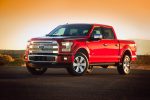
NHTSA Opens Probe Into 1.3 Million Ford F-150 Trucks Over Sudden Downshifts and Wheel Lock Risk

If you drive a 2015 to 2017 Ford F-150, there’s a new federal investigation worth keeping on your radar. The National Highway Traffic Safety Administration has opened an engineering analysis covering nearly 1.3 million trucks over complaints that the transmission can downshift unexpectedly without warning or driver input. In some cases, the allegation goes a step further, with owners reporting a temporary rear wheel lockup that can quickly turn an ordinary drive into a white-knuckle moment.
The trucks at the center of the investigation are equipped with Ford’s 6R80 six-speed automatic. Investigators are looking closely at a scenario where a signal loss tied to sensors in the transmission can trigger strange behavior, including unintended shifts to neutral, an unexpected upshift, or a rapid downshift. In plain terms, the truck may suddenly pick a different gear on its own, and depending on speed and conditions, that abrupt change can upset the chassis and traction.
Digging into the technical side, the issue appears connected to electrical connection degradation within a lead frame over time from thermal cycling and vibration, which can contribute to signal loss from the Transmission Range Sensor. NHTSA documents also reference Ford’s programmed “shift map,” which outlines how the transmission reacts when these signals drop out. One of the more concerning details is that at speeds between 35 and 64 mph, the system could allow a downshift into second gear in a worst-case scenario, and Ford has acknowledged that temporary wheel lockup can be part of that worst-case outcome.
Owner feedback is a big reason this has moved forward. NHTSA says it reviewed hundreds of owner questionnaires tied to the issue, and a significant portion of those owners reported at least one wheel lockup-related event during an unexpected downshift. That type of pattern is exactly what tends to push an investigation deeper, because it suggests the concern is not a one-off glitch and may be repeatable under certain conditions.
It’s also worth noting Ford’s position that this is not the same problem as earlier OSS sensor issues that prompted multiple prior actions on older F-150 model years. Still, the end result drivers care about is similar: a transmission doing something you did not ask it to do. If you own one of the affected model-year trucks, the smart move is to keep an eye on updates from NHTSA, check for any future recalls tied to your VIN, and pay close attention to any unusual shifting, abrupt deceleration, or odd behavior when selecting gears, especially at moderate speeds or when backing on an incline.


More Stories
Opel STX Concept Brings Active Aerodynamics to the Electric Estate Car
Opel is preparing a new concept car for the 2026 Paris Motor Show. Called the STX, it previews a future...
A Modern Citroën 2CV Sounds Great. Until You Think About the Price
Citroën has revived the 2CV name at the Paris Motor Show, displaying two concepts inspired by its most recognisable small...
Pickup Truck vs SUV Insurance Costs and What Drivers Should Know
Insurance belongs in the buying budget when the shortlist includes a pickup and an SUV. Either vehicle may cost less...
Porsche Mission S Could Get a Manual Transmission and That Makes This Mid-Engine Supercar Even More Exciting
Just when we thought Porsche’s stunning new Mission S concept couldn’t get any more exciting, the German automaker has revealed...
New Tesla Roadster Looks Production Ready, But Will Its Insane Acceleration and Flying Tricks Ever Be Street Legal?
Just when we thought the new Tesla Roadster couldn’t get any more ridiculous, we’re getting a closer look at the...
What DUI Attorneys Do to Fight and Beat a Drunk Driving Charge
Drunk driving remains a serious concern in Los Angeles, California. According to the California Highway Patrol’s Statewide Integrated Traffic Records...