
Venezuela Plans Amnesty for Political Prisoners, Closure of Notorious Detention Center

By Aldgra Fredly
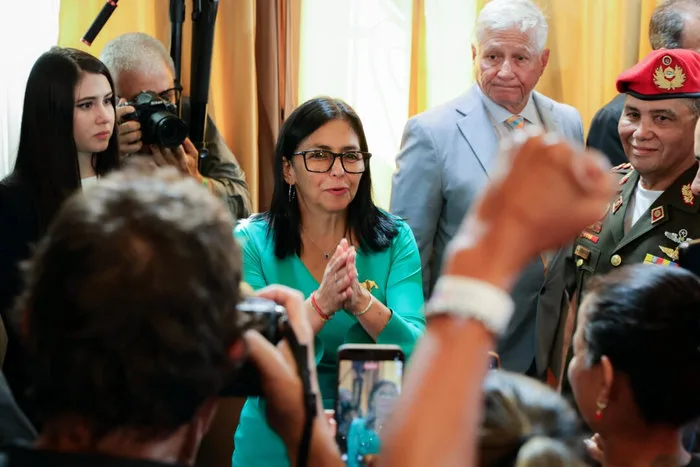
Venezuelan interim leader Delcy Rodríguez on Jan. 30 proposed a general amnesty bill that would lead to the release of hundreds of political prisoners, amid the regime’s reform efforts following the U.S. capture of former leader Nicolás Maduro.
The release would include opposition leaders, journalists, and human rights activists detained for political reasons.
Rodríguez said the proposed amnesty would cover cases “from 1999 to the present,” but would not apply to prisoners convicted of murder, drug trafficking, corruption, or human rights violations.
“May this law serve to heal the wounds left by the political confrontation fueled by violence and extremism,” she said during a televised event at the Supreme Court of Justice.
“May it serve to redirect justice in our country, and may it serve to redirect coexistence among Venezuelans.”
Rodríguez also said the state will shut down El Helicoide, the notorious detention center in Caracas, and turn it into a sports, social, and cultural center for police and the surrounding neighborhoods.
“We will immediately attend to the request of the President-in-charge, Delcy Rodriguez, to work on a General Amnesty Law, once it is submitted by the Commission for Judicial Revolution,” National Assembly President Jorge Rodríguez, who is the brother of Delcy Rodríguez, said on Facebook.
Rodríguez earlier said that Venezuela’s interim regime has already freed “a significant number” of political detainees to demonstrate its “broad intention to seek peace.”
At least 302 political prisoners were confirmed to have been released as of Jan. 29, according to Alfredo Romero, director of Caracas-based advocacy group Foro Penal.
In a social media post on Jan. 30, Romero said he would support Rodríguez’s proposed amnesty as long as it does not discriminate against anyone.
“A general amnesty is always welcome as long as its elements and conditions include all of civil society, without discrimination, it does not become a blanket of impunity, and that it contributes to the dismantling of the repressive apparatus of political persecution,” he said on X.
The U.S. embassy said on Jan. 30 that Venezuela has released all known U.S. citizens detained in the country, but did not specify how many were released or why they had been detained.
“We are pleased to confirm the release by the interim authorities of all known U.S. citizens held in Venezuela,” the embassy wrote on X, urging the public to reach out if they have any information about U.S. citizens still detained in Venezuela.
Rodríguez was appointed interim leader by Venezuela’s Supreme Court and was sworn in on Jan. 5 after U.S. forces captured Maduro and his wife, Cilia Flores, from their residence in Venezuela’s capital, Caracas, to face drug- and arms-related charges in the United States.

More Stories
MGA, Curaçao, and German Licences: What the Differences Mean for Users
Choosing an online casino often comes down to one detail most players skim past: the licence badge in the footer....
Is I Will Find You Season 2 Returning? Renewal Status, Cast, and Plot
In 2026, the first season of the popular and most awaited series was released. I Will Find You first dropped...
Top Ahrefs SEO Tools to Boost a Website’s Traffic and Sales
Website analysis has become one of the most useful SEO tools used by several companies nowadays. Ahrefs SEO tool provides...
Planning Group Travel That Doesn’t Fall Apart at the Logistics Stage
Anyone who has organized transportation for a wedding party, a school trip, or a corporate retreat knows the pattern. The...
Black Doves Season 2 is Coming Soon! Release Date, Cast Members, and Production Updates
Good news! The release date for the popular spy-action drama Black Doves Season 2 is out. Keira Knightley is returning...
How to Enable AO3 Dark Mode? Sign-up and Login Process
Looking for possible ways to enable AO3 dark mode? Many readers want to read fanfiction in dark mode on Archive...