
Gaskin: Kraft scores with years of philanthropic TDs

It wasn’t just Myra Kraft who had deep philanthropic commitments to Black and Hispanic communities in Boston. Robert Kraft did as well — often quietly, institutionally, and long before politics complicated how those actions were interpreted.
Kraft made decisions that placed Black leadership in positions of real authority and trust. These efforts were not branded as “racial justice,” but they materially supported Black neighborhoods. One of the clearest examples came in 2007, when Kraft hired Andre Tippett, a Pro Football Hall of Famer and Patriots legend, as Executive Director of Community Relations. This senior role oversaw the franchise’s charitable giving, youth programs, and community partnerships across New England. Tippett held the position for more than a decade.
This was not symbolic work. Community relations controls money, access, credibility, and long-term relationships with neighborhoods that are disproportionately Black and working class.
I know this commitment firsthand.
My organization, Greater Grove Hall Main Streets, was one of the nonprofits that benefited from Kraft’s support. When we launched the Black Women Lead project — an effort to honor Boston’s most beloved, admired, and iconic Black women leaders — several major institutions declined to support it.
Bob Kraft didn’t.
He immediately understood why it mattered to publicly honor Black women whose leadership had shaped Boston but whose names were too often missing from official histories. When I presented the proposal, he noticed a typo. One of the women we sought to honor was Ruth Batson, the legendary civil rights and education activist. Kraft pointed out that her last name had been misspelled.
Beyond the embarrassment, what struck me was this: how did this billionaire from Brookline know the correct spelling? That kind of attention doesn’t come from performative allyship. It comes from familiarity, respect, and care.
When we later asked to expand the project — increasing the number of honorees from 100 to 200 — Kraft agreed. He didn’t just approve the idea; he backed its growth. (We are now seeking a new sponsor to add an additional 300 women.)
Kraft’s broader philanthropic footprint followed the same pattern. Through the Patriots organization and Kraft family giving, resources flowed to urban institutions serving Black and Latino communities: youth development programs, education initiatives, community health efforts, and anti-violence work. These investments were steady, institutional, and outcome-focused — not performative.
Culturally, Kraft also moved comfortably in Black spaces. He maintained longstanding relationships with Black athletes and artists, including Jay-Z. He was visible dancing with Cardi B and wore Jordans. Cultural proximity is not activism, but it often precedes it — and it matters.
As national tensions rose during the era of Black Lives Matter and NFL protests, Kraft articulated a position that balanced unity with constitutional rights. In 2017, he said:
“The greatest enemy in sport is division from within… I respect the right of people in this country to make statements or protests, peacefully.”
When President Donald Trump publicly attacked protesting players, Kraft broke with him:
“I am deeply disappointed by the tone of the comments made by the President… I support their right to peacefully affect social change.”
Asked about Colin Kaepernick, Kraft added:
“I would very much like to see him in the league.”
In 2016, Kraft did publicly support Donald Trump’s presidential run, and for some that relationship undermined his credibility on race and racism. It didn’t. It showed something many people struggle with: the ability to maintain relationships across deep political and cultural divides. Kraft could be friends with Donald Trump and Jay-Z at the same time — and later become a close ally of Meek Mill.
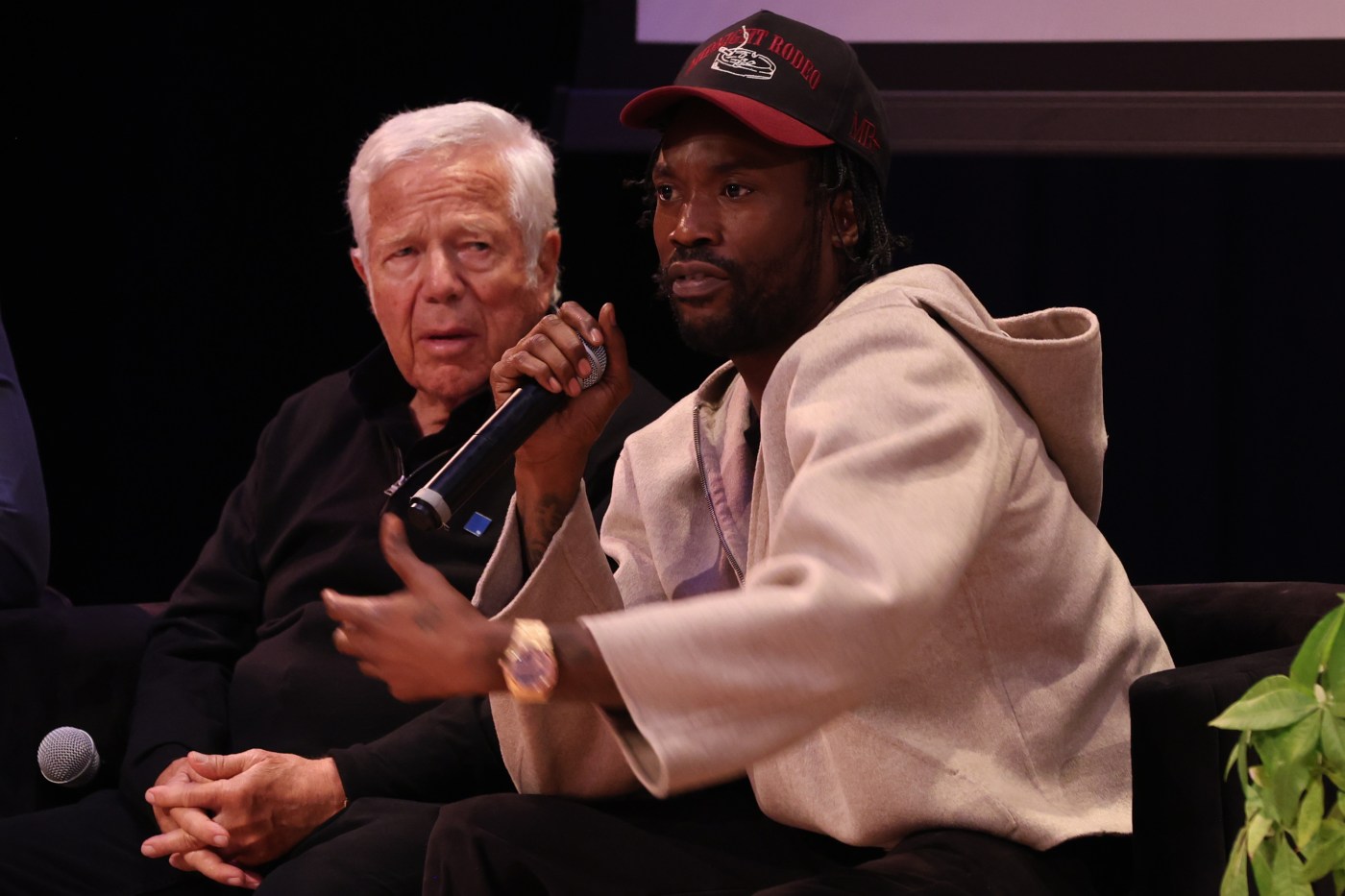
Kraft’s friendship with Mill marked a deeper, more explicit phase of engagement. Mill is a Grammy-nominated Black rapper from Philadelphia whose incarceration for repeated technical probation violations — despite no new violent crimes — became a national symbol of probation abuse. In 2018, Kraft visited him in prison. Seeing the system firsthand pushed Kraft from quiet philanthropy into public advocacy, including at NAACP and other public forums, helping catalyze his role as a co-founder of the REFORM Alliance, launched in 2019 with Mill, Jay-Z, and others, backed by an initial $50 million commitment to reform probation and parole laws nationwide.
That work did not come out of nowhere. It built on an earlier pattern of institutional trust, leadership inclusion, and attention.
That same pattern appeared again when Kraft faced one of the most consequential business decisions of his ownership: replacing longtime head coach Bill Belichick.
When Kraft selected Jerod Mayo, Mayo’s hire was not a DEI hire, and his firing was not racist. He was hired to lead, not to symbolize. It was no different from the way Kraft has treated even the most accomplished figures in the organization such as Belichick when results no longer followed.
Mayo was a legitimate candidate on football and leadership grounds. As a player, he was a team captain and defensive signal-caller, widely respected for intelligence and preparation. As a coach, he rose quickly, earning trust for clarity, accountability, and command. Just as important, he represented continuity at a moment of transition, making him a defensible choice for an owner seeking stability rather than spectacle.
When Mayo’s first season ended with a 4–13 record, Kraft confronted reality. Reporting afterward noted that Kraft acknowledged placing Mayo in an “untenable situation” and took responsibility for the circumstances surrounding the season. Still, stewardship requires accountability. Kraft moved on, hiring Mike Vrabel.
It wasn’t personal. It wasn’t racial. It was business.
Many Black fans and observers — myself included — can hold both truths at once: we were glad Mayo was given a real opportunity, and we accepted that it did not work out. That balance reflects what Black communities have long asked for — not special treatment, but fairness: the chance to succeed or fail on equal terms.
Ed Gaskin is Executive Director of Greater Grove Hall Main Streets and founder of Sunday Celebrations


More Stories
Getting to know you: Toby Spooner, co-founder, METRIX
Toby Spooner is a sport scientist and former personal trainer who co-founded METRIX, an immersive fitness competition in which pairs...
Getting to know you: Conor McKenna, co-founder and CEO, Go Swag
Conor McKenna is co-founder and chief executive of Go Swag, a Glasgow company that sources, stores and ships branded gifts...
Sovereignty concerns raised as Saudi-Sudan maritime delimitation push gains momentum
Sudan has been at war since April 2023, when fighting broke out between the Sudanese Armed Forces (SAF), led by...
Getting to know you: Barry Leahey MBE, president, Playdale Playgrounds
Barry Leahey MBE is President of Playdale Playgrounds, the Cumbrian manufacturer that has designed and installed more than 25,000 playgrounds...
Getting to know you: Paul Corcoran, founder and CEO, Agent
Paul Corcoran is the founder and CEO of Agent, a full-service marketing agency and certified B Corp with studios in...
Getting to know you: Peter Nailer, managing director, CloudCoCo
Peter Nailer is managing director of CloudCoCo Group plc, the AIM-listed IT procurement and e-commerce business. In August 2026 the...