
Editorial: NASA’s new moon mission riskier than it should be

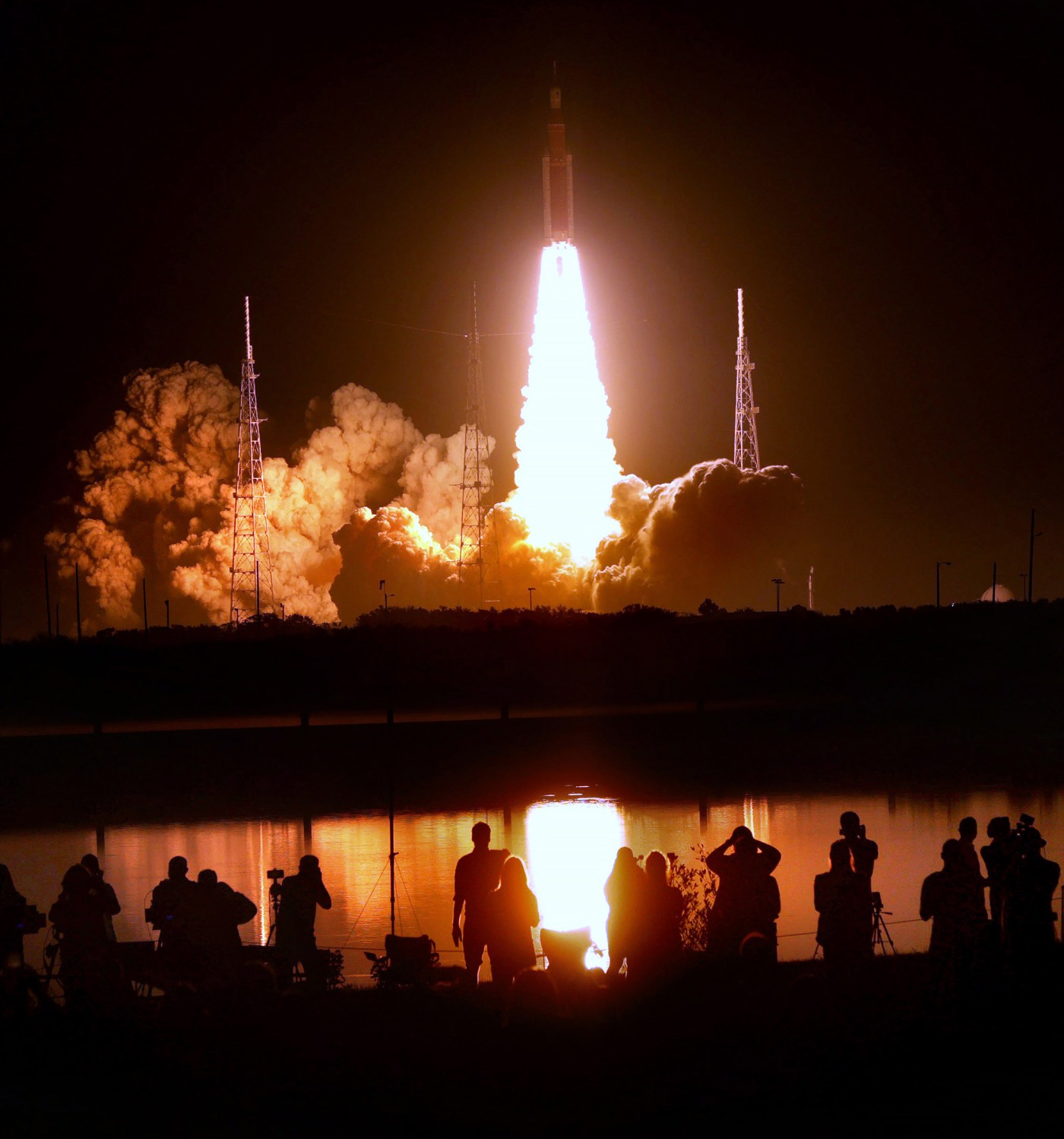
Wish them well. Next month, four astronauts are expected to board a space capsule called Orion, blast off on a rocket known as the Space Launch System, and exit low-Earth orbit for the first time since 1972, en route to a 10-day flyby of the moon. Unfortunately, their mission will be riskier than it should be.
The planned flight is a crucial component of the National Aeronautics and Space Administration’s Artemis mission, which aims to return humans to the lunar surface. Thus far, the mission has been plagued by soaring costs, repeated delays, technical shortcomings, contracting woes and burgeoning operational complexities. One former NASA chief recently called it “a path that cannot work.”
Orion is an especially concerning element. Across two decades of development, the capsule’s costs have exceeded $20 billion. By many accounts, it’s antiquated, overweight and ill-suited to the mission. Experts have been warning about its deficiencies since at least 2009.
Key parts of its life-support system have yet to be fully tested.
In an uncrewed test flight in 2022, Orion’s separation bolts suffered unexpected melting and erosion, while its power-distribution system reported some two dozen disruptions in flight. An inspector general report after the test also noted problems with hardware, software, imagery, circuitry, batteries, launch debris and more.
Most worrying was the performance of the capsule’s heat shield, needed to protect the astronauts as they reenter the atmosphere at 25,000 miles per hour. During the test, trapped gases from the shield’s outer coating led to unexpected cracking, “char loss” and an ominous debris trail.
Finding problems during a test flight is normal, and NASA quickly worked to address them. Yet its response to the heat-shield defect was worrying. Rather than conduct another costly test flight, it relied on simulations to model one. Rather than fix the shield itself, it created an operational workaround: For next month’s mission, it will simply alter the capsule’s reentry path. The risk, as the inspector general report warned, is that such changes could “introduce new failures or unknowns into the system.”
To be clear, NASA takes safety quite seriously. Its new administrator, Jared Isaacman, said recently that the agency has “full confidence” in the mission. Yet it’s fair to ask if the appalling costs of the Artemis program — at some $100 billion and counting, with each new launch of the SLS exceeding $4 billion — may have induced officials to sign off on decisions they otherwise wouldn’t have, or to forgo additional tests that would’ve allayed more concerns.
One irony of this endeavor is that the president’s most recent budget request called for scrapping the current Artemis design post-moon landing and moving on to “more cost-effective, next-generation commercial systems.”
It’s a good moment for a rethink. As a start, the SLS/Orion combination should be retired as soon as possible, in favor of private platforms. Doing so would make way for a faster, safer and vastly cheaper alternative, while allowing the agency to refocus on R&D and space science. The executive branch should prioritize reforms to make America’s commercial space business more competitive.
But first things first: Get these astronauts back home safely.
Bloomberg Opinion/Tribune News Service
Editorial cartoon by Steve Kelley (Creators Syndicate)


More Stories
Marcos Neves Rodrigues: leading Florida’s hotel floor with a manager’s eye for detail
Rodrigues started in entry-level guest services, working front desks and reservations desks before moving into supervisory roles. From there he...
Ian Reight: bringing surgical leadership to Mount Vernon, Maine
That early work shaped how he thinks about pressure, teamwork, and staying calm when something goes wrong. Reight studied psychology...
Reed names five young founders as first entrepreneurs fund winners
Reed, the recruitment company, has named the first five winners of its All About Business Entrepreneurs Fund, with each young...
Paul Smith chairman calls Frasers’ Harvey Nichols takeover ‘dubious’
The executive chairman of Paul Smith has questioned the ethics of Frasers Group’s £43.3m takeover of Harvey Nichols, completed through...
UK business owners face fourth-highest tax bill of 13 major economies
A business owner in the UK taking £160,000 a year in salary and dividends would face the fourth-highest overall tax...
Chemify secures £22m public backing for £89.9m Glasgow expansion
Glasgow-based digital chemistry company Chemify has secured £22m of public funding towards an £89.9m expansion that it says will create...