
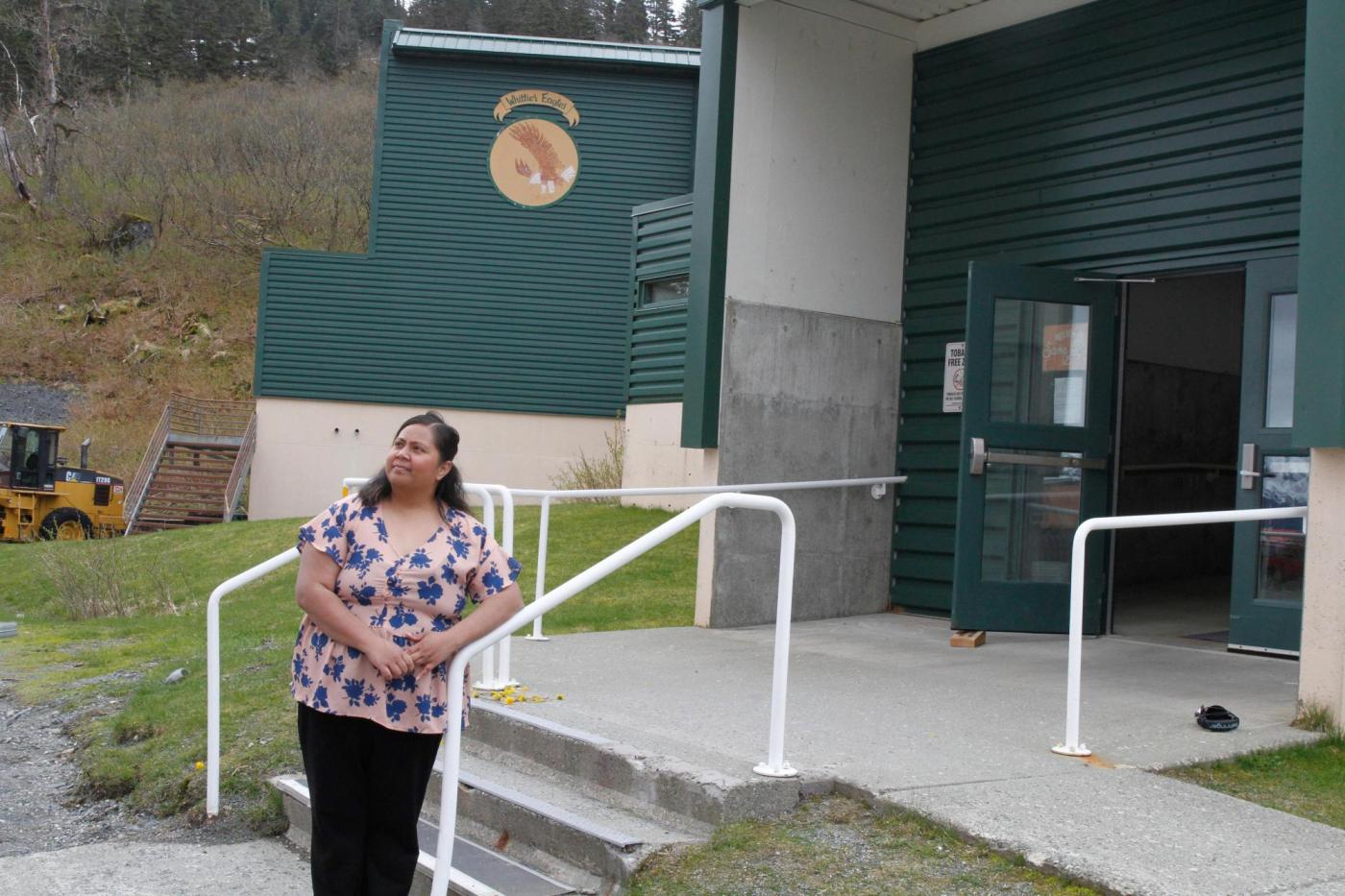
Alaska woman appeals voter fraud charges in case that puts spotlight on status of American Samoans

By BECKY BOHRER and MARK THIESSEN
ANCHORAGE, Alaska (AP) — A state appeals court is being asked to dismiss felony voter misconduct charges against an Alaska resident born in American Samoa, one of numerous cases that have drawn attention to the complex citizenship status of people born in the U.S. territory.
Related Articles
Trump announces outlines of health care plan he wants Congress to consider
Judge hands offshore wind industry another victory against Trump in clearing way for NY project
Press freedom advocates worry that raid on Washington Post journalist’s home will chill reporting
Final day to select ACA health plans arrives in most states, with no subsidy deal yet
Trump is meeting with Venezuelan opposition leader after cozying up to Maduro’s successor
In arguments Thursday, attorneys for Tupe Smith plan to ask the Alaska Court of Appeals in Anchorage to reverse a lower court’s decision that let stand the indictment brought against her. Her supporters say she made an innocent mistake that does not merit charges, but the state contends Smith falsely and deliberately claimed citizenship.
Prosecutors also have brought charges against 10 other people from American Samoa in the small Alaska community of Whittier, including Smith’s husband and her mother-in-law. American Samoa is the only U.S. territory where residents are not automatically granted citizenship by being born on American soil and instead are considered U.S. nationals. Paths to citizenship exist, such as naturalization, though that process can be expensive and cumbersome.
American Samoans can serve in the military, obtain U.S. passports and vote in elections in American Samoa, but they cannot hold public office in the U.S. or participate in most U.S. elections.
Smith was arrested after winning election to a regional school board in 2023. She said she relied on erroneous information from local election officials when she identified herself as a U.S. citizen on voter registration forms.
In a court filing in 2024, one of her previous attorneys said that when Smith answered questions from the Alaska state trooper who arrested her, she said she was aware that she could not vote in presidential elections but was “unaware of any other restrictions on her ability to vote.”
Smith said she marks herself as a U.S. national on paperwork. But when there was no such option on voter registration forms, she was told by city representatives that it was appropriate to mark U.S. citizen, according to the filing.
Smith “exercised what she believed was her right to vote in a local election. She did so without any intent to mislead or deceive anyone,” her current attorneys said in a filing in September. “Her belief that U.S. nationals may vote in local elections, which was supported by advice from City of Whittier election officials, was simply mistaken.”
The state has said Smith falsely and deliberately claimed citizenship. Prosecutors pointed to the language on the voter application forms she filled out in 2020 and 2022, which explicitly said that if the applicant was not at least 18 years old and a U.S. citizen, “do not complete this form, as you are not eligible to vote.”
The counts Smith was indicted on “did not have anything to do with her belief in her ability to vote in certain elections; rather they concerned the straightforward question of whether or not Smith intentionally and falsely swore she was a United States citizen,” Kayla Doyle, an assistant attorney general, said in court filings last year.
One of Smith’s attorneys, Neil Weare, co-founder of the Washington-based Right to Democracy Project, said by email that if the appeals court lets stand the indictment, Alaska will be “the only state to our knowledge with such a low bar for felony voter fraud.”
Bohrer reported from Juneau, Alaska.

More Stories
Getting to know you: Toby Spooner, co-founder, METRIX
Toby Spooner is a sport scientist and former personal trainer who co-founded METRIX, an immersive fitness competition in which pairs...
Getting to know you: Conor McKenna, co-founder and CEO, Go Swag
Conor McKenna is co-founder and chief executive of Go Swag, a Glasgow company that sources, stores and ships branded gifts...
Sovereignty concerns raised as Saudi-Sudan maritime delimitation push gains momentum
Sudan has been at war since April 2023, when fighting broke out between the Sudanese Armed Forces (SAF), led by...
Getting to know you: Barry Leahey MBE, president, Playdale Playgrounds
Barry Leahey MBE is President of Playdale Playgrounds, the Cumbrian manufacturer that has designed and installed more than 25,000 playgrounds...
Getting to know you: Paul Corcoran, founder and CEO, Agent
Paul Corcoran is the founder and CEO of Agent, a full-service marketing agency and certified B Corp with studios in...
Getting to know you: Peter Nailer, managing director, CloudCoCo
Peter Nailer is managing director of CloudCoCo Group plc, the AIM-listed IT procurement and e-commerce business. In August 2026 the...