
Flynn files resolution on meeting violations during City Council president election, seeking AG’s guidance

Lobbying efforts ahead of the twisty election of the Boston city council president last week may have violated Massachusetts’s Open Meeting Law, according to allegations in a resolution filed by Councilor Ed Flynn seeking the Attorney General’s guidance on the issue.
“For the city council to move forward, it’s important for us to accept responsibility, acknowledge the violation and request assistance and guidance from the Massachusetts Attorney General Division of Open Government Office on how to conduct future elections for city council president that comply with state law,” said Flynn. “The city council broke a state law, and we must accept responsibility for it.”
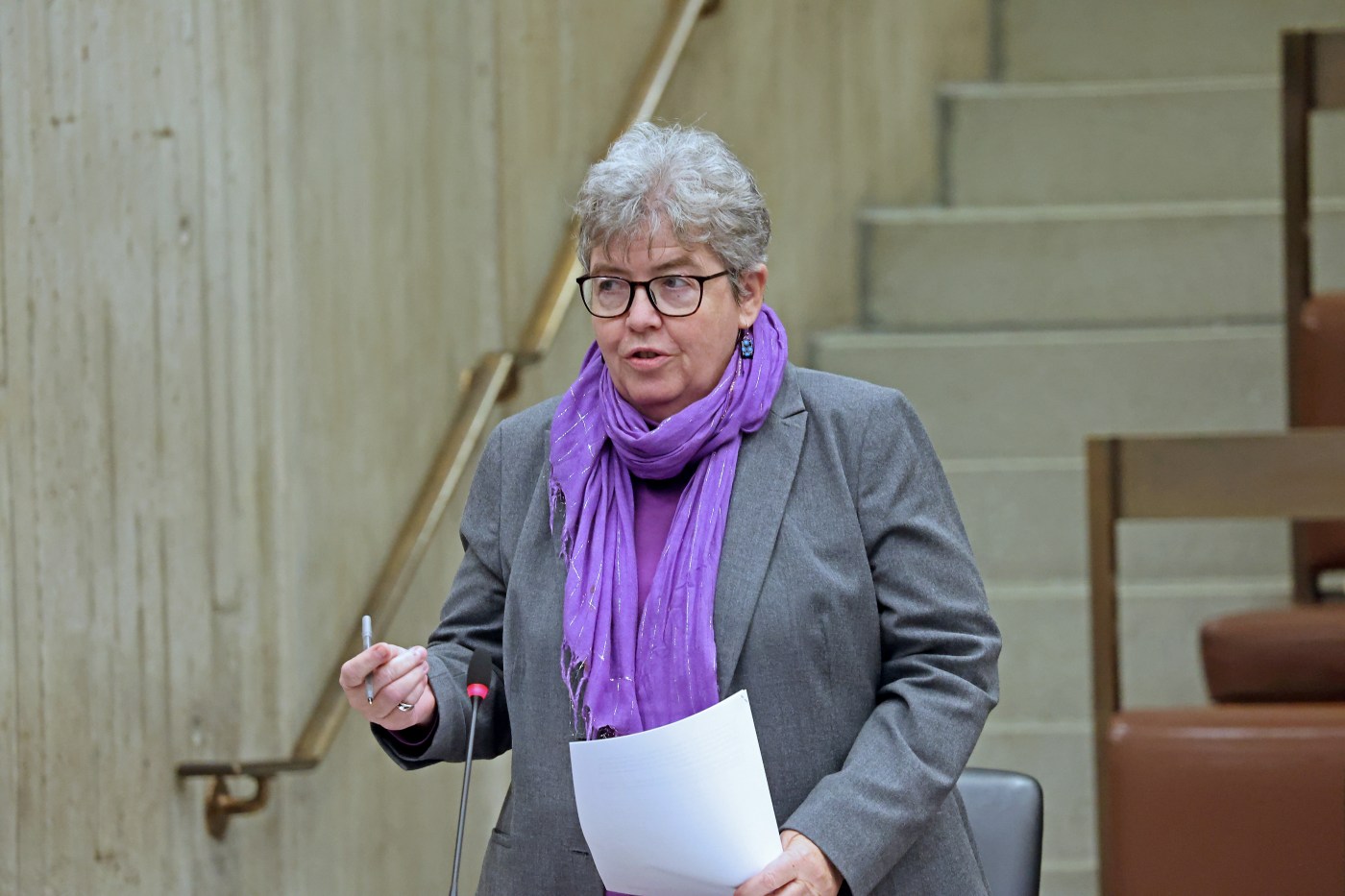
District 9 Councilor Liz Breadon was elected council president on Jan. 5 in a surprise turn after Gabriela Coletta Zapata dropped out of the race the night before and Brian Worrell appeared to have the votes to secure the seat.
The election came under further scrutiny after former city councilor Tania Fernandes-Anderson, who resigned last summer after being convicted on federal corruption charges, detailed allegations that Mayor Michelle Wu and her allies on the council conspired to defeat Worrell’s bid days later.
In a letter, Fernandes-Anderson stated the mayor orchestrated “by any means necessary, the blocking of a Black man from becoming Council president precisely because he exercised democratic power with integrity.”
An NBC 10 segment featuring Breadon aired Sunday. The newly selected Council President said during the segment that she hadn’t yet selected a vice president. However, in a statement updated before the segment aired, Breadon said she selected Worrell to serve as her vice president after Coletta Zapata passed on the post to serve instead as the chair of government operations.
Worrell told the Herald late Sunday night that he also had declined the post.
“I was proud to serve the body as their vice president last term, and similar to my colleague from District 1, I am respectfully declining the opportunity to be the vice president for this upcoming term,” Worrell said.
“I’m looking forward to working in other committees and just gaining more experience in different committees where my work, my passion and interests are really aligned,” he continued.
Flynn’s resolution cites the Open Meeting Law requirement “no more than three councilors can deliberate on a matter related to the business of the council” and states leading up to the election there were reports of city councilors meeting at one’s home, in offices and elsewhere.
“Boston residents have expressed concern that there was a lack of transparency and backroom deliberations among city councilors which skirted the spirit of the Open Meeting Law leading up to the first Council meeting to determine who would be elected as the President of the Boston City Council,” Flynn’s resolution states.
Flynn said he could not speculate on whether there could be a re-do of the 2026 city council president election due to any such violations, but noted it was “unlikely.”
Breadon did not respond to requests for comment on the resolution as of Sunday night.
The council president did say on NBC 10 that she wouldn’t say the mayor had a role in her election.
“I feel that an opportunity presented itself, and I took it,” Breadon answered.
Asked about Councilors Sharon Durkan and Enrique Pepen, both seen as allies of Wu, visiting her home late last Sunday night to encourage her to run as evidence of the mayor “pulling some strings behind the scenes,” Breadon said she “really can’t comment on that.”
“I do know from conversations with both of them that they really consider me as a very steady, reliable influence, so I think they felt compelled to come and talk with me, and I think that’s all,” Breadon said, acknowledging the late visit was “surprising.”
Flynn’s filing alleges councilors “publicly admitted” at the time of the vote to deliberations taking place throughout the process and especially in the last 24 to 48 hours prior.
Related Articles
Mayor Wu inauguration to kick off celebration events Monday
The year’s best pictures: Capturing the joy and anguish of 2025
Nov. 4 municipal election: What Boston voters need to know
Editorial: Herald endorses Miniard Culpepper for District 7
“A series of incidents like this has now paved way for cynicism and the erosion of public trust between city elected officials and the residents of Boston that we serve,” the resolution states. “It is critical that the Boston City Council acknowledges years of ongoing public concerns on potential Open Meeting Law violations – and actively work to regain public trust and confidence through state training and recommendations on how to conduct this important process without breaking the law, and to conduct itself as a more open and transparent body.”
Flynn’s resolution seeks to acknowledge the violations and seek further guidance from the Massachusetts Attorney General’s Office of Open Government. The state’s Open Meeting Law says the Attorney General “may issue written guidance to address common requests for interpretation.”
— Gayla Cawley contributed to this report.
City Councilor Ed Flynn (Staff Photo By Stuart Cahill/Boston Herald, File)
City Councilor Brian Worrell (Stuart Cahill/Boston Herald, File)


More Stories
Top 6 AI Infographic Generators (Ranked & Reviewed)
Late last year, a marketing strategist in my network needed to turn a research-heavy briefing into a visual asset before...
When SMEs scale connected services: how to keep ownership and avoid rebuilding the platform every time the business pivots
Most connected services start with a narrow business problem. A manufacturer may add remote monitoring to reduce support calls, give...
6 Ways a Car Cover Can Save You Money on Vehicle Maintenance
A car parked in the driveway may look perfectly safe, but every day it sits outside, it is exposed to...
Applied Nutrition closes in on £1bn valuation after raising guidance for third time this year
The sports supplement maker Applied Nutrition has raised its annual sales and profit guidance for the third time this year,...
One of Britain’s oldest family firms to save £250,000 a year as energy scheme opens to forges
One of the UK’s oldest family-owned companies has praised the government’s decision to include forges in its energy subsidy scheme...
Burnham signals more energy bills support in budget as price cap rises 4 per cent
Andy Burnham has signalled that there will be more support to help people with their bills in the budget, as...