
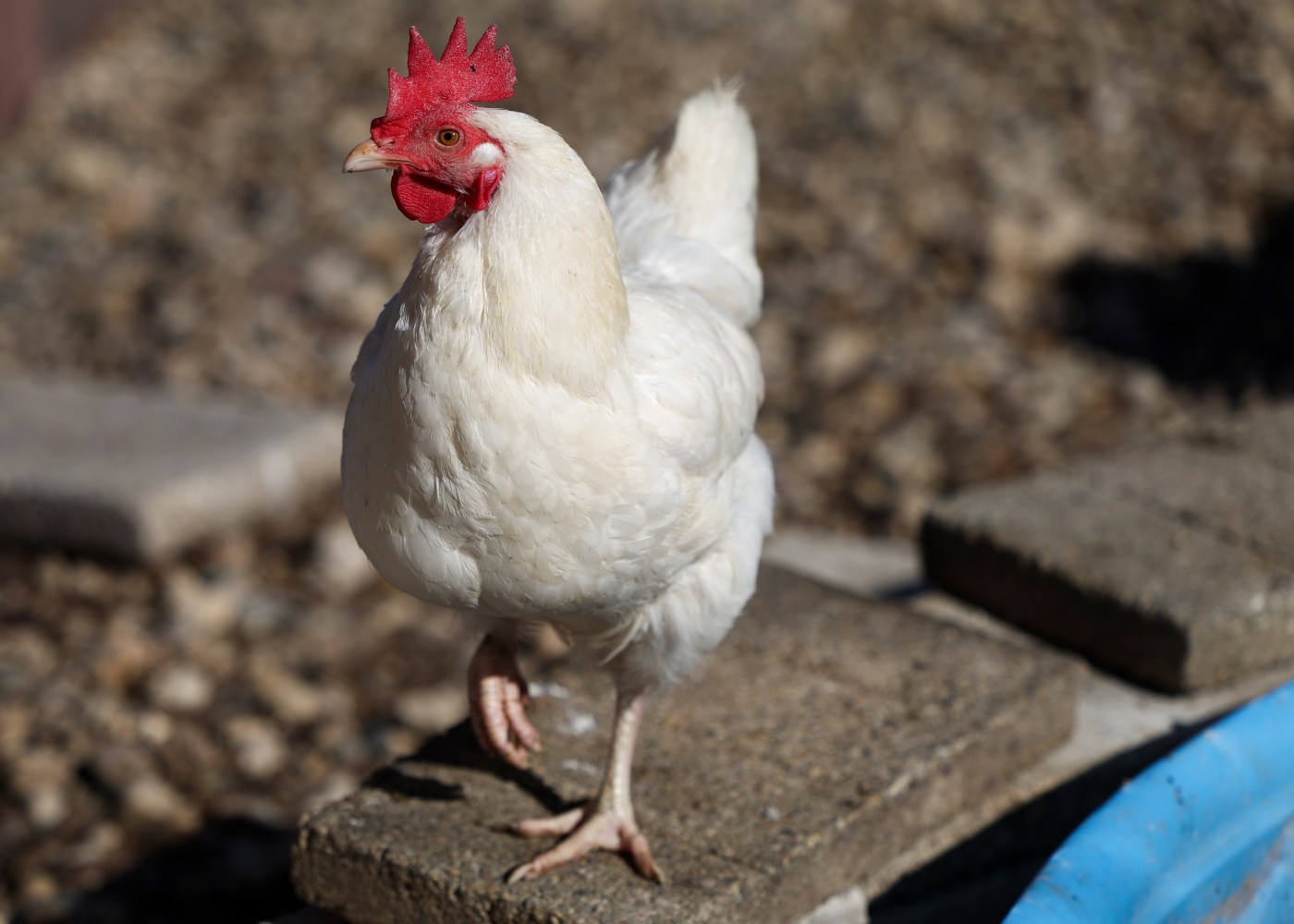
Bird flu confirmed in Massachusetts, as backyard chickens killed

The circulating bird flu has been confirmed in the Bay State, as agricultural officials report that backyard chickens tested positive for the disease and were killed.
The Massachusetts Department of Agricultural Resources and its partner agencies “safely depopulated and disposed” of a backyard flock of chickens due to the detection of Highly Pathogenic Avian Influenza (HPAI).
The chickens in Duke County — which includes Martha’s Vineyard — showed clinical signs of the bird flu and tested positive for the disease. Also, officials are investigating wild bird deaths in Massachusetts to collect and test for HPAI.
Raptors, waterfowl, and other aquatic birds are most at risk for infection, although any bird species should be considered susceptible.
Poultry is highly susceptible to the virus and suffers extremely high mortality rates. Poultry becomes infected after coming into contact with wild birds, their feathers, droppings, and any areas they frequent.
“MDAR is advising backyard and commercial poultry owners to practice strong biosecurity measures to prevent domestic poultry from having contact with wild birds since the HPAI virus is continuing to circulate in the wild bird population,” the Massachusetts Department of Agricultural Resources posted.
“Eliminating standing water and preventing domestic birds from having access to ponds, streams, and wetland areas that attract wild waterfowl is of critical importance,” the agency added. “Allowing domestic flocks to have ‘free range’ poses substantial risk of exposure to HPAI. The consequences can be deadly.”
Birds may be infected with HPAI without showing any signs of illness. Wild mammals can also become infected, especially those that scavenge on birds such as foxes.
While seasonal flu is on the rise in Massachusetts, it’s different from avian influenza, which rarely infects humans. To date, there have been no reported cases of HPAI in humans in Massachusetts.
Humans who have prolonged close contact with sick or dead birds infected with HPAI are the most at risk of becoming infected. The virus is shed from infected birds through bodily fluids, most commonly saliva, mucous, and feces. Inhaling those shed particles or contacting them and then touching the eyes, nose, or mouth can allow the virus to pass to humans.
MDAR urges flock owners and the public to practice the following guidance to ensure enhanced biosecurity measures:
Handling birds and other wildlife: The public should avoid handling any sick or dead birds or other animals.
Protecting poultry: Owners should keep birds indoors or in covered pens, avoid tracking dirt/feces into coops, and prevent contact with wild birds.
Keeping pets safe: Pets should always be kept away from wildlife. Cats are highly susceptible to HPAI and may die from an infection. Cat owners in affected areas should keep their pets indoors to prevent them from being exposed to infected wildlife. Animal health officials also recommend leashing dogs and not feeding pets “raw diets.”
Reporting domestic birds: The public should report sick or dead poultry online at www.mass.gov/reportpoultry.
Reporting wild birds: The public should report observations of five or more sick/dead wild birds found at a single location at www.mass.gov/reportbirds.


More Stories
Poundland owner Gordon Brothers pushes for insolvent sale of chain
Poundland’s owner, Gordon Brothers, is pushing for an insolvent deal for the discount chain that could see it broken up...
Tinned food sales up 40 per cent at Iceland after stock-up call
Iceland has reported a 40 per cent increase in sales of tinned products over the weekend and Maplin a 284...
Microsoft offers voluntary redundancy to up to 60,000 staff
Microsoft has offered voluntary redundancy to up to 60,000 employees, including staff in the UK, as the technology group seeks...
Record 738,144 UK businesses in financial distress ahead of Budget
A record 738,144 UK businesses were in significant financial distress in the third quarter of 2026, according to research published...
British manufacturers urge Healey to cut costs in tomorrow’s Budget
Two British manufacturers have called on Chancellor John Healey to bring down energy and employment costs in his first Budget,...
AI giant eyes record IPO
Claude developer Anthropic is seeking a record valuation while acknowledging potentially catastrophic risks from its own technology US artificial intelligence...