
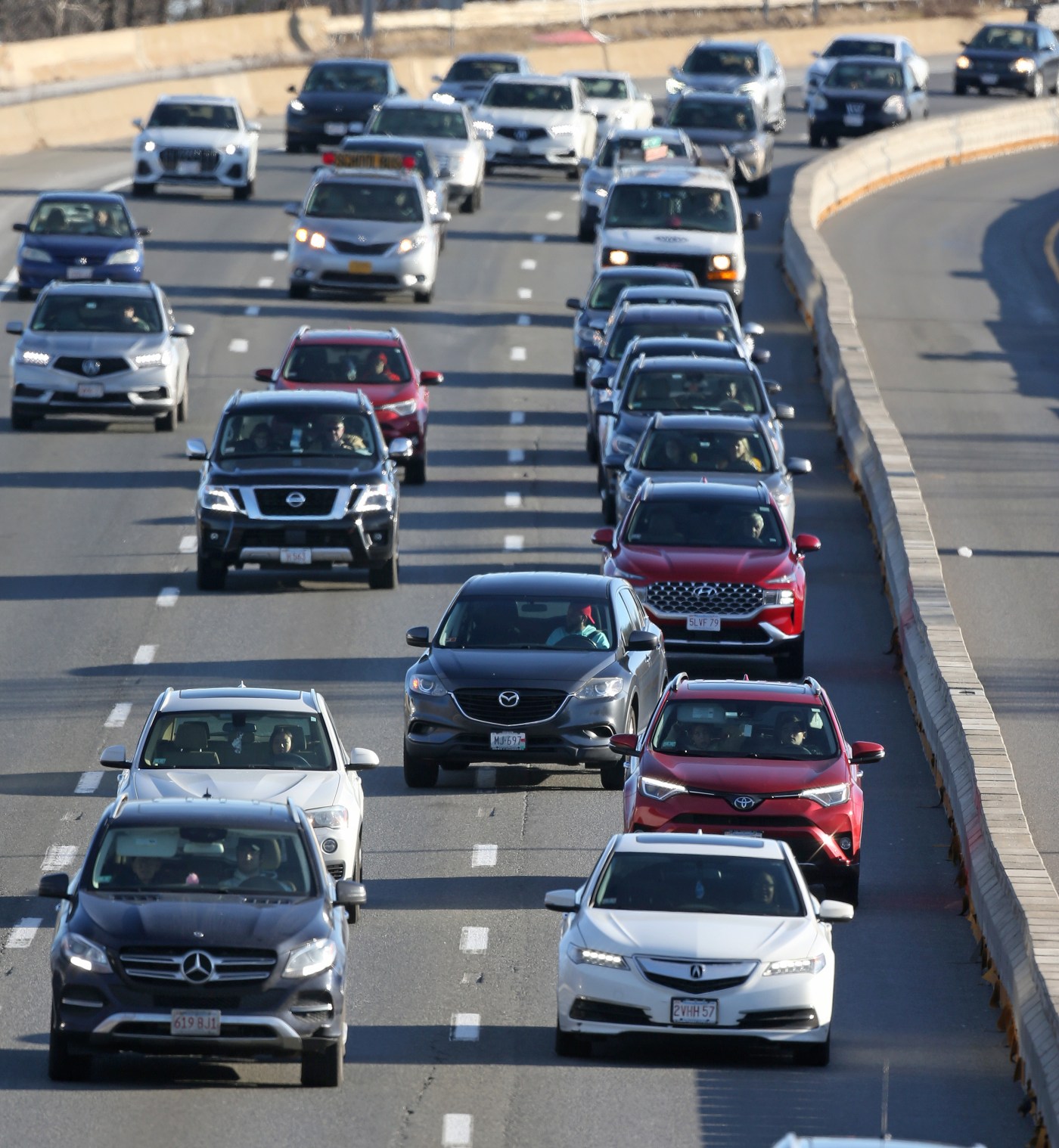
Beacon Hill hears bill to reduce driving in Massachusetts

A bill is advancing through the Massachusetts State House that would seek to reduce the amount of miles residents travel in their personal vehicles in order to meet state climate mandates.
An Act Aligning the Commonwealth’s Transportation Plan with its Mandates and Goals for Reducing Emissions and Vehicle Miles Traveled (S. 2246) was filed by state Sen. Cynthia Stone-Creem (D-Norfolk & Middlesex) and is based on existing laws and regulations in Colorado and Minnesota and is meant to bring Massachusetts in line with its climate mandates.
“The bill would also require MassDOT to set goals for reducing the number of statewide driving miles, which would be considered when EEA sets greenhouse gas emissions limits and sublimits,” a summary of the legislation says.
Sponsors and supporters of the bill alike argue the legislation is needed due to the fact that the transportation sector accounts for the greatest share of emissions in Massachusetts.
“The sector is the largest source of emissions in the Commonwealth, accounting for roughly 40% of overall carbon pollution,” said Casey Bowers, of the Environmental League of Massachusetts, while testifying in support of the bill before the Joint Committee on Telecommunications, Utilities and Energy.
Kevin Shannon, an analyst with the Union of Concerned Scientists, also testified in support, saying it would “fill a necessary gap between our climate goals and plans and the transportation plans the state makes every year.” He also argues the legislation will improve public health across Massachusetts.
“Our recent research, in that same report, has shown that across the country this kind of transition could save over $100 Billion in public health costs from improved air quality alone. And that doesn’t even account for the reduced pedestrian fatalities and the increased benefits of public transportation,” Shannon said.
But State Senator and Committee Chair Michael Barrett (D-Third Middlesex) expressed concern about how limiting statewide personal vehicle miles would affect those in rural parts of the state.
“I do worry about an unintended and subtle bias against rural Massachusetts,” said Barrett. “Why we would want to start to pressure Massachusetts to reduce all miles traveled, polluting and non-polluting alike, does raise the question of what someone is to do in a place when one has to travel a long distance to a construction job or any other place of employment,” Barrett said.
Seth Gadbois, a Clean Transportation Attorney at the Conservation Law Foundation, argued that providing more public transit throughout the state and in rural areas will incentivize people to drive less.
“This is not also about going after drivers who need or just want to drive,” said Shannon. “There have been enough people across demographics, including and especially in rural areas, who are saying ‘we need and want ways to get around.’ And by providing those people the means and options to get around, we believe that is what will get the path towards meeting these targets.”
No specific figure was listed in the bill for how many driving miles per person will be reduced, but it does task the Transportation Secretary with establishing the official vehicle travel reduction goal “for the year 2030 and for every fifth year thereafter.”
It would also establish a 15-member intergovernmental coordinating council to find ways to make public transportation more accessible for residents and possibly even incentivize the use of public transit.
The bill was reported favorably by the Joint Committee on Telecommunications, Utilities and Energy in a 4–1 vote in November and has been referred to the Senate Ways and Means Committee.
Not covered by the bill, an expense account that pays lawmakers for travel to and from the State House.
According to the National Conference of State Legislatures, Massachusetts lawmakers living within 50 miles of the state house receive a $17,043 office expense stipend that can be used for travel expenses, while lawmakers living more than 50 miles from the state house receive a $22,723 stipend for travel. That’s on top of a base salary of $82,044 for all state lawmakers, up over 11% from the 2024 base pay.
The Massachusetts State House.


More Stories
Why Corporate Video Production Matters More Than Ever for UK Businesses
The challenge is no longer simply whether to use video, but how to create content that feels credible, supports a...
How Gambling Affiliates Can Make Trust Part of the Business Model
For publishers and gambling businesses, the challenge is to make that relationship clear without losing the useful analysis that brought...
Getting to know you: Oliver Corrigan, managing director, WorkWell
Oliver Corrigan is the founder and managing director of WorkWell, a Yorkshire provider of serviced offices, co-working space, meeting rooms...
Getting to know you: Stefano Maifreni, founder, Eggcelerate
Stefano Maifreni is the founder and director of Eggcelerate, a London-based practice that acts as a fractional COO and CCO...
Simple Steps To Take To Make Your Business Premises More Appealing To Customers
A neglected entrance, dirty windows, or a poorly maintained exterior can make even a successful business appear less professional than...
Britain should scrutinise Gulf capital, not squander it
That ‘twitch’ became evident for the second time in a month this week, this time over the United Arab Emirates’...