
‘Unacceptable’: Boston homeowners to see 13% tax hike next year, state certification confirms

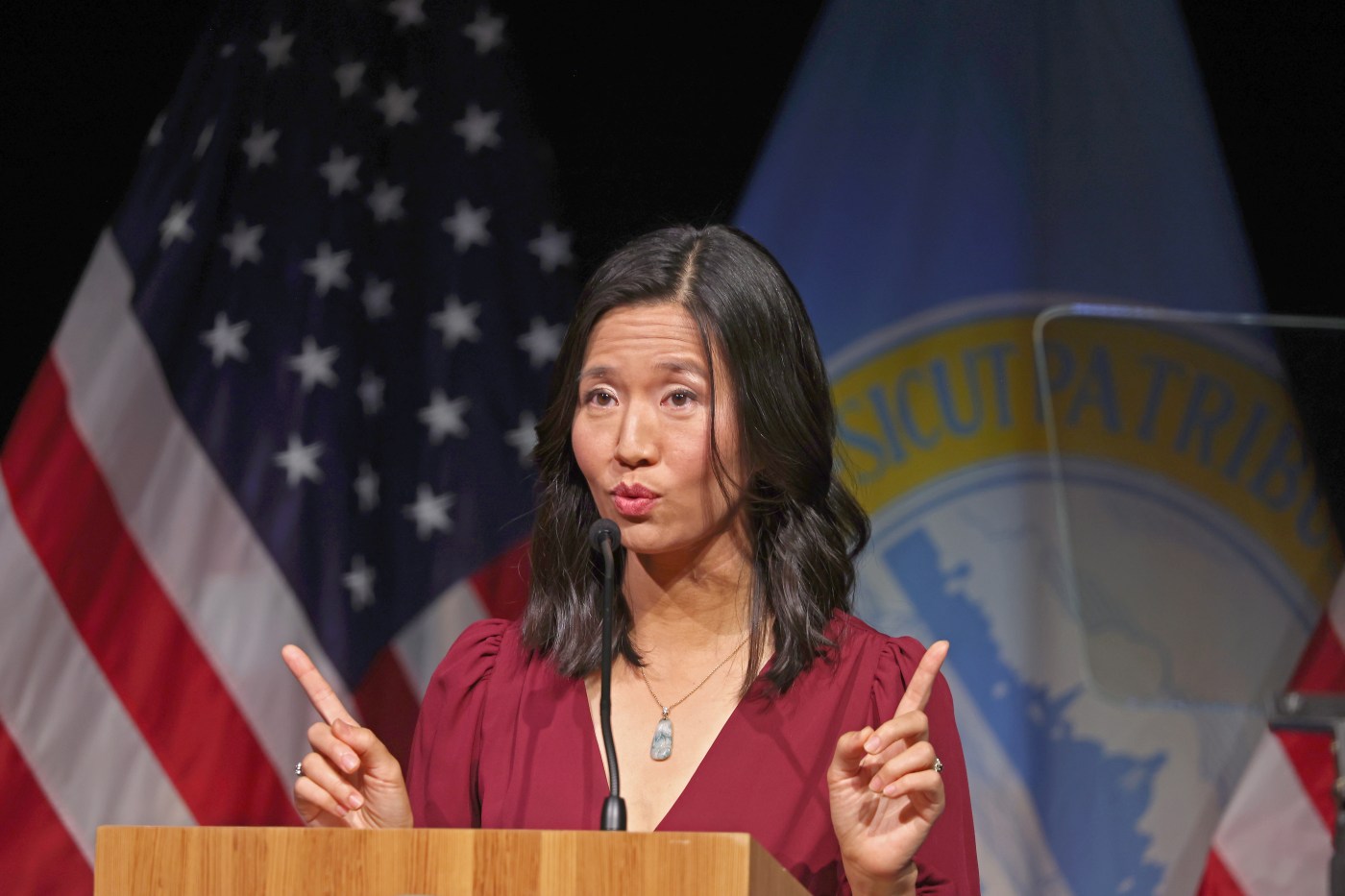
The average single-family homeowner will see a 13% tax increase next year, a scenario that was projected earlier this week by the city and confirmed Friday by the state Department of Revenue, Boston Mayor Michelle Wu’s office said.
Wu’s office said Friday that the city’s property valuations have been certified by the Department of Revenue, which confirmed that the average homeowner will experience a double-digit property tax increase for a second straight year — unless state lawmakers approve the stalled tax shift legislation the mayor’s been pushing for nearly two years.
“Now that the valuations for Boston’s 180,000-plus parcels have been confirmed, we can say with certainty that unless the state legislature takes action on Boston’s residential tax relief home rule petition, the average single-family homeowner’s tax bill will go up by another 13% next year, with many households having even higher increases than average,” city spokesperson Emma Pettit said in a statement.
“This will mean that under state law, Boston residents will have seen their taxes go up by 34% since 2023, with eight straight years of increases over 5%. This is unacceptable and deeply destabilizing for our residents and the businesses they run, work in and shop at. We urge swift passage of this legislation before tax bills go out in January,” Pettit added.
Wu said at a Tuesday press briefing that the average single-family homeowner will see a $780 increase in their tax bills. Her office said the increase would be $480 should the tax shift legislation be approved.
The legislation seeks to increase commercial tax rates to provide residential tax relief. It would give the city the authority to shift more of the city’s tax burden from the residential to commercial sector beyond the 175% limit allowed under state law, for a three-year period.
The contentious bill was approved three times by the Boston City Council and state House of Representatives, but died late last year in the Senate, and stalled there again this year.
Wu’s renewed push for the Senate to pass the legislation on Tuesday was met with a chilly reception, and led to another dust-up with one of her adversaries, state Sen. Nick Collins of South Boston, who used a procedural move to block a vote repeatedly last year and said this week that the bill would jeopardize the economy.
Driving the double-digit tax increase is a 6% drop in commercial property values, coupled with a 2% increase in residential values, that by way of a city budgetary structure that derives roughly three-quarters of its revenue from property taxes, is pushing more of the city’s tax burden onto homeowners, city officials said.
Wu on Tuesday said cutting the city’s $4.8 billion budget, which grew by 4.4% this fiscal year and 8% last year, is not “realistic,” given the impact it would have on delivering city services and maintaining the city’s AAA bond rating.
Wu said that commercial property owners would still see a lower tax bill next year with her legislation, but not as low as what it would be without it. The average Class A office tower tax bill is set to decrease by 4.4%, or $210,000, she said.
The mayor’s tax shift legislation was ultimately killed late last year by Senate President Karen Spilka, due to a lack of support, after Department of Revenue-certified numbers of city assessing data showed residential tax increases were lower than projected by the city last year.
The discrepancy also led four business groups to back out of the compromise they had reached with the mayor on her legislation, by shortening the length of the bill from five to three years with a lower shift onto businesses, according to a statement issued Wednesday by Tamara Small, CEO of NAIOP Massachusetts.
Last year’s property tax hike for homeowners was in line with previous years, at 10.4%, rather than 33% as projected by the city, Small said.
Wu on Wednesday urged the four business groups involved in last year’s compromise — the Boston Municipal Research Bureau, Greater Boston Chamber of Commerce, Massachusetts Taxpayers Foundation, and NAIOP Massachusetts — to publicly reaffirm their support.
Small said this week that the mayor shouldn’t count on her organization’s support, and James Rooney, president and CEO of the Boston Chamber of Commerce, issued a statement Thursday indicating the Chamber was leaning the same way.
Rooney said that the city should be looking to strengthen its “struggling commercial real estate market,” which is seeing declines in commercial values at a time when there is “almost no growth of new commercial properties” — a post-pandemic trend that he says will continue for at least the next few years.
Related Articles
Editorial: City Hall can’t afford to miss another security lesson
Consultant worked for Boston City Council candidate and union backing her, violating campaign finance law
Boston skyline’s iconic CITGO sign will soon be moved and rebuilt
Battenfeld: Michelle Wu can cut a Christmas tree, but not her own budget
Tax-lash: Boston Mayor Michelle Wu’s renewed tax shift bill push met with chilly reception from Senate, businesses
“As the Chamber and many civic and business leaders continue to point out, commercial property taxes provide the foundation of the city’s budget, which has allowed for growth in the city’s budget and among the lowest residential property taxes in the state over decades,” Rooney said. “But times have changed, and our public policy approach must change with it.
“Instead of increasing the costs and the difficulty of developing and operating a business in Boston, we urge policymakers to refocus on strategies that support economic growth and competitiveness, strengthening our commercial sector and creating jobs for our residents,” he added.
The city’s latest valuation data has Gregory Maynard, executive director of the Boston Policy Institute, warning that the city is hurtling toward BPI’s worst-case scenario of a $2.1 billion budget shortfall within five years due to dropping commercial values.
That’s nearly double the $1.4 billion shortfall BPI projected in its initial empty office buildings report in February 2024.
“City Hall hasn’t done anything to move this conversation forward,” Maynard told the Herald. “The mayor’s proposal is extremely short-term. It’s only for a couple of years, and it hasn’t been accompanied by any strategy from the city to try to prop up commercial property benefits. Boston is now lagging behind other major American cities in that it has no boldface downtown revitalization plan.”


More Stories
Henry Gabay Started Duet Group With $10 Million. Two Decades Later, It Managed More Than $5 Billion.
By the time Financial News reported on the firm’s 2013 results, that early bet had compounded into one of the...
Planning an Antarctica Cruise Tour
Poseidon Expeditions runs its Antarctica program aboard the 114-passenger M/V Sea Spirit, an ice-strengthened ship led by a team of...
Vincent “Vinny” Colardi on Running, Music and Making Room for Different Passions
Between his career, playing guitar, writing music, running, and exploring his interest in food, Colardi has built a life around...
Why the Rolex Air King Makes More Sense in an Era of Lookalike Luxury Watches
Dials in black, metal bracelets, highly readable markings, and sport-inspired cases are common throughout many current product ranges, while social...
Viriora Expands Online Trading Access Across Forex, Stocks and Crypto Markets
The platform is designed around a broad selection of markets, with published information about available instruments and trading conditions. More...
Markets too ready for conflict over Taiwan – US diplomat
Investors are overestimating the threat of a military confrontation over the island, Michael DeSombre has told CNBC Investors are exaggerating...