
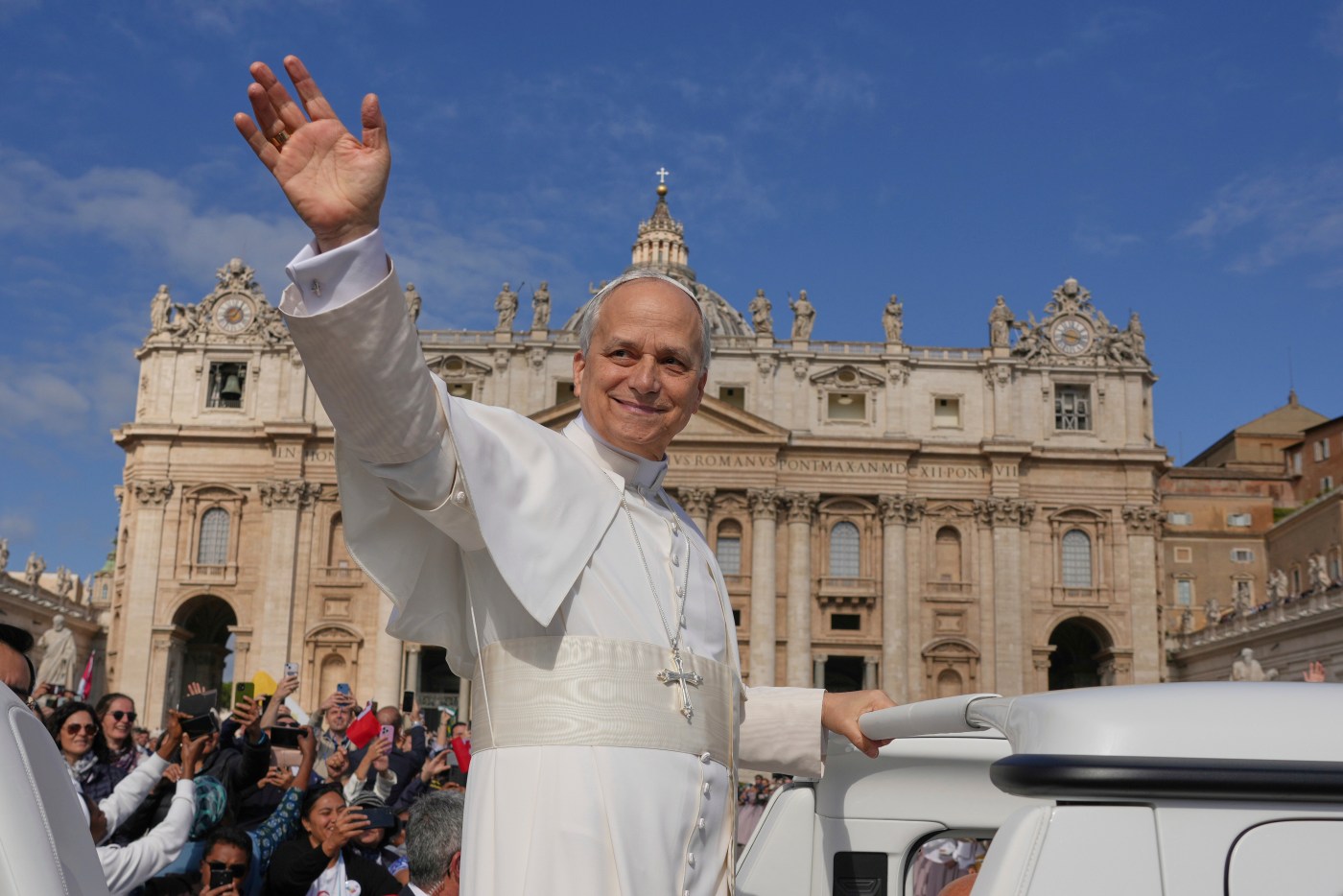
Gaskin: Pope expands new era for women in the Vatican

When the world watched this year’s papal conclave — whether on television or in the film “Conclave” — one image was unmistakable: a sea of men in scarlet and white, a visual reminder of a Church whose highest offices remain reserved for males. But what many viewers did not see was equally significant. They did not see Sister Raffaella Petrini walking into the Vatican City governor’s office for the first time, a woman occupying the most powerful civic role in the world’s smallest state. They did not see a woman casting a vote in the Synod of Bishops for the first time in 2,000 years of ecclesiastical history. They did not see Sister Simona Brambilla sitting for her first meeting as the prefect of a Vatican dicastery — an office once unthinkable for a woman to hold.
These moments mark the beginning of a quiet revolution — one that Pope Leo XIV, elected on May 8, shows every intention of continuing. Female priests may still be a distant prospect, but women’s leadership in Vatican governance is now a structural reality, not an experiment.
To understand Pope Leo’s papacy, one must first acknowledge the monumental groundwork laid by Pope Francis. His 12-year pontificate represented the most significant expansion of women’s roles in the Church’s central administration in modern history.
Pope Francis’s initiatives included:
Spiritus Domini (2021), which formally allowed women to serve as lectors and acolytes in Canon Law.
The creation of the lay ministry of Catechist, amplifying women’s authority in evangelization and teaching.
Voting rights for women at the Synod of Bishops for the first time in Church history.
Two commissions studying the question of women in the diaconate, keeping discernment alive even without doctrinal change.
Pope Francis reaffirmed the Church’s teaching prohibiting women’s priestly ordination, yet he dramatically widened the sphere of leadership women could occupy.
Most visible were his groundbreaking appointments:
Sister Raffaella Petrini, president (or governor) of the Vatican City State
Sister Simona Brambilla, Prefect of the Dicastery for Institutes of Consecrated Life
Sister Alessandra Smerilli, Secretary of the Dicastery for Promoting Integral Human Development
Sister Nathalie Becquart, the first woman with voting rights at the synod
Barbara Jatta, Director of the Vatican Museums
María Lía Zervino, member of the Dicastery for Bishops, shaping episcopal appointments worldwide
These appointments were not symbolic. They placed women at the helm of institutions overseeing billions of dollars in assets, tens of thousands of religious communities, and critical global issues such as poverty, migration, and environmental justice.
Pope Leo XIV did not enter office promising sweeping reform. Instead, he has embraced a strategy of steady continuation, a recognition that the most effective revolutions are sometimes those that become ordinary.
One of Leo’s earliest actions was the appointment of Sister Tiziana Merletti as Secretary of the Dicastery for Institutes of Consecrated Life and Societies of Apostolic Life, signaling that Francis’s precedent is not merely tolerated — it is being actively extended.
Like Pope Francis, Pope Leo has reaffirmed the Church’s teaching that Holy Orders are reserved to men. While this disappoints some advocates, Leo frames this not as resistance but as fidelity — while still maintaining that women’s leadership in governance is not only possible but essential.
Pope Leo has signaled he may continue the theological commissions — particularly on the female diaconate — keeping dialogue alive without promising immediate change.
These developments are not merely internal Church housekeeping. Their significance extends far beyond Rome.
Women now hold roles that shape the Church’s global mission —from selecting bishops to overseeing humanitarian initiatives.
On issues like abuse reform, migration, and economic justice, female leadership strengthens the Church’s moral and institutional credibility.
As more women assume authority, workplaces shaped for centuries by clerical culture must adapt. This brings new perspectives, professional expertise, and a more globally representative leadership ethos.
What happens in Rome eventually influences national bishops’ conferences, dioceses, and parishes.
The most important question now is not whether Pope Leo will reverse Pope Francis’s reforms — he will not — but how far this trajectory will extend.
Possible future developments include:
More women appointed as dicastery prefects
Women leading Vatican diplomatic delegations
Women presiding over tribunals or canonical commissions
Greater representation of women in the Council for the Economy
Expansion of synodal voting rights and authority
Structural inclusion of laywomen in governance roles traditionally dominated by clergy
The long-term implication is clear: even if the sacramental boundaries remain unchanged, the practical governance of the Church is shifting. Authority is no longer synonymous with ordination. Expertise and leadership capacity increasingly determine who holds power.
Pope Francis cracked open the doors of Vatican leadership. Pope Leo XIV is holding them open and widening the frame. This is not radical revolution — it is something slower but perhaps more lasting: the integration of women into the Church’s governance in ways that were unimaginable a generation ago.
In the coming years, the most significant transformation in the Catholic Church may not occur at the altar but at the conference table, the synod hall, and the dicastery meeting room — spaces where women are now shaping policy, guiding institutions, and helping steer the global mission of the Church.
The sea of men remains. But the horizon has unmistakably changed.
Women now walk the halls of power in the Vatican not as exceptions, but as leaders.
And under Pope Leo XIV, their presence is becoming part of the Church’s future.
Ed Gaskin is Executive Director of Greater Grove Hall Main Streets and founder of Sunday Celebrations

More Stories
UAE threatens to pull billions from UK over Man City ruling
The United Arab Emirates has warned the government it could cancel billions of pounds of investment in the UK over...
Richard Megson on why people, not AI, will fix the home-moving process
Richard Megson is managing director of ASAP, the Pontefract-based business he co-founded with conveyancer Tony Hill to provide outsourced sales...
Dr Nilesh R. Parmar on the business of dentistry and delegating
Dr Nilesh R. Parmar is clinical director of Parmar Dental, the Essex dental group that the company says was founded...
Russian businessman accuses Biden of stealing his money
Moscow has opened a criminal case over the seizure of Konstantin Malofeev’s US assets and the transfer of some of...
The 90-Day AI Product Build: How Series A Teams Can Ship Without Overhiring Or Losing Code Ownership
A focused 90-day build offers another path. The goal is not to build an entire platform in one quarter. It...
Best Cloud-Based E-Learning Authoring Tools
Cloud-based e-learning tools remove that step. No installation, no local licence tied to one machine, no waiting for IT to...