
New Car Preview: 2026 Jeep Recon Introduced as A New Kind of Trail Rated EV

Jeep is finally pulling the cover off the 2026 Recon, an all electric SUV built to give you Wrangler vibes without a drop of gasoline. The brand’s second EV for the U.S. arrives as a mid-size, two row off roader with removable doors, big knobby tires, and a starting price of $66,995. Production is slated to begin in early 2026 after a series of delays that pushed the Recon past its originally promised 2024 launch, with sales targeted for spring of that year.
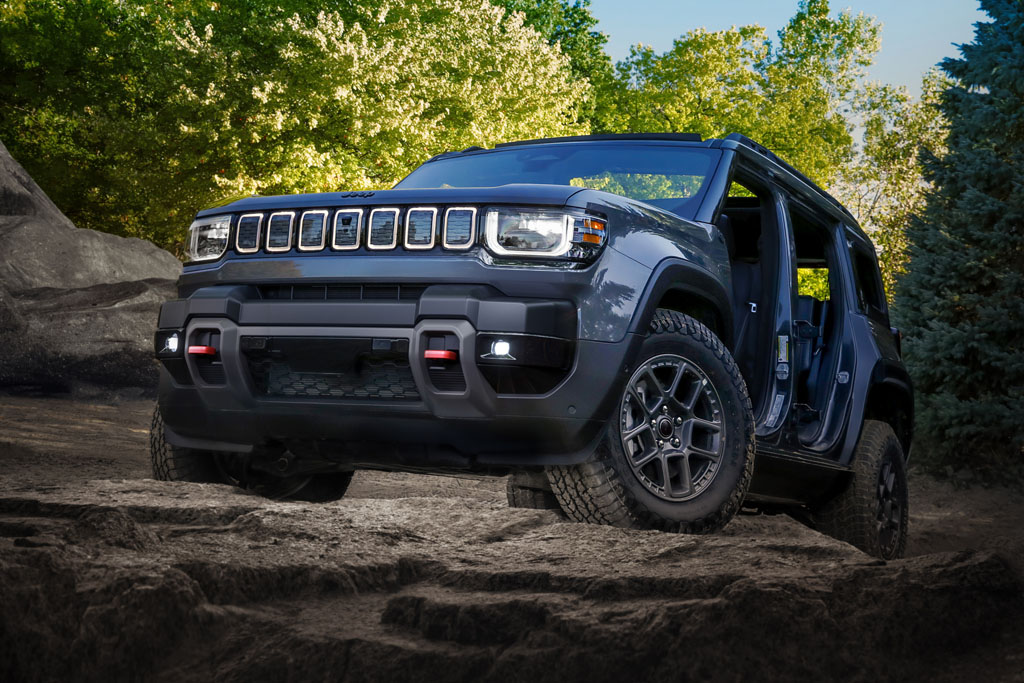
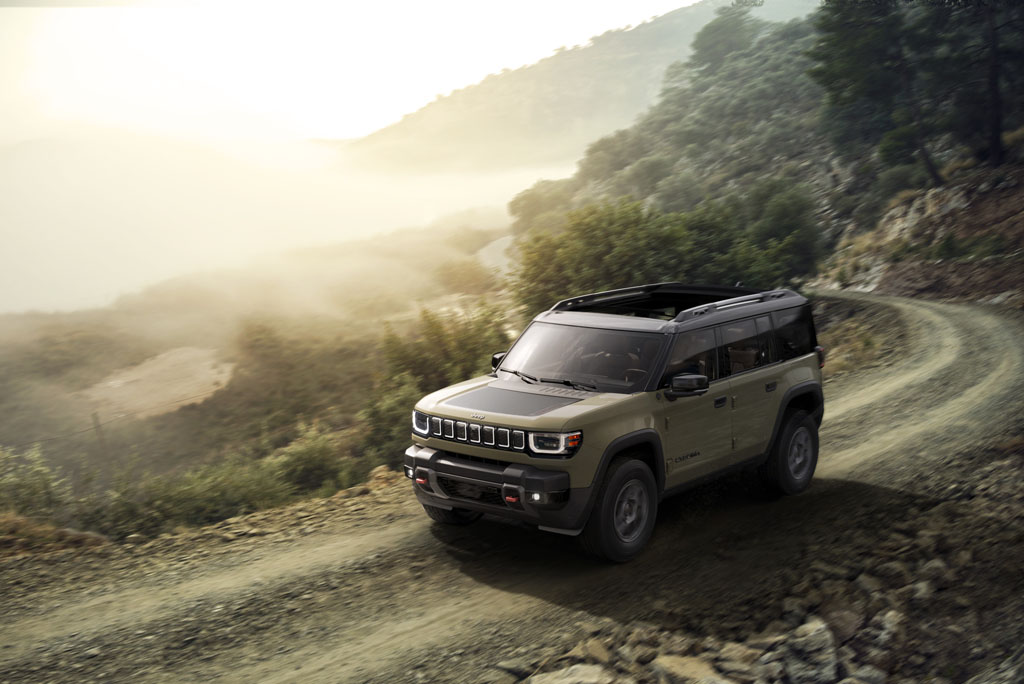
Visually, the Recon looks like it grew up on the same trails as the Wrangler, but the two are not twins. Both wear upright, boxy bodies, yet the Recon rides on the STLA Large unibody platform that it shares with the Wagoneer S and Dodge Charger EV, instead of the Wrangler’s body on frame architecture. At 193.3 inches long and about 74 inches tall, the Recon is only offered as a four door and is actually a little longer and wider than a four door Wrangler. Unique touches like square headlamps and a light up version of Jeep’s seven slot grille make sure no one mistakes it for a simple copy. Ground clearance and water fording ability trail the Wrangler, though, with the Recon offering up to 9.1 inches of clearance and the ability to handle 24 inches of water, versus up to 12.9 inches and 30 inches respectively for the most serious Wranglers.
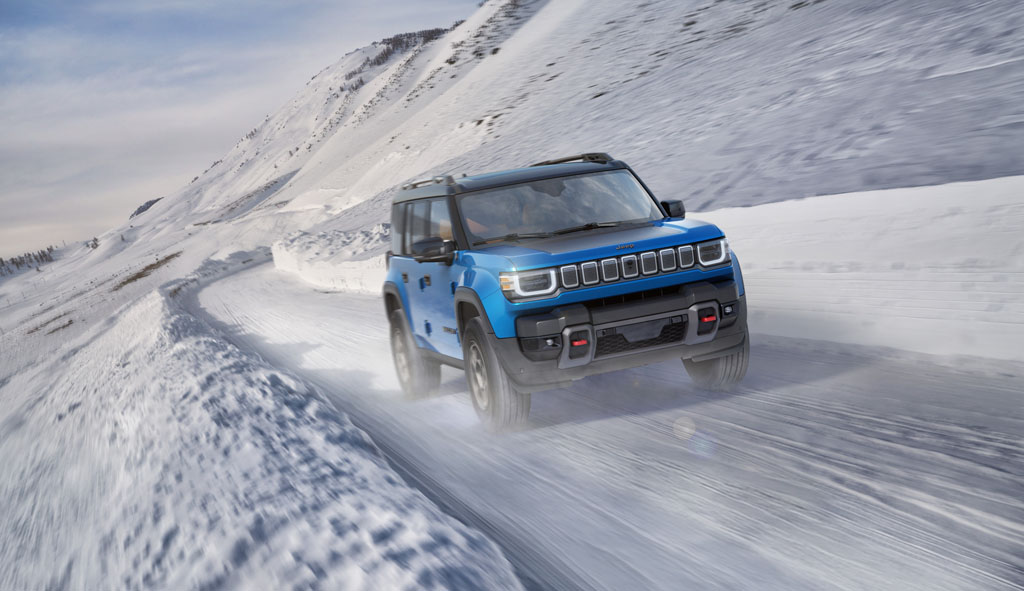
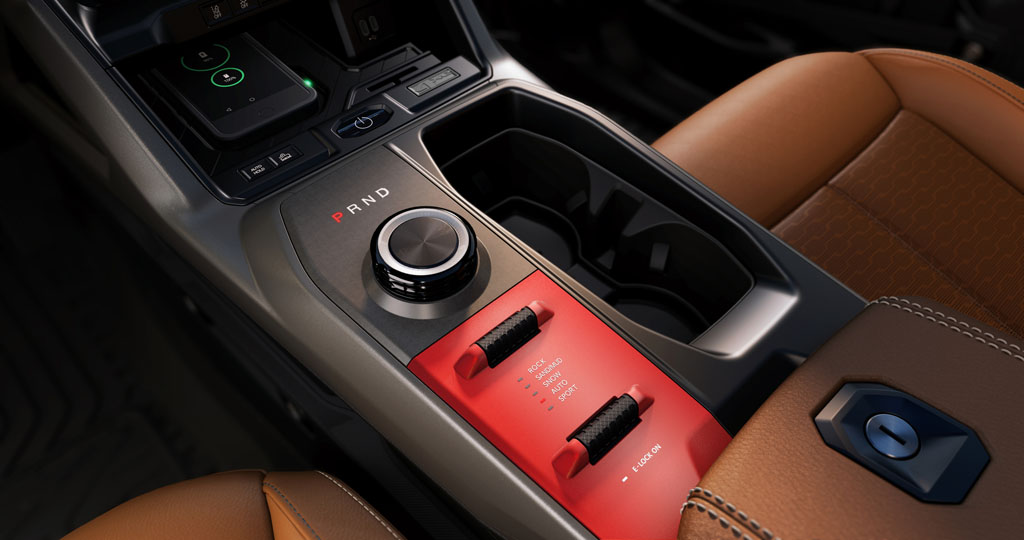
Under the skin, Jeep is betting that most buyers will trade a bit of ultimate rock crawling ability for comfort and tech. Instead of solid axles, the Recon uses an independent short long arm suspension up front and a multilink setup in the rear, tuned to balance trail control with a calmer ride on pavement. Every Recon gets all wheel drive and an electronically locking rear differential, but there is no traditional two speed transfer case or dedicated front locker in the mix. Jeep instead gives the rear motor a short 15:1 axle ratio that effectively mimics low range by multiplying torque at slow speeds, especially when paired with the locking diff. The launch spec Moab trim rides on 33 inch Nexen Roadian ATX all terrain tires, comes with steel skid plates, and offers optional rock rails, so the hardware is still serious enough for the kind of off roading most Jeep owners actually do.
Power is where the Recon stops playing nice with the Wrangler and simply outguns it. Two electric motors combine for 650 horsepower and 620 pound feet of torque, figures that comfortably eclipse the Wrangler Rubicon 392 and its 470 horsepower V8. Jeep says the Recon Moab will sprint from 0 to 60 mph in 3.6 seconds and run up to 112 mph, despite tipping the scales at over 6,100 pounds. That makes it quicker than the V8 Wrangler in a straight line, and it will do it in near silence, whether you are blasting onto a highway on ramp or crawling up a rocky ledge.
Feeding those motors is a roughly 100 kWh battery pack nestled low in the chassis as part of a 400 volt architecture, sealed and protected for off road abuse. Jeep estimates up to 230 miles of range for the Moab trim at launch, with a less aggressive variant expected to stretch that to around 250 miles on the same pack. On a Level 2 charger, Jeep says the Recon can go from 5 to 80 percent in under seven hours, while a DC fast charger can do the same in about 28 minutes and add roughly 100 miles of range in about 10 minutes. The first production units will use the familiar CCS charge port, but future models are planned to adopt the NACS connector that opens access to much of Tesla’s Supercharger network.
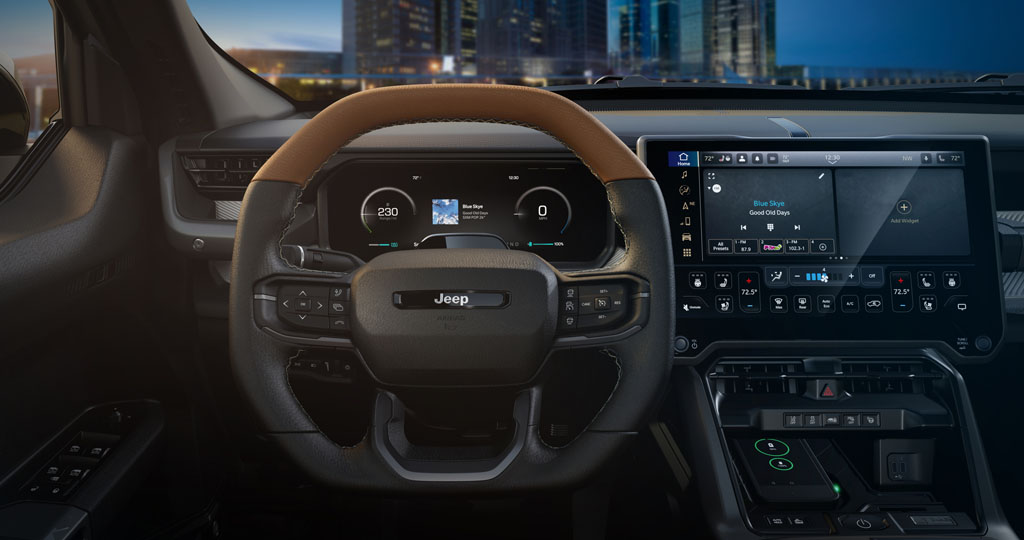
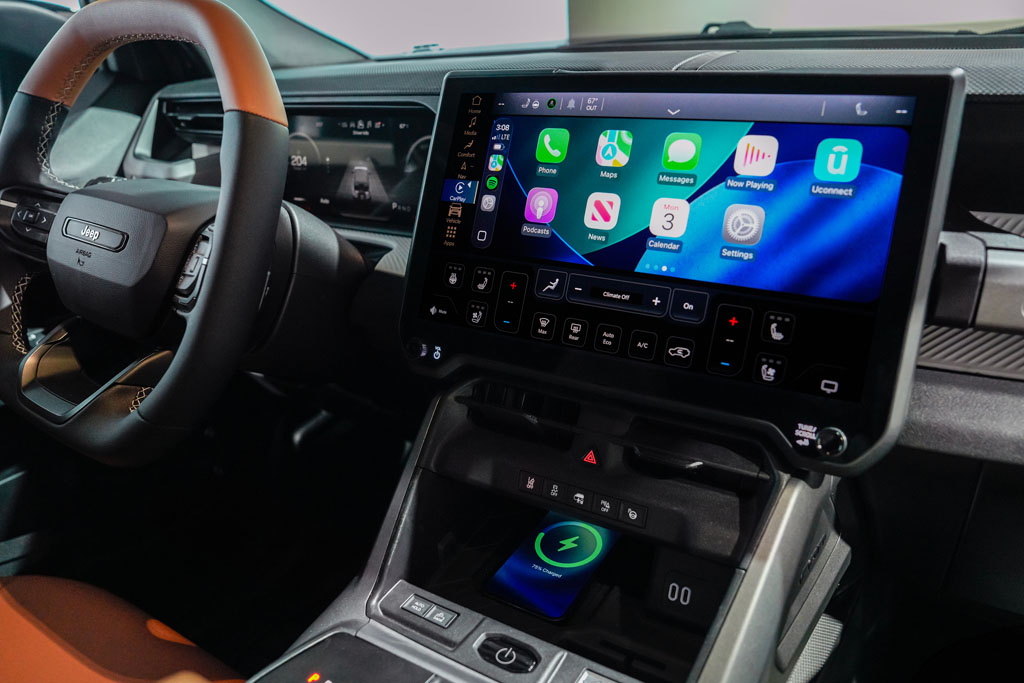
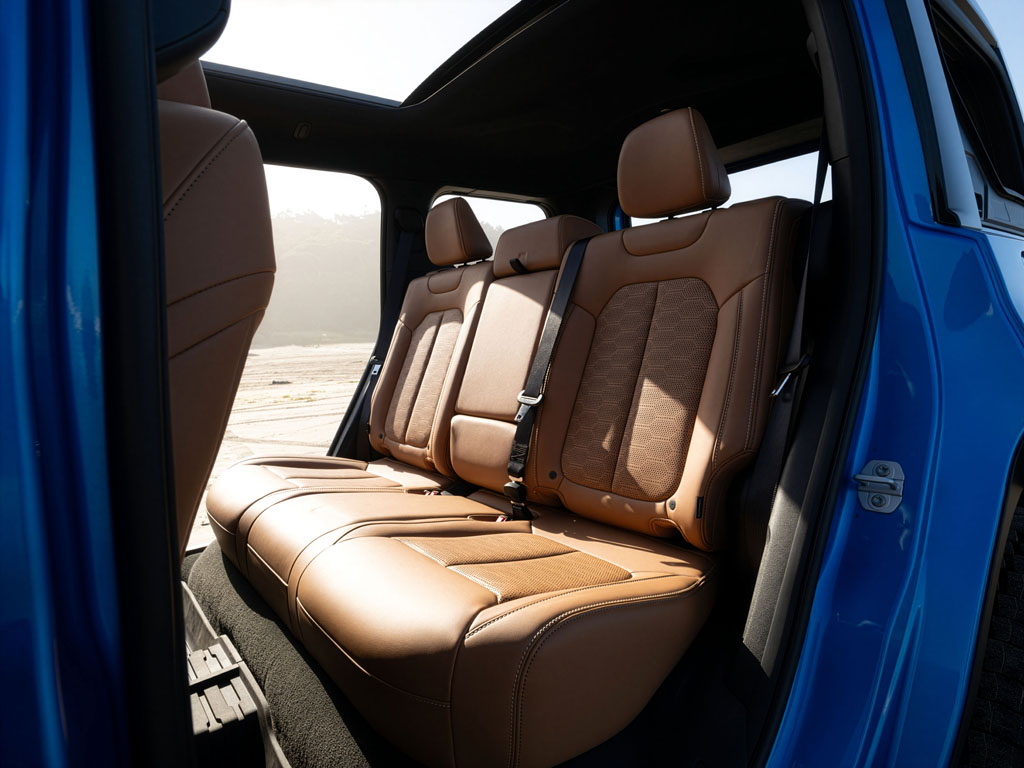
Inside, the Recon feels like a modern Jeep that has been pushed firmly into the EV era. The dash layout is horizontal and blocky, with a passenger grab handle that clearly nods to the Wrangler, but front and center sit a 12.3 inch digital gauge cluster and a 14.5 inch touchscreen running Uconnect 5. Wireless Apple CarPlay and Android Auto are standard, over the air updates are built in, and there are real knobs for volume and tuning, but most climate functions have moved into the screen. Storage is a priority, with clever strap style door pockets, space under the center console, a small 3 cubic foot front trunk, and a rear cargo area that ranges from about 30 to 66 cubic feet depending on how you configure the back seats.
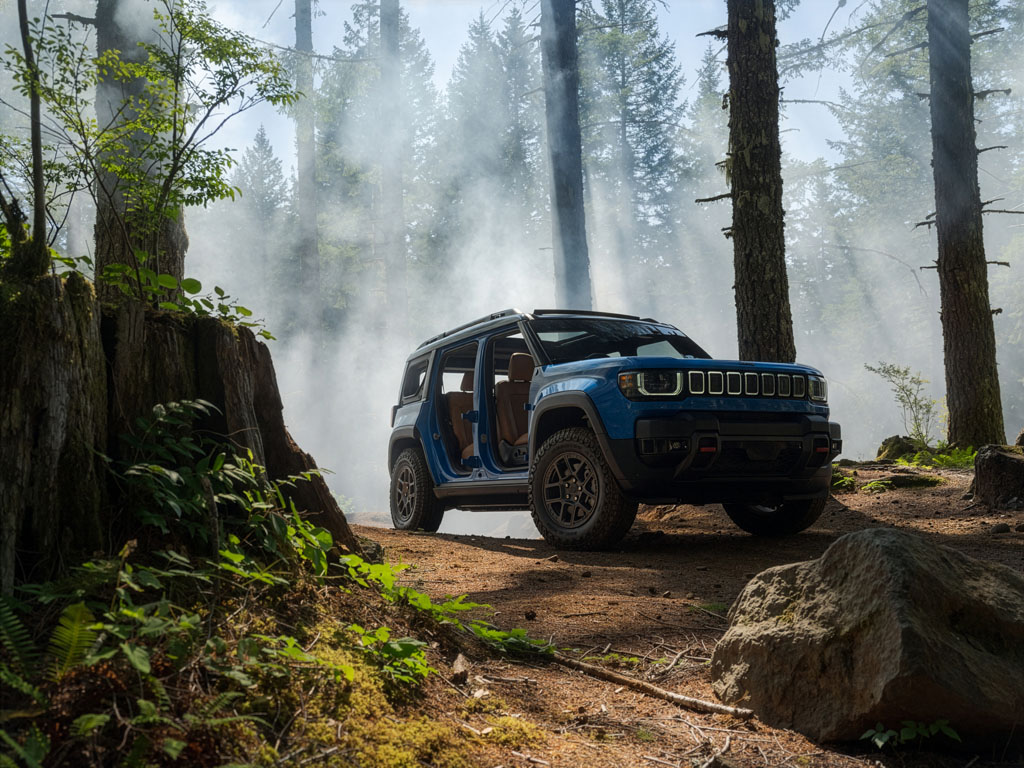
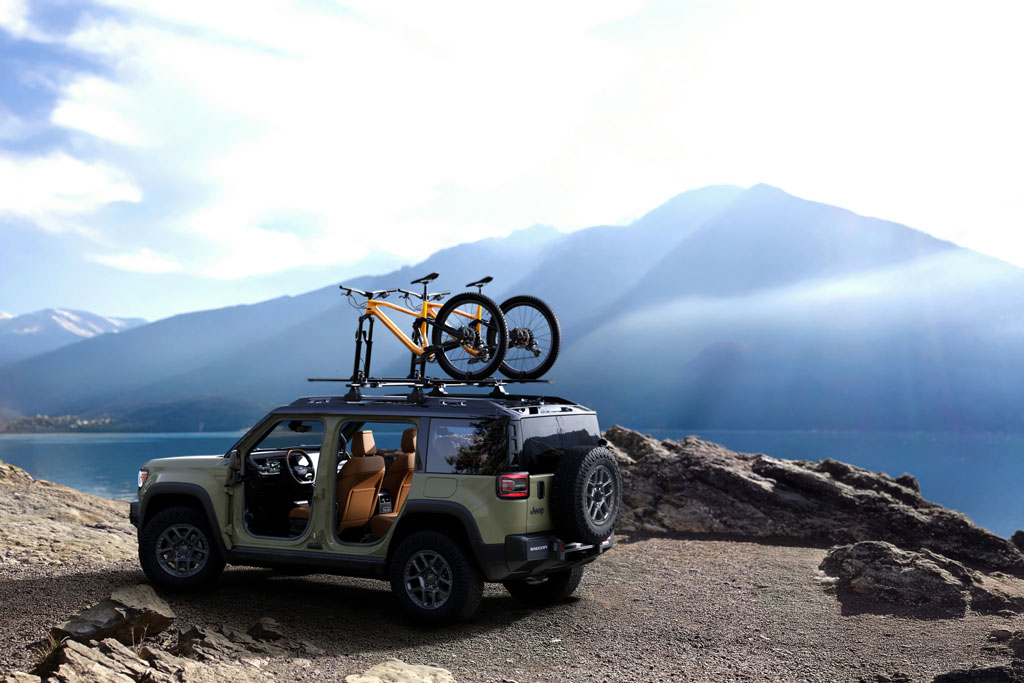
Of course, none of this would feel like a true Jeep without open air fun. Recon owners will be able to remove the doors and rear quarter glass without tools, just like on a Wrangler, and a standard panoramic roof brings in plenty of light. For those who want the full convertible vibe, an available power retractable roof slides back at the touch of a button without a fixed cross member cutting into the view of the sky. The rear swing gate still carries a full size spare, so the traditional Jeep silhouette is intact even when you strip everything off and head for the nearest trailhead.
There is also an important branding story here. The Recon wears Jeep’s 4xe badge, which used to be reserved for plug in hybrids like the Wrangler 4xe and Grand Cherokee 4xe, but is now being expanded to cover all electrified Jeeps, full EVs included. Blue trim is quietly disappearing in favor of more traditional Jeep cues like red tow hooks, and the Recon Moab is rated to tow up to 3,300 pounds, only slightly less than many Wrangler configurations. With a starting price of $66,995, it lines up closely with a high spec Wrangler 4xe and undercuts the V8 powered Wrangler 392 by roughly $15,000, positioning the Recon as the EV choice for buyers who want Wrangler attitude with a smoother daily commute and zero tailpipe emissions.
Jeep has had to navigate delays with several recent EV launches, including the Wagoneer S, so it remains fair to question whether the Recon will arrive exactly on time. What is clear, though, is that this SUV is a key piece of the brand’s future. If Jeep can deliver the promised blend of open air freedom, real trail hardware, and everyday livability at the plug, the Recon could become the go to choice for drivers who love the idea of a Wrangler but want their next adventure to be electric.








More Stories
2027 Lexus RZ Arrives With Up to 301 Miles of Range, 402 Horsepower, and a $47,495 Starting Price
Lexus is keeping its all-electric luxury SUV competitive with the introduction of the 2027 Lexus RZ, bringing back the improved...
Toyota Tests New 2.0-Liter Inline-Four Engine in GR86, Hinting at a Big Change for Its Sports Car
Toyota is experimenting with something that could completely change the future of its popular GR86 sports car. During the latest...
2027 Infiniti QX65 Invoice Price, Dealer Cost, and What You Should Pay
The 2027 Infiniti QX65 is an all-new model, the brand’s first fastback coupe-style SUV since the original FX lineup that...
2027 Hyundai Sonata Invoice Price, Dealer Cost, and What You Should Pay Near You
The Hyundai Sonata has quietly become one of the most compelling mid-size sedans on sale in the United States, offering...
2028 Mitsubishi Outlander Diamond Trail Edition Revealed With Rugged Off-Road Upgrades for SEMA
Mitsubishi is getting serious about the growing demand for adventure-ready SUVs, revealing the new 2028 Outlander Diamond Trail Edition ahead...
2027 Jeep Gladiator Gets Factory 35-Inch Tires With New Limited-Edition Off-Road Package
Jeep is finally giving Gladiator enthusiasts something they’ve been asking for since the truck first arrived. The 2027 Jeep Gladiator...