
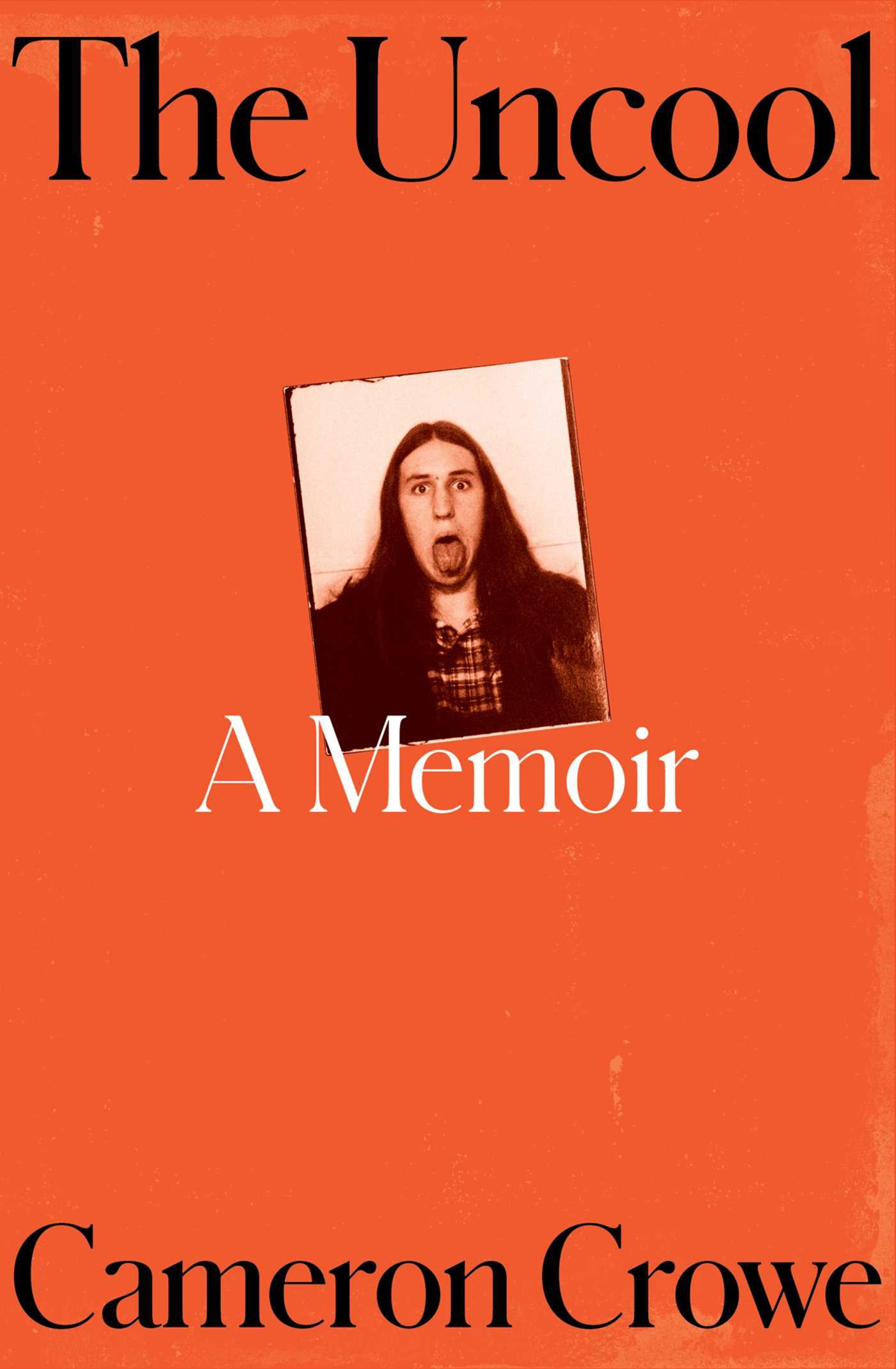
The rock world was Cameron Crowe’s oyster in memoir ‘The Uncool’

SAN DIEGO — Cameron Crowe was understandably wide-eyed and elated in the 1970s as a San Diego teenager who traveled here, there and everywhere conducting in-depth interviews with the Allman Brothers Band, Led Zeppelin, Linda Ronstadt and other music luminaries for Rolling Stone magazine.
He is no less so when recounting those experiences in his warmly engaging new memoir, “The Uncool.” Published by Avid Reader Press, the book vividly chronicles Crowe’s experiences in an era when Rolling Stone was a must-read for many young people and an arbiter of nearly all things cool.
It was also an era when some of the world’s most celebrated rock stars granted almost unlimited access to Crowe, the endlessly enthusiastic and completely guileless whiz-kid writer.
Still a student at University High School in Linda Vista when his career as a music journalist ignited, he graduated three years early.
“I looked younger than everybody. That would be my calling. My diploma came in the mail,” writes Crowe, whose book poignantly begins and ends in San Diego with his dying mother in the first chapter and his father in the last.
Crowe’s fresh-faced passion and sincerity endeared him to even his most press-wary interview subjects. They welcomed the opportunity to open up to an interviewer whose questions were well-researched, who listened intently, wrote insightfully and whose only agenda was to let them speak freely to their fans.
He had at least one other advantage: Crowe was an unabashed admirer of bands that most Rolling Stone writers viewed with disdain, including Yes, Deep Purple and the Eagles. He would go on to interview all three for the magazine.
The fact that Crowe declined any and all offers of drugs from his interview subjects also endeared him to them, with one notable exception. A paranoid and glazy-eyed Gregg Allman was unnerved by Crowe’s abstention, including turning down a speedball (which mixed cocaine and heroin). So unnerved that — after pouring his heart out to the young writer — Allman demanded to see his ID card.
That Crowe had yet to obtain his driver’s license incensed Allman, who accused the hapless 16-year-old of being an undercover police informant. Allman confiscated the tapes of Crowe’s in-depth interview with him and the band’s other members, and insisted he sign ownership over to Allman. Scared and under duress, Crowe reluctantly agreed.
The tapes were returned, intact, a few days later. Crowe’s sensitively crafted article on the Allman Brothers earned him his first Rolling Stone cover story. What transpired also provided pivotal source material for Crowe’s Oscar-winning 2000 feature film, “Almost Famous,” which he wrote and directed. He also masterminded its rebirth as a musical in 2019.
The longest chapter in “The Uncool” gives a blow-by-blow account of what transpired with the Allmans. As an epilogue to that sometimes-harrowing saga, the book later recounts the 2015 backstage meeting at the Del Mar Fairgrounds Grandstand Stage between Crowe and Allman.
“Thank you for ‘Almost Famous,’” Crowe said.
“You’re welcome,” replied Allman, who died in 2017. He was 69, just one year older than the still-youthful Crowe is now.
Crowe’s teen exploits are the primary focus of “The Uncool,” which is also the title of his website. The name was inspired by former La Mesa rock critic Lester Bangs, who memorably cautioned Crowe about the status of music critics: “We’re from (expletive) San Diego. We’re uncool!”
Some of the most enjoyable parts of “The Uncool” are when Crowe provides fresh new facts and added context to events that inspired some of the most memorable scenes in “Almost Famous.” By disclosing previously unknown details, including the fact that he initially wrote the film as a starring vehicle for David Bowie, Crowe has produced a book that is part memoir, part novelization and all heart.
His tenure at Rolling Stone laid the foundation for a career that has seen him pen three acclaimed books and write and direct such hit films as “Jerry McGuire” and “Say Anything.” He fared less well with “We Bought A Zoo.”
Crowe’s current film project is a biopic on Joni Mitchell. He befriended her during a 1979 interview that was his final cover story for Rolling Stone. Mitchell had long held the publication in extremely low regard after being misogynistically slighted in one of its 1971 issues.
Crowe acknowledges in “The Uncool” that he broke a major journalistic taboo by allowing the iconic singer-songwriter to read his cover story about her before turning it into Rolling Stone. By way of thanks, she gifted him with one of her paintings and signed it: “Thanks for the cooperation, Joni Mitchell.”
Reflecting now on the painting she dedicated to him, Crowe writes: “I knew instantly I could never put it where a fellow journalist might see it.”
By way of justification, he adds: “What might have been considered criminal to some journalists was a key to her comfort.”
Cameron didn’t have a high school girlfriend or go to prom. But he was on a first-name basis with rock stars his classmates could only dream of meeting, let alone going on the road with those stars and sharing their innermost thoughts.
“The Uncool” is a dive well worth taking.
Tribune News Service
‘THE UNCOOL’
By Cameron Crowe
Avid Reader Press, $35
Grade: A
Cameron Crowe arrives for the 76th Annual Tony Awards meet the nominees press event in New York City in 2023. (Leonardo Munoz/AFP via Getty Images/TNS)


More Stories
Henry Gabay Started Duet Group With $10 Million. Two Decades Later, It Managed More Than $5 Billion.
By the time Financial News reported on the firm’s 2013 results, that early bet had compounded into one of the...
Planning an Antarctica Cruise Tour
Poseidon Expeditions runs its Antarctica program aboard the 114-passenger M/V Sea Spirit, an ice-strengthened ship led by a team of...
Vincent “Vinny” Colardi on Running, Music and Making Room for Different Passions
Between his career, playing guitar, writing music, running, and exploring his interest in food, Colardi has built a life around...
Why the Rolex Air King Makes More Sense in an Era of Lookalike Luxury Watches
Dials in black, metal bracelets, highly readable markings, and sport-inspired cases are common throughout many current product ranges, while social...
Viriora Expands Online Trading Access Across Forex, Stocks and Crypto Markets
The platform is designed around a broad selection of markets, with published information about available instruments and trading conditions. More...
Markets too ready for conflict over Taiwan – US diplomat
Investors are overestimating the threat of a military confrontation over the island, Michael DeSombre has told CNBC Investors are exaggerating...