
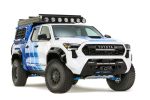
Toyota Tacoma H2 Overlander Concept Brings Serious Hydrogen Muscle to SEMA

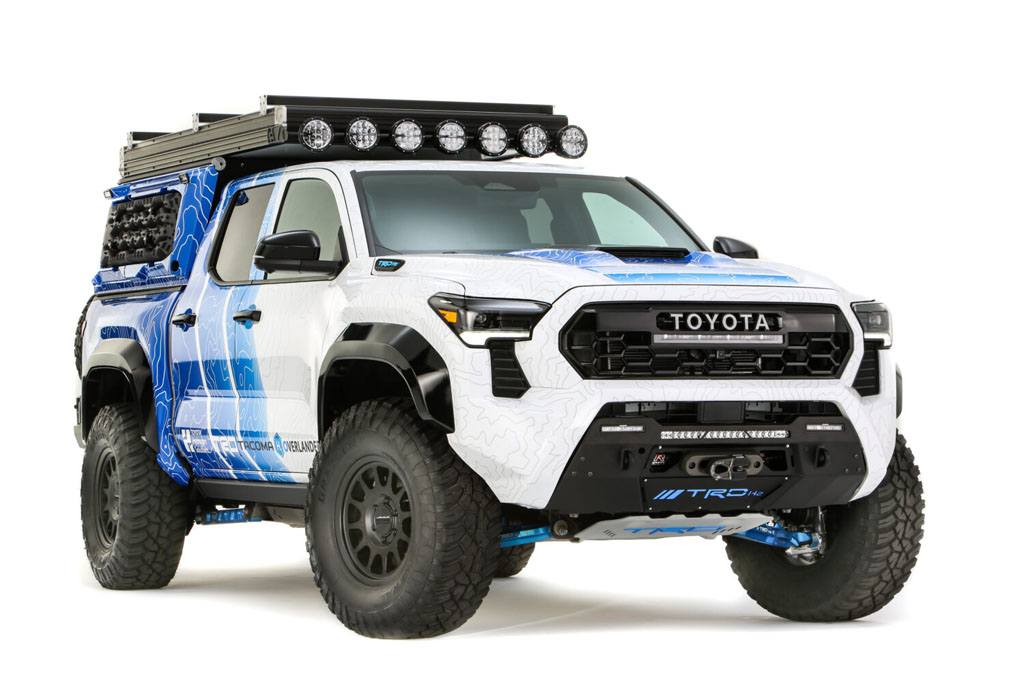
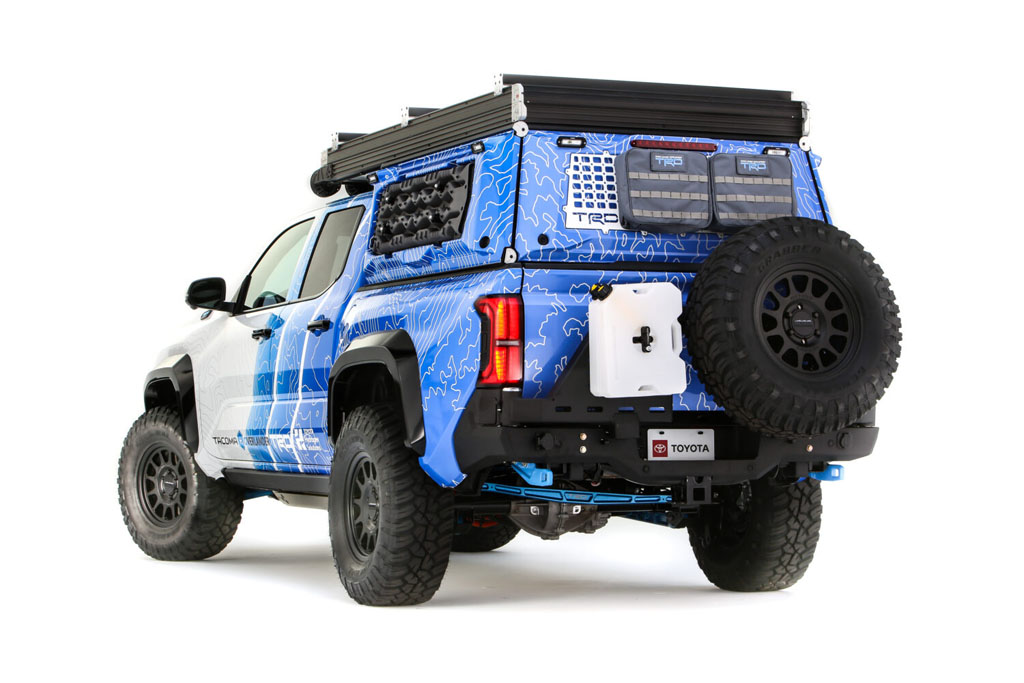
Toyota showed up to SEMA with a concept that feels both familiar and futuristic. Meet the Tacoma H2 Overlander, an off road pickup that swaps pistons for proton power by lifting the hydrogen fuel cell system from the Mirai sedan and slipping it into the Tacoma’s TNGA F bones. It is the kind of big swing you expect from SEMA, only this one previews real tech Toyota keeps betting on.
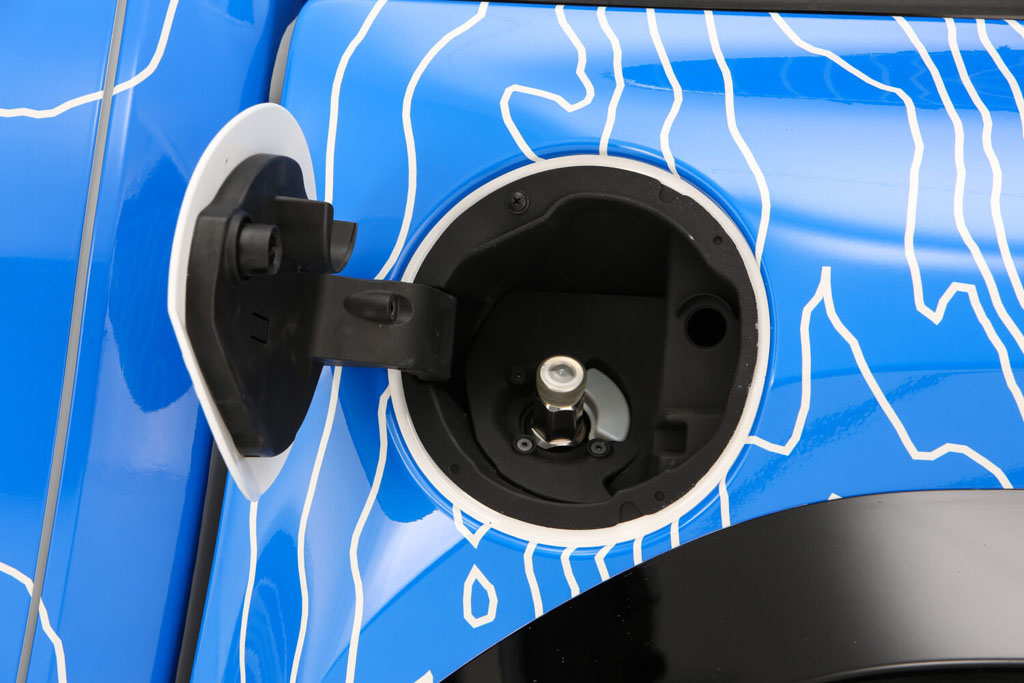
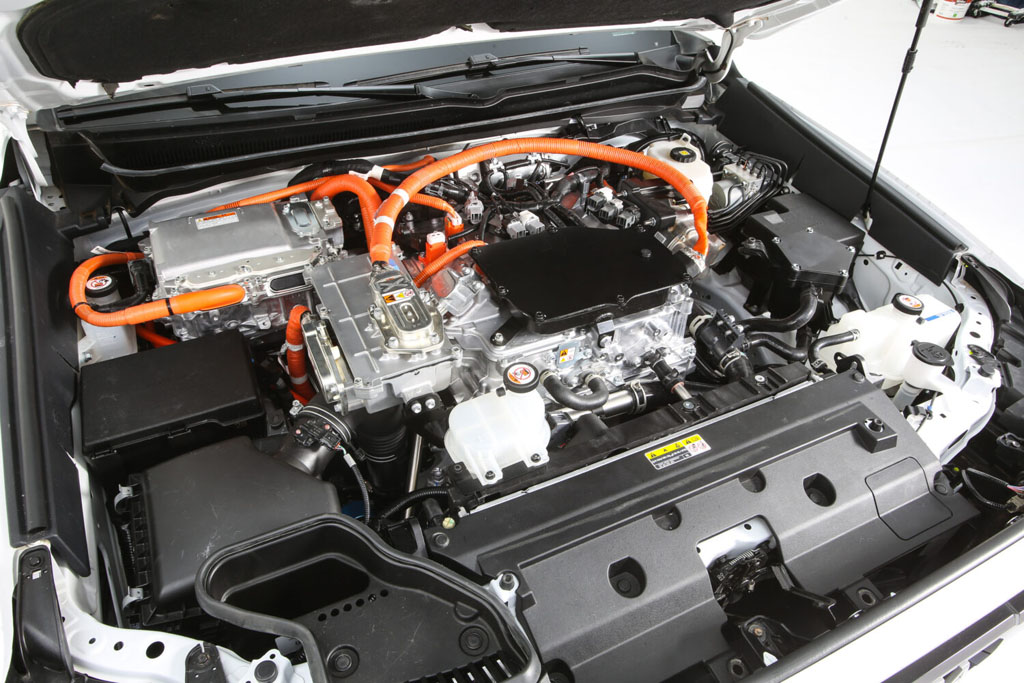
Under the hood, or more accurately under the skin, is the Mirai’s second generation fuel cell stack teamed with three hydrogen tanks totaling 6 kilograms of capacity tucked inside the frame rails. The H2 Overlander uses a 24.9 kWh lithium ion battery to buffer the system and power a dual motor setup. The front motor is rated at 301 horsepower, the rear at 252, for a combined 547 horsepower. Power routes to the dirt through a front limited slip differential and a rear electronic locking differential, which should make quick work of loose climbs and off camber ledges.
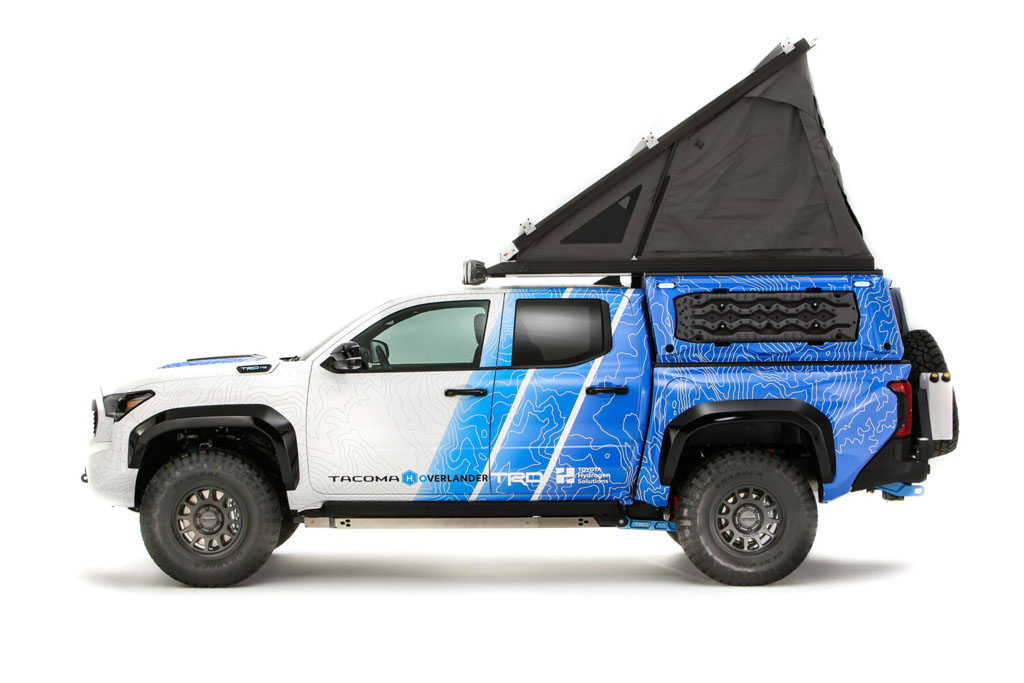
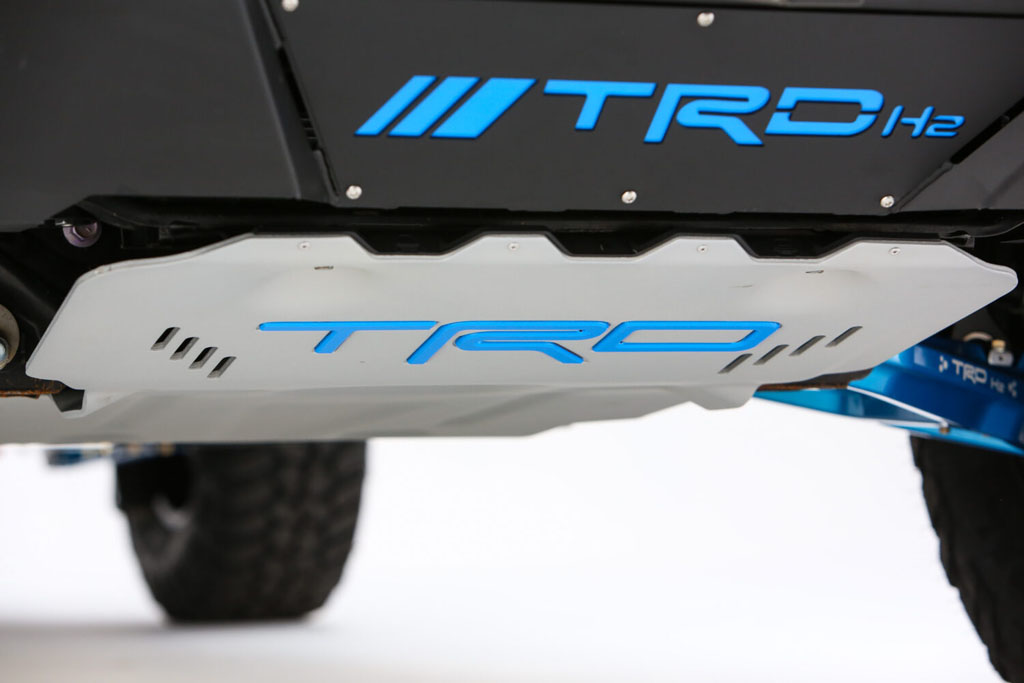
TRD handled the engineering and build, and it shows. The chassis wears a TRD billet long travel kit with Fox 2.5 Performance Elite Series shocks that were developed while tuning Tundra suspension. Speaking of Tundra, its front brakes are along for the ride here too. The rolling stock is classic overland spec, 17 inch Method Race wheels wrapped in 35 inch General Grabber all terrains. Approach a rocky ledge, point the truck, and let the motors do the work while the dampers take the hits.
The most conversation worthy feature might be the thing no one normally talks about on an off road truck, the tailpipe. A fuel cell’s only byproduct is water, so Toyota devised a patent pending exhaust water recovery system that captures and filters what the stack produces. The idea is delightfully practical. Use the water at camp for washing dishes or taking a quick shower after a dusty trail day. Toyota says to treat it like gray water, which means helpful around camp but not for drinking.
Camping life is clearly the theme. The Tacoma concept carries a 15 kilowatt onboard power supply that can light up a site, run tools or appliances, and even charge two EVs at once using dual NEMA 14 50 outlets. That is serious portable power for an off grid weekend. It hints at the larger appeal of hydrogen electric overlanding, silent running, instant torque, and the ability to export power without the noise or fumes of a generator.
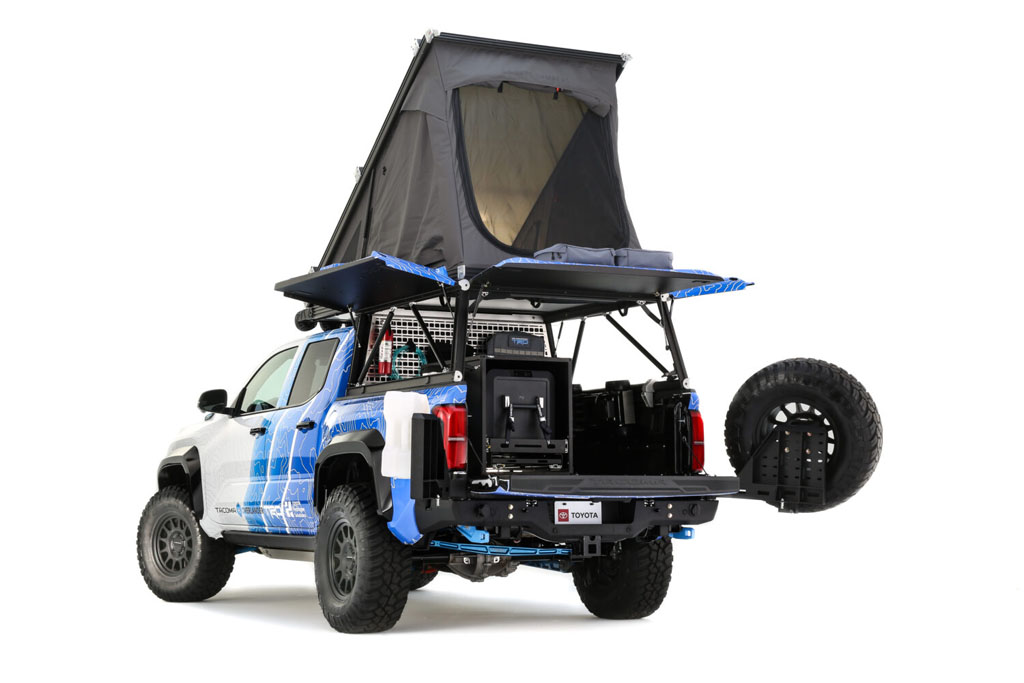
Look in the bed and you will find a clever storage system built with recycled carbon fiber panels that flip up to reveal a camp kitchen, a refrigerator, and neatly stashed gear. Recovery boards ride along, a tent sits up top, and auxiliary lighting surrounds the truck. Heavy duty bumpers with built in tow hooks add protection and utility, while a front mounted winch gives you a get out of jail card when the trail gets more ambitious than planned. Up front, a bumper integrated light bar adds a wall of white for night runs, with seven round auxiliary lights on the roof bringing classic desert racer vibes.
Numbers are impressive, yet the bigger picture matters too. Toyota remains one of the few automakers publicly committed to hydrogen fuel cell tech for passenger applications. The Mirai is still on sale in California, and Toyota has said its next generation FCEV system is being developed for multiple vehicle types. The Tacoma H2 Overlander is not a production announcement, it is a proof of concept that hydrogen and serious off roading can coexist in one package.
There are clear advantages. Refueling a hydrogen tank takes minutes when the infrastructure exists, torque from electric motors is immediate and easy to modulate on technical terrain, and a truck like this can supply serious power at camp without idling an engine. The water recovery system doubles down on that off grid utility. At the same time, the realities are well known. Public hydrogen stations remain limited to a few regions, and the broader ecosystem has a lot of work ahead before a hydrogen powered overland pickup makes sense for most buyers.
As a rolling tech demo, though, the H2 Overlander nails the brief. Toyota used off the shelf parts where possible, blending Tacoma TRD Pro and even Lexus RZ cooling hardware to support the hydrogen and electric systems. That mix of existing components and customized bits is classic TRD problem solving. It is easy to picture teams using a mule like this to validate thermal performance on slow climbs, suspension tuning under heavy loads, and the usefulness of that 15 kW power export during real world trips.
From an enthusiast lens, what stands out is how well this concept aligns with what overlanders actually want. More range and simpler refueling is always on the wish list, so if hydrogen availability grows, the refuel and go appeal is real. Camp power is huge, and 15 kW is enough to run everything from induction cooktops to air compressors to portable A C units. The storage system looks purpose built rather than an afterthought, and the 35s on long travel suspension suggest capability that matches the look.
Will Toyota build a hydrogen Tacoma you can buy soon There is no sign of that today. The point here is to demonstrate how Toyota’s fuel cell tech can flex beyond sedans and heavy duty prototypes. Trucks are the heart of the American market, and off road flavored trucks are the heartbeat. Showing a hydrogen Tacoma at SEMA is savvy, because it puts the conversation exactly where enthusiasts are listening.
If you are walking the halls in Las Vegas, the H2 Overlander will be hard to miss. If you are watching from home, what matters is the message. Toyota is not done with hydrogen. The company is exploring how to package it in vehicles people love, trucks included. Even if this exact Tacoma stays a one off, the ideas inside it, the power export, the water capture, the dual motor torque, are the sort of things that could filter into future off road rigs.
For now, chalk this up as one of SEMA’s most intriguing builds. It is equal parts test bed and trail rig, an experiment that lets Toyota engineers learn while giving fans something to dream about. And if the industry eventually solves hydrogen supply and infrastructure at scale, a quiet, torque rich, zero emission Tacoma that powers your campsite and rinses off your boots might not sound like a fantasy at all.







More Stories
Electric Chevrolet Corvette Is Still in GM’s Plans, But There’s No Timeline for Its Arrival
The idea of an all-electric Chevrolet Corvette has been floating around for years, and it looks like General Motors still...
Best Voice AI for Automotive Dealers
Automotive dealerships face mounting pressure to respond to customer inquiries faster than ever before. Voice AI solutions now handle incoming...
Cyprus September 2026: Jeep Avenger and BYD Seal U reach ranking records
The BYD Seal U reaches a record third place in Cyprus in September. According to data by our local partners...
Panama September 2026: Hyundai Grand i10 leads again, Mitsubishi L200 in Top 5
The Mitsubishi L200 is back inside the Panama Top 5 in September. New light vehicle sales in Panama are stable...
Vietnam September 2026: Market up 28%, VinFast VF 3 now #1 year-to-date
According to data provided by VAMA, Hyundai and VinFast, the Vietnamese new vehicle market shoots up 28% year-on-year in September...
Thailand September 2026: Sales up 24.7%, MG (+72.3%) places Urban inside Top 10
The MG Urban ranks #10 in Thailand in September. It’s another very satisfying month for the Thai new light vehicle...