
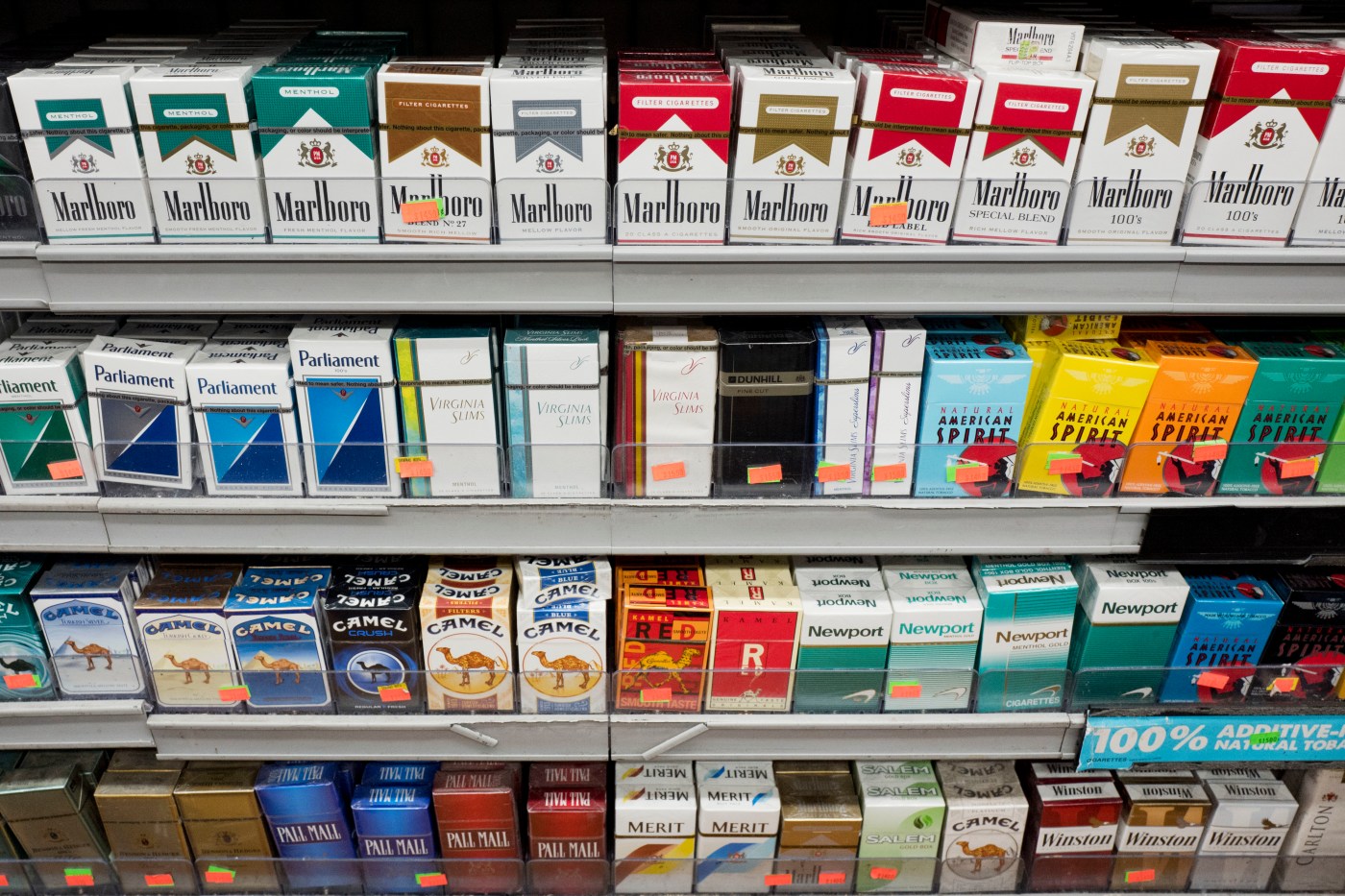
Lawmakers hear ‘generational’ tobacco ban bills

You can’t smoke ‘em if you don’t got ‘em.
That’s the idea behind a pair of bills before the state Legislature which would ban tobacco sales to people born before 2006.
The proposal went before a hearing of the Joint Committee on Public Health on Monday.
If enacted, it would be the first such statewide law in the nation, though not the first implementation of the idea altogether. Residents of more than a dozen-and-a-half commonwealth communities already live under similar bans through local ordinances.
Advocates say a statewide ban for people of a certain age would represent an end to tobacco use for the next generations of Bay State residents, therefore saving them and the state from the costs associated with the harmful effects of smoking or other tobacco use.
Dr. Henry Dorkin, a Newton resident who the Massachusetts Medical Society describes as a “renowned pediatric pulmonologist and researcher,” told the committee that he was endorsing the bills on behalf of the 25,000 medical professions represented by the MMS.
“To be clear: this is a public health measure no different than keeping immunizations up to date. In addition to patient harm, the cost of to the taxpayers of Massachusetts for medical care of nicotine delivery system induced diseases is high,” Dorkin said.
The data shows that it costs about $4.74 billion annually to treat Bay State residents’ tobacco-related health concerns, according to Dorkin.
“Your medical society believes that this is a protective health measure, please protect our children,” he urged lawmakers.
But not everyone is in favor of the idea.
Gas station owners, liquor store owners and the trade groups that represent them spoke out against the ban, noting parallels between the state’s proposal and the federal government’s attempt at the prohibition of alcohol in the early 20th century.
Robert Mellion, speaking on behalf of the Massachusetts Package Stores Association, said that tobacco ban “is not going to work” in the same way that prohibition couldn’t make people stop drinking and other bans have failed to curtail behavior.
“The flavored tobacco ban doesn’t work,” he said. “It doesn’t work because it’s a Massachusetts only ban and we are surrounded by predator states who are selling to Massachusetts residents by the hour. That’s the truth, we can deny it, but it’s the absolute truth.”
“These bans don’t work because prohibition didn’t work,” he added.


More Stories
Ofcom orders Openreach to withdraw £9.50 full-fibre discount
Ofcom has today directed Openreach to withdraw a wholesale offer that would have given internet service providers a discount of...
Police refuse to reopen RBS hotel loan case without judicial review
Police Scotland has closed its handling of fraud allegations made by an Edinburgh businessman against Royal Bank of Scotland, telling...
Mustafa Suleyman warns AI has reached a “watershed moment”
Mustafa Suleyman, chief executive of Microsoft AI, has said artificial intelligence has reached a “watershed moment”, pointing to agents that...
Insolvency Service puts phoenixing directors at top of new strategy
The Insolvency Service will make abusive phoenixing, where directors repeatedly walk away from company debts and set up similar businesses...
John Lewis adds art galleries and 12 travel hubs to its stores
The John Lewis Partnership is expanding its concessions into fine art and bespoke travel, adding three art galleries and 12...
George Bamford to become JCB joint chairman as profits slip to £642m
George Bamford will become joint chairman of JCB alongside his father, Lord Bamford, on 1 October, the first change at...